The 2020s File Feature
Popstar
DJ Khaled Featuring Drake: "Popstar" and the Summer 2020 Chart Assault When DJ Khaled's "Popstar" featuring Drake debuted at number 3 on the Billboard Hot 10…
01 The Story
DJ Khaled Featuring Drake: "Popstar" and the Summer 2020 Chart Assault
When DJ Khaled's "Popstar" featuring Drake debuted at number 3 on the Billboard Hot 100 dated August 1, 2020, it announced itself as one of the most strategically engineered pop moments of the year. The track arrived during an unprecedented summer when the music industry was navigating a global pandemic, locked-down stadiums, and an entirely streaming-dominated chart ecosystem. That it entered so high and so immediately was a testament to the commercial machine both artists had built over the preceding decade.
DJ Khaled, born Khaled Mohamed Khaled in New Orleans in 1975 and raised in Orlando, Florida, had spent much of his career as a DJ, radio personality, and hip-hop hype man before pivoting into one of the most recognizable producer-hosts in popular music. His model, refined across a series of major-label albums beginning with Listennn... the Album in 2006, involved assembling superstar collaborators and positioning himself as the unifying brand. By the time he released Khaled Khaled in 2021, his profile had become inseparable from motivational social media content and high-profile guest features. "Popstar" sat squarely within that framework.
Drake, the Toronto-born rapper and singer whose full name is Aubrey Drake Graham, was already the dominant force on the Billboard Hot 100 by 2020. His catalogue had accumulated more charted entries than any other artist in the chart's history at that point, and his streaming numbers were consistently staggering. The pairing of Drake with Khaled was not new: the two had collaborated multiple times before, and Khaled's connections to the Toronto artist went back years through shared record label affiliations and a personal friendship cultivated through the Miami music scene.
"Popstar" was released on July 24, 2020, as part of a double-single rollout that also included "Greece," another Khaled and Drake collaboration. The strategy of releasing two tracks simultaneously was deliberate: it maximized streaming volume across two songs, ensuring both would chart and that collective engagement would spike across platforms. "Popstar" debuted with 36.4 million streams in its first tracking week, a figure that reflected Drake's ability to command immediate attention from a massive global fanbase.
The track itself was produced in a melodic, pop-leaning direction that drew on the crossover sound Drake had been perfecting since his Take Care era. The production featured airy, shimmering sonics with an understated rhythm structure that gave Drake room to blend rapping and singing, his signature mode. The song's title and central premise dealt with the concept of celebrity and cultural stardom, framing the artist's position in the public imagination as a character study as much as a boast.
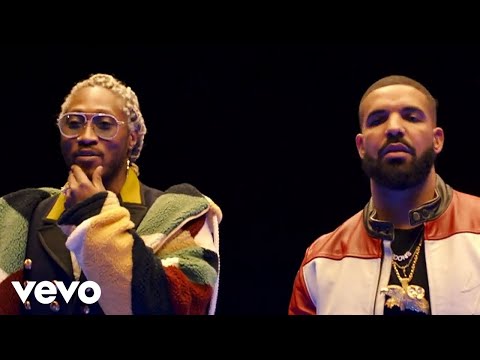
The accompanying music video was directed by Director X, the Canadian director who had worked with Drake on numerous previous projects. The video itself became something of a separate cultural event: it featured a parade of celebrity cameos that spoke to Khaled's extraordinary network, with appearances from figures across entertainment spanning film, sports, and music. The video's release amplified conversation about the song significantly and drove additional streaming activity in its debut week.
On the chart, the debut at number 3 made "Popstar" one of the highest-debuting songs of 2020 at that point in the year. The song spent 19 weeks total on the Billboard Hot 100, an extended residency that demonstrated genuine listener retention even after the initial debut surge. The peak was reached in that first week, which is characteristic of streaming-era releases where catalogue depth and promotional momentum concentrate listening activity immediately around release.
The summer of 2020 was an intensely competitive moment on the charts, with The Weeknd's "Blinding Lights" dominating for months and a wave of pandemic-era streaming releases flooding the market. "Popstar" carved out a distinct identity in that landscape through its production quality and the consistent reliability of Drake as a commercial force. The number 3 position placed it just outside the top two, which at that moment were occupied by some of the period's strongest sustained performers.
Critically, the song received generally positive notices, though some reviewers noted that the collaborative format, while commercially potent, sometimes left Drake's contribution feeling self-contained within Khaled's broader brand architecture. The question of how much Khaled's artistic identity shaped the final product versus serving as a promotional vehicle was one that critics had debated across his catalogue, but commercially the results were consistently strong.
For Khaled specifically, "Popstar" represented a continuation of his peak commercial period. His 2017 album Grateful had produced the number 1 hit "Wild Thoughts" featuring Rihanna and Bryson Tiller, and subsequent projects maintained his profile as a reliable hit generator. The double-single strategy with "Popstar" and "Greece" saw both tracks chart simultaneously, an approach that few artists could replicate without the combined streaming infrastructure that Khaled and Drake commanded.
The song also arrived at a moment when Drake was navigating a complex cultural moment: his public feud with Kanye West had been quieter in the preceding period, and he was building toward what would become the massive Certified Lover Boy album. The guest appearances on Khaled projects during this stretch functioned partly as strategic singles that maintained his chart presence between full album cycles.
In retrospect, "Popstar" occupies a specific place in the pandemic-era pop archive, a song that felt simultaneously effortless and engineered, blending tropical production aesthetics with the kind of self-aware celebrity commentary that defined much of early 2020s hip-hop. Its chart performance, commercial numbers, and cultural footprint all reflected the particular mechanics of how major pop music worked during one of the most unusual years in modern history.
Chart Context and Legacy
The Billboard Hot 100 in the summer of 2020 was shaped by streaming dominance more thoroughly than at any previous point. Algorithms on Spotify, Apple Music, and YouTube rewarded catalogue consistency and engaged fanbases over traditional radio-driven promotion. Drake's fanbase represented one of the most activated listener communities on any streaming platform, and when paired with Khaled's promotional energy, the result was a near-guaranteed chart debut of significant height. The 19-week chart run of "Popstar" placed it among the better-performing tracks of the mid-2020 period, and its legacy is one of efficient commercial pop construction executed at the highest available level.
02 Song Meaning
Celebrity, Self-Mythology, and the Popstar Persona in DJ Khaled and Drake's 2020 Collaboration
"Popstar" is, at its core, a meditation on the strange gravity of extreme fame. The song places its narrator at the center of cultural attention and examines what that position feels like from the inside: the adulation, the paranoia, the privilege, and the odd weightlessness of being a figure that millions of people project their desires onto. Drake, who has been navigating celebrity discourse in his music for well over a decade, approaches the subject here with a kind of cool detachment that reads as both self-aware and genuinely reflective.
The title itself functions as a statement and a question simultaneously. To call oneself a popstar is to claim a particular kind of cross-genre appeal, a transcendence of hip-hop's categorical boundaries into something broader and more culturally legible. Drake's relationship with the "popstar" label has always been complicated, given that a meaningful segment of hip-hop criticism has used his pop sensibility as a point of contention, arguing that his melodic, accessible approach dilutes the genre's harder edges. The song engages that tension without fully resolving it, instead leaning into the persona with confidence.
Thematically, the track operates in the tradition of celebrity self-examination that runs through post-2010 hip-hop and R&B, from Kanye West's extended explorations of ego and cultural power to the more introspective modes of Frank Ocean and even earlier Drake material. The difference in "Popstar" is its relative lightness, the way it treats fame as a given rather than a burden. There is no obvious anguish in the narrator's position, but there are layers of self-consciousness that reward close listening.
The production plays a meaningful role in shaping the song's emotional register. The shimmering, almost aquatic sonic palette creates a sense of floating, of existing above ordinary concern. This is not a street-level record; it is constructed to feel elevated, which reinforces the central theme. When Drake describes his position and relationships from within that sonic environment, the music itself becomes an argument for the reality of his stated perspective.
Romantic relationships as filtered through celebrity are another thread running through the song. The narrator's interactions with others are shaped by their fame, by the way attention follows them, by the complexity of intimacy when one party is a cultural phenomenon. This theme of fame-distorted intimacy appears repeatedly across Drake's catalogue, from earlier works through his more recent output, and "Popstar" fits into that lineage as a relatively compressed but clearly articulated entry.
The DJ Khaled framing adds another layer of meaning. Khaled's signature practice of assembling and contextualizing talent functions here as a kind of declaration: by placing Drake within his universe, Khaled affirms the hierarchy of current pop stardom while also inserting himself into it as a curator. The song becomes, in this reading, partly about the ecosystem of celebrity itself, the producers, the brands, the networks that sustain and generate popstardom as an ongoing cultural product.
Musically, the song's composition is built around restraint. Unlike maximalist trap production, the beat gives Drake's delivery room to breathe, allowing inflection and phrasing to carry emotional weight. This compositional choice reflects an understanding of how melody and rhythm interact in post-Drake R&B-influenced hip-hop. The hooks are designed for streaming replay, for the kind of passive, repeated listening that accumulates streams without requiring active engagement. There is sophistication in that apparent simplicity.
Culturally, "Popstar" arrived during a period when the concept of celebrity itself was under unusual scrutiny. The COVID-19 pandemic had disrupted the usual machinery of fame, shutting down tours, red carpets, and the physical gathering spaces where celebrity culture traditionally reproduced itself. Music released in mid-2020 was consumed almost entirely through screens and headphones, which changed the relationship between listeners and the art. A song about being a popstar, released when popstars could not perform publicly, carried an unintentional irony that added to its layered meanings.
The music video extended the song's themes into visual territory, surrounding the narrator with fellow celebrities and cultural figures in a way that literalized the idea of fame as an interconnected network. The cameo-dense format transformed the visual component into its own statement about cultural capital, with each recognizable face adding to the cumulative sense of being at the center of a particular universe.
The song's lasting cultural impact lies in its articulation of early 2020s celebrity consciousness: the blend of confidence and self-awareness, the comfort with the commercial machinery of pop stardom, and the understanding that in a streaming-dominated landscape, the construction of a persona is as important as any individual artistic statement. "Popstar" is both a product of that system and a knowing commentary on it, which is what gives it staying power beyond its chart run.
→ More from the 2020s File
View all 2020s hits →


Keep digging