The 2020s File Feature
Lonely
DaBaby and Lil Wayne's "Lonely": Chart Journey and Recording Background DaBaby's "Lonely," featuring Lil Wayne, surfaced in the second half of 2021 as a coll…
01 The Story
DaBaby and Lil Wayne's "Lonely": Chart Journey and Recording Background
DaBaby's "Lonely," featuring Lil Wayne, surfaced in the second half of 2021 as a collaboration between two of hip-hop's most prominent figures across different generational waves. DaBaby, by then one of the dominant forces in contemporary rap following his breakthrough with Kirk (2019) and the crossover success of "Rockstar" (2020), united with Lil Wayne, the New Orleans legend whose influence on a generation of rappers including DaBaby himself was well-documented. The song entered the Billboard Hot 100 on September 25, 2021, debuting at position 68 before climbing to its peak of position 63 the following week, giving it a two-week chart presence.
The track appeared as a component of DaBaby's broader 2021 release activity, a year that was complicated significantly by public controversies. DaBaby had made inflammatory comments at the Rolling Loud Miami festival in July 2021, remarks that drew widespread condemnation and led to his removal from several major festival lineups. "Lonely" arrived during this period of reputational repair, and while its chart performance was modest relative to DaBaby's peak commercial moments, the collaboration with Lil Wayne demonstrated a continued willingness from respected industry figures to work with him.
Lil Wayne's involvement brought its own complex context. Wayne had spent the years following his 2018 release from the legal battles with Cash Money Records rebuilding his release schedule and performing at a high level creatively. His verse on "Lonely" was characteristic of his most engaged recent work, featuring the dense internal rhyme schemes and unexpected metaphorical pivots that had made him one of the most celebrated technical rappers of his era.
DaBaby, born Jonathan Lyndale Kirk on December 22, 1991, in Cleveland, Ohio, and raised in Charlotte, North Carolina, had arrived in mainstream hip-hop consciousness with a distinctive delivery and an energy that felt both aggressive and playful simultaneously. His breakthrough "Rockstar," featuring Roddy Ricch, had spent seven weeks at number one on the Hot 100 in 2020, an achievement that placed him at the very top tier of commercial rap. "Lonely" represented a different register from that breakthrough, slower and more reflective, though still built on the rhythmic confidence that defined his style.
The production on "Lonely" employed a melancholic melodic sensibility more common in the emotive trap subgenre than in DaBaby's harder-edged earlier work. The beat creates space for the thematic content about isolation and interior struggle, and both rappers use that space to deliver performances that lean into vulnerability more than their harder, more confrontational catalog entries. This tonal departure was noted by reviewers as a sign of DaBaby's attempt to expand his artistic range.
Lil Wayne's commercial and critical standing by 2021 remained substantial despite the complicated decade he had experienced. His Tha Carter V album (2018) had been widely acclaimed as a return to form following years of legal disputes that had delayed its release. The album had debuted at number one on the Billboard 200 and demonstrated that his audience had remained loyal through his extended absence from releasing new material. His verse on "Lonely" fit into a pattern of high-profile features that maintained his profile between solo projects.
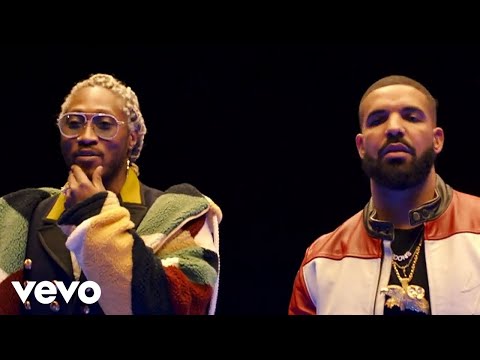
The music video for "Lonely" was released alongside the track and received considerable attention on YouTube, where the song accumulated approximately 67 million views in the years following its release. The visual treatment was consistent with the song's thematic preoccupations, presenting both artists in settings that communicated introspection and emotional weight, a visual departure from the more kinetic and comedic energy that had characterized some of DaBaby's earlier videos.
The chart trajectory of "Lonely" reflected the difficult period DaBaby was navigating professionally. His earlier 2021 singles had performed well before the controversy, and the modest showing of "Lonely" was read by some industry observers as evidence of commercial fallout from the backlash. However, the song's YouTube longevity suggested that its appeal to listeners who engaged with it directly was genuine even if radio and streaming platform promotion was affected.
The generational dynamic between DaBaby and Lil Wayne adds another layer to the song's significance. Wayne had been one of the defining figures of the late 2000s and 2010s rap era, a period during which artists like DaBaby were shaped as listeners and developing artists. The collaboration thus functions as both a commercial pairing and a symbolic handoff, or at least a handshake, between an established titan and a newer generation's representative.
DaBaby's Position in Early 2020s Hip-Hop
By the time "Lonely" was released, DaBaby had accumulated multiple platinum certifications across his catalog, with "Rockstar" alone certified multi-platinum in the United States. His style, characterized by consistent cadence, declarative punchlines, and an ability to dominate a track's energy without relying heavily on melodic performance, had influenced a wave of younger rappers. "Lonely" was notable as a moment where he stepped somewhat away from that mode toward something more emotionally exposed, a move that demonstrated range even if it did not produce his biggest commercial result.
02 Song Meaning
Isolation and Interior Life: The Thematic Architecture of "Lonely"
DaBaby and Lil Wayne's "Lonely" engages with a subject that hip-hop has historically approached with considerable caution: the experience of emotional isolation and interior vulnerability from within a position of external success. The song does not romanticize loneliness or treat it as a badge of artistic sensitivity. Instead, it presents the condition as a genuine feature of the life being described, one that coexists with wealth, fame, and social presence in ways that cannot be easily resolved.
The title itself signals an emotional register that was somewhat unusual for both artists at the time of the song's release. DaBaby's public persona had been built largely on extroversion, aggression, and an almost comedic bravado that found humor and pleasure in confrontation. Lil Wayne, for his part, had produced some of his most personal and vulnerable work on Tha Carter V (2018), but his public image retained the air of invincibility and creative dominance that had defined his peak period. A track explicitly naming loneliness as its subject thus represented a thematic departure for both, one that made the song's emotional stakes legible to listeners familiar with either artist's typical mode.
The production creates an atmosphere of emotional spaciousness that is essential to the thematic project. The beat's melancholic quality, the relative sparseness of its rhythmic elements, and the way the melodic line loops without building to a conventional climax all work to communicate a sense of stasis, the feeling of being suspended in an emotional condition rather than moving through or beyond it. This sonic stillness is the musical equivalent of the interior state being described.
DaBaby's verse explores the tension between public confidence and private fragility. The performer who has built a career on appearing unassailable uses the song's space to admit that the performance of unassailability is exactly that, a performance, and that the backstage reality is more complicated. This kind of admission carries particular weight in hip-hop, a genre whose social codes have often punished visible vulnerability in male artists, though that has been changing substantially across the 2010s and into the 2020s.
Lil Wayne's contribution amplifies the thematic content through his characteristic approach to personal disclosure. Wayne has always woven genuinely autobiographical detail into even his most technically complex and playful verses, and on "Lonely" that tendency serves the song's emotional purposes directly. His lines carry the authority of someone who has navigated extraordinary public and private pressures, including years of legal battles and health difficulties that had been documented in the press. When Wayne speaks about feeling alone, the statement lands differently than it would from a less weathered source.
The song touches on the paradox of connection in the social media era, where artists and public figures are surrounded by constant attention, interaction, and audience engagement while potentially experiencing profound disconnection from genuine intimacy. This paradox has become one of the defining emotional themes of early 21st-century popular culture, and "Lonely" locates it within a specifically hip-hop context of success narratives that have tended to emphasize accumulation over interiority.
The cultural timing of the release, arriving during DaBaby's period of public controversy following his Rolling Loud comments, added an involuntary layer of interpretation to the song's themes. A track about feeling isolated and misunderstood took on additional resonance when understood in the context of an artist experiencing very public social ostracism. Whether this context was intended by the creative team or arrived coincidentally, it made the song's emotional content more complicated and more interesting to engage with than it might otherwise have been.
The generational dimension of the collaboration contributes to the meaning in a more subtle way. Lil Wayne belongs to a generation of hip-hop artists who navigated their emotional lives largely without the resources of an openly therapeutic culture, carrying the weight of their experiences through metaphor and performance rather than direct articulation. DaBaby represents a slightly more recent generation, one that has grown up with somewhat more cultural permission to name emotional states directly. The two voices on "Lonely" thus bring different relationships to the subject they share, and that difference enriches the song's emotional texture rather than creating inconsistency.
Ultimately, "Lonely" matters as a cultural document because it demonstrates the ongoing evolution of hip-hop's emotional vocabulary. The genre that once insisted on impenetrability as a survival strategy has been developing increasingly sophisticated tools for addressing interior life, and "Lonely" is part of that development, a song that treats emotional difficulty as worthy of direct artistic attention rather than something to be coded into metaphor or suppressed entirely.
→ More from the 2020s File
View all 2020s hits →


Keep digging