The 2020s File Feature
Life Goes On
Life Goes On: BTS Makes History with a Korean-Language Number One On November 7, 2020, "Life Goes On" by BTS became the first song in Billboard Hot 100 histo…
01 The Story
Life Goes On: BTS Makes History with a Korean-Language Number One
On November 7, 2020, "Life Goes On" by BTS became the first song in Billboard Hot 100 history to debut at number one while performed predominantly in the Korean language. That milestone, achieved in the context of an American popular music chart whose number one position had been almost exclusively occupied by English-language recordings for its entire history since 1958, was one of the most significant cultural moments in the history of K-pop and in the broader history of non-English language music's relationship with the American market.
The song was released on October 2, 2020 as a track from the BTS album BE, which was conceived and recorded largely during the COVID-19 pandemic. The album was released on November 20, 2020, but "Life Goes On" was promoted as a pre-release single, generating the streaming and sales activity that drove its historic Hot 100 debut. The track was produced by Pdogg, with songwriting contributions from BTS members RM, SUGA, j-hope, and Jungkook, as well as Anton and Supreme Boi. Released through Big Hit Entertainment and Columbia Records, the single's chart success was not simply a commercial event but a structural rupture in how American radio and streaming charts had historically privileged English.
The context of the pandemic was central to both the song's creation and its reception. BE was conceived as a direct response to the circumstances that COVID-19 had imposed on the group's life and career. A world tour had been canceled. The kind of sustained live performance and global travel that had defined BTS's existence for years was simply not available. The album, and "Life Goes On" as its leading statement, emerged from the group processing that abrupt halt and trying to articulate what stability and continuity could mean in its absence.
The production of "Life Goes On" is deliberately restrained. Built around acoustic guitar, gentle percussion, and layered vocal harmonies, it represents one of the most sonically modest records BTS had ever released as a lead single. The choice to foreground acoustic instrumentation in a period when the group's chart performances had increasingly relied on electronic pop and hip-hop production elements was a statement in itself, suggesting that the conditions of the pandemic demanded a different kind of music, one that felt closer and less produced, more like something made in a room with people you trusted.
The Billboard Hot 100 debut at number one was achieved through a combination of streaming dominance and digital download sales in its first tracking week. BTS's fanbase, ARMY, had developed highly coordinated streaming strategies over the preceding years, and those strategies were deployed systematically for "Life Goes On." The result was a debut week that was not simply remarkable for a K-pop act but remarkable in absolute terms: the song outperformed every other record in the American market during the tracking period in question.
The achievement drew commentary from across the music industry and from cultural observers whose interest extended beyond the Billboard charts. The fact that a song sung almost entirely in Korean had displaced English-language competition at the top of the American market's most prominent singles chart was taken as evidence of a fundamental shift in how music consumption worked in the streaming era. Geography and language, which had historically served as practical barriers to chart competition, had been partially dissolved by streaming platforms that made any song available to any listener anywhere with equal immediacy.
BTS's previous history with the Hot 100 had been building toward this result for several years. Their first Hot 100 entries had come in 2017 and 2018, and their English-language single "Dynamite," released in August 2020, had already debuted at number one on the Hot 100 just weeks before "Life Goes On" achieved the same result. The back-to-back number one Hot 100 debuts in a single year, particularly the Korean-language one, established a sequence that had no precedent in the chart's history.
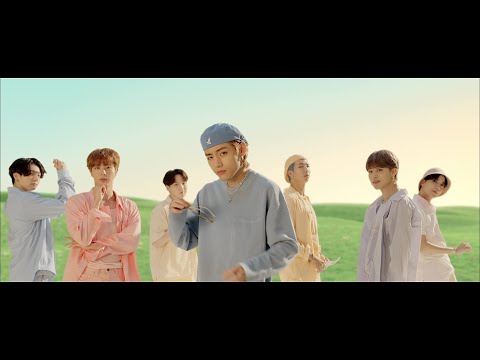
The music video was directed by Jungkook, the youngest member of BTS, marking one of his first credited directorial works. Shot in what appeared to be intimate, naturalistic settings that emphasized the low-key aesthetic of the song, it reinforced the album's central theme of making meaning within constraint. The visual direction prioritized authenticity and quietness over the high-production spectacle associated with many BTS releases, a choice consistent with the record's pandemic origins.
In the years following its release, "Life Goes On" has retained its status as one of the defining records in BTS's catalog and in the history of Korean music's engagement with the global mainstream. The Grammy nomination the song received, alongside "Butter," in the Best Pop Duo/Group Performance category at the 2022 ceremony, further institutionalized its significance. For the broader K-pop industry, the number one debut functioned as proof of concept for something that had been theoretically approaching for years: a Korean-language song at the very top of the American market, not as a novelty but as the strongest single in the country for a given week.
02 Song Meaning
The Meaning Behind "Life Goes On": Stillness, Loss, and Continuity Under Pandemic Conditions
"Life Goes On" was created inside the specific conditions of the COVID-19 pandemic, and its meaning is inseparable from that context. The song was not written as a general meditation on loss or resilience in the abstract but as a response to a particular moment when the world had stopped, when plans had dissolved, and when the rhythms of daily life that most people had taken for granted were no longer available. What the song proposes is not triumph over those conditions but something quieter and more honest: the observation that life continues even when it does not feel like it should, and that continuity itself can be a form of grace.
For BTS specifically, the pandemic carried a particular kind of weight. The group had been one of the most active touring acts in the world, and the cancellation of the Map of the Soul World Tour due to COVID-19 restrictions represented not just a financial loss but the disappearance of the primary context in which their relationship with their fanbase, ARMY, was most directly expressed. Live performance was the moment when the connection between the group and the audience became physical and mutual. The pandemic made that impossible, and "Life Goes On" was partly written about that loss.
The production's restraint, with its acoustic guitar foundation and its gentle, unhurried tempo, is itself a form of meaning-making. In a musical landscape in which BTS had increasingly operated at a scale that demanded spectacle, "Life Goes On" chose smallness deliberately. The sonic texture says something that the lyrics reinforce: that in conditions of uncertainty and loss, the appropriate register is not proclamation but presence. The song does not tell the listener that everything will be fine. It says, with considerable gentleness, that even when things are not fine, the next moment still arrives.
The use of the Korean language as the primary vehicle for the track's emotional content was meaningful in the context of the group's relationship with the American market. In the months preceding "Life Goes On," BTS had released "Dynamite," their first all-English single, a choice that had been received by some within the fanbase with ambivalence, since it seemed to prioritize accessibility over the group's native linguistic identity. "Life Goes On" returned the group to Korean as the language of their most direct emotional expression, and the fact that it achieved the same chart result as the English-language single was read by many observers as a statement about where the power actually resided.
The song's title functions as a kind of thesis. "Life goes on" is a phrase so common in everyday usage that it can sound like a dismissal, the implication being that whatever you're experiencing is not significant enough to stop the forward motion of everything else. The song reclaims the phrase and invests it with different weight: life goes on not as a cold indifference to suffering but as a quiet persistence that holds space for both grief and continuation simultaneously. The two things are not in conflict in the song's emotional framework. You can be sad and still be here. The next day still comes.
The music video's intimate visual style, emphasizing domestic spaces, quiet gatherings, and the kind of small moments that became the entire texture of life during lockdown periods, aligned the song's visual vocabulary with its lyrical and sonic content. By choosing to film in settings that looked like the spaces where people actually spent the pandemic months, rather than in the kind of elaborate constructed environments that dominated K-pop video production, the directors made a choice to ground the song's abstractions in recognizable reality.
The global reception of "Life Goes On" confirmed that the song had articulated something genuinely shared. Across different countries, languages, and cultural contexts, millions of listeners recognized in the song's emotional content their own experience of the pandemic's particular form of suspended grief, the strange combination of loss and endurance that defined 2020 for a significant portion of the world's population. That recognition was not manufactured by marketing. It arose because the song was made honestly, from inside the conditions it described, and honesty in music tends to travel farther than calculation.
→ More from the 2020s File
View all 2020s hits →



Keep digging