The 2020s File Feature
Johnny P's Caddy
Benny the Butcher and J. Cole's "Johnny P's Caddy": Independent Rap Excellence Meets the Hot 100 "Johnny P's Caddy" by Benny the Butcher and J. Cole is one o…
01 The Story
Benny the Butcher and J. Cole's "Johnny P's Caddy": Independent Rap Excellence Meets the Hot 100
"Johnny P's Caddy" by Benny the Butcher and J. Cole is one of the more remarkable entries in the Billboard Hot 100 in recent years, representing the intersection of two artists whose commercial profiles operate in fundamentally different registers, and demonstrating that the streaming economy could deliver a number-72 debut for a track that existed entirely outside the conventions of radio-friendly commercial rap production. The song appeared in February 2022 on Benny the Butcher's album Tana Talk 4, and its Hot 100 appearance was a direct function of J. Cole's massive streaming audience combining with Benny's devoted fanbase to generate enough streaming numbers for a single chart week at position 72.
Benny the Butcher, born Jeremie Pennick in Buffalo, New York, had built his reputation over a decade of consistent independent releases within the tradition of East Coast lyrically dense hip-hop that draws on the legacy of figures like Jay-Z, Nas, and the Wu-Tang Clan. His association with Griselda Records, the collective he co-founded with his cousin Westside Gunn and his brother Conway the Machine, had given him access to a devoted critical and fan base that valued technical lyrical skill, intricate drug narrative as a literary mode, and the specific aesthetic sensibility of upstate New York street culture. Griselda Records had by 2022 established itself as arguably the most critically acclaimed independent rap imprint in America, producing a string of releases that received near-unanimous critical admiration despite operating at significant commercial remove from the mainstream of streaming-era hip-hop.
J. Cole, born Jermaine Lamarr Cole in Frankfurt, Germany, and raised in Fayetteville, North Carolina, occupied an entirely different position in the commercial landscape. As one of the most commercially successful rappers of the 2010s and 2020s, Cole had demonstrated a consistent capacity to generate massive streaming numbers and album chart positions across a series of critically acclaimed releases. His label Dreamville Records had become a significant institutional presence in hip-hop, and his track record of debut-week number-one albums, including 2014 Forest Hills Drive, 4 Your Eyez Only, KOD, The Off-Season, and others, established him as one of the most bankable album artists in the genre.
The pairing of Benny the Butcher and J. Cole on "Johnny P's Caddy" was therefore a collaboration between an underground critical darling with limited commercial reach and a mainstream star with enormous streaming power, and the song's Hot 100 debut represented the power of J. Cole's audience to translate his participation in a project into chart visibility even for an artist who would not have achieved it independently. The track debuted at number 72 on February 12, 2022 and appeared on the chart for only a single week, a pattern that reflected J. Cole's capacity to generate strong first-week streaming numbers without the sustained radio support that would have been required for an extended chart run.
The production of "Johnny P's Caddy" was handled by Beat Butcha, whose work perfectly captures the aesthetic sensibility that characterizes Griselda Records' output. The beat is built on soulful sample-based production, incorporating the kind of dusty, warm sonic textures that evoke classic East Coast hip-hop of the 1990s while remaining firmly contemporary in its execution. The title itself references Johnny P, a singer and longtime collaborator in the Griselda orbit, and a Cadillac, an automobile with deep symbolic resonance in African American cultural expression as a signifier of achieved success and smooth navigation of the world.
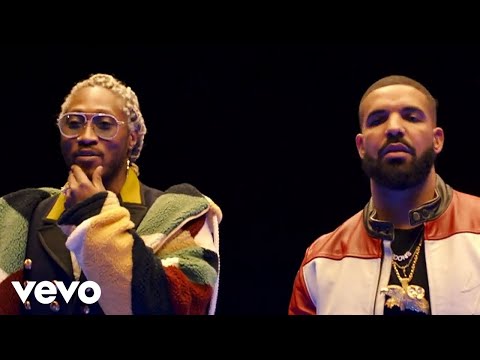
The YouTube video for "Johnny P's Caddy" accumulated approximately 40 million views, a figure that substantially exceeds what Benny the Butcher's catalog typically generates without a major guest appearance, demonstrating the multiplicative effect of J. Cole's audience engagement on content he participates in. The visual presentation was consistent with the stripped-down, authenticity-focused aesthetic that characterizes Griselda Records' visual output, prioritizing performance footage and environmental context over elaborate production design.
Critical reception of "Johnny P's Caddy" was uniformly strong. Publications covering hip-hop with a critical-appreciation emphasis, including Pitchfork, the same outlets that had championed Griselda Records' catalog across the preceding years, received the track as a successful demonstration of what happens when two artists who share a commitment to technical lyricism and authentic street narrative collaborate without commercial compromise. The verses from both artists were analyzed closely, with particular attention to the specific literary techniques, the internal rhyme schemes, the narrative compression, and the precise word choices that have always been the primary currency of this tradition.
The Griselda Aesthetic and Mainstream Crossover
Benny the Butcher's Hot 100 appearance with "Johnny P's Caddy" raised interesting questions about the streaming era's effect on the traditional distinction between mainstream and underground hip-hop. For most of the genre's history, the kind of lyrically dense, aesthetically uncompromising rap that Griselda Records represents has occupied a separate commercial ecosystem from the mainstream chart world. The streaming economy, by aggregating audience data across all listening contexts into a single chart metric, has created occasional moments where this separation breaks down, allowing artists with devoted niche audiences to generate chart moments that would have been structurally impossible in the radio airplay era. "Johnny P's Caddy" is one of the cleaner examples of this phenomenon, a track that made the Hot 100 entirely on the strength of authentic audience engagement without any of the traditional commercial infrastructure that chart success usually required.
02 Song Meaning
Craft, Legacy, and the Literature of the Street in "Johnny P's Caddy"
"Johnny P's Caddy" operates within the tradition of hip-hop as a literary practice, a form of storytelling and self-documentation that treats verbal skill as the primary measure of artistic value. The song brings together two artists, Benny the Butcher and J. Cole, who both operate with an explicit awareness of hip-hop's canonical tradition and a conscious commitment to honoring the technical standards established by its greatest practitioners. The result is a track that functions as a demonstration of craft as much as a piece of entertainment, inviting listeners who share that orientation to engage with the verbal content analytically as well as emotionally.
Benny the Butcher's lyrical approach is rooted in a specific literary tradition within hip-hop that uses the drug trade as both subject matter and as a source of metaphorical language. This tradition, which can be traced through the work of Jay-Z, Biggie Smalls, Nas, and numerous figures in between, treats the experience of street commerce and its attendant risks as a rich source of narrative material capable of bearing genuine literary weight. Benny's particular contribution to this tradition is a quality of specificity and biographical grounding that gives his narratives a documentary authority, the sense that the details are precise because they are drawn from actual experience rather than genre convention.
J. Cole's contribution brings a somewhat different quality to the collaborative context. His lyrical approach has consistently been oriented toward introspection, personal accountability, and a kind of confessional self-examination that sits alongside rather than within the street-narrative tradition. His verses on "Johnny P's Caddy" engage with the tradition being established by Benny while also reflecting his own characteristic concern with what success means and costs, the complex relationship between achievement and the values one held before achieving it. This combination of two distinct lyrical modes within a single track creates a thematic richness that neither artist would have achieved alone.
The title's invocation of a Cadillac is loaded with symbolic significance in African American cultural expression. Cadillacs have appeared throughout the history of Black American music, from blues and soul through hip-hop, as symbols of achieved mobility, elegant self-presentation, and the capacity to navigate the world on one's own terms. The specific association of the car with Johnny P, a real figure in the Griselda creative orbit, grounds the symbol in a particular social world rather than generic aspiration, giving the image a documentary specificity that distinguishes it from conventional luxury-signifier usage.
The production by Beat Butcha, with its soulful, sample-based warmth, creates a sonic environment that situates the track firmly within the East Coast hip-hop tradition while remaining contemporary in its execution. This production aesthetic is itself a statement of values, a declaration that the artists involved are operating within a specific lineage and hold themselves to the standards that lineage has established. The deliberate evocation of 1990s East Coast production sensibility is not nostalgia for its own sake but a claim about which creative standards are worth maintaining and which innovations represent genuine improvements rather than mere novelty.
The song's commercial performance, appearing for a single week at number 72 on the Hot 100, is itself a meaningful data point about the relationship between artistic integrity and commercial viability in the streaming era. The fact that a track with no radio-friendly production, no pop crossover elements, and no commercial compromise achieved any Hot 100 position at all reflects both J. Cole's extraordinary streaming reach and the streaming economy's capacity to aggregate niche audience engagement into commercially legible numbers. This single-week appearance represents something genuinely new in the history of commercially uncompromising hip-hop.
The cultural significance of the Griselda Records project, within which "Johnny P's Caddy" exists as an extension of Benny the Butcher's catalog, cannot be separated from the song's meaning. Griselda's emergence as a critical phenomenon in the late 2010s and early 2020s represented a significant pushback against the dominant melodic, emotionally confessional aesthetic of trap-adjacent mainstream hip-hop. The label's commitment to technical lyricism, dense internal rhyme schemes, and the specific narrative traditions of street literature asserted that these values remained vital and capable of generating genuine audience engagement rather than existing as mere historical artifacts. "Johnny P's Caddy" is an extension of this assertion, carrying the Griselda aesthetic into the mainstream chart world via J. Cole's commercial reach while maintaining complete aesthetic integrity.
For listeners who engage with hip-hop primarily as a literary form, the track rewards close attention in ways that more production-forward or melody-dependent tracks do not. The verse structures, the rhyme patterns, the specific word choices, and the compression of narrative detail into short lyrical passages all repay analytical listening. This quality, the capacity to sustain repeated listening that goes deeper with each pass, is characteristic of the canonical hip-hop tradition that both Benny the Butcher and J. Cole are consciously working within, and it distinguishes "Johnny P's Caddy" from the majority of its Hot 100 contemporaries.
→ More from the 2020s File
View all 2020s hits →



Keep digging