The 2020s File Feature
To Be Loved
To Be Loved — Adele (2021) When Adele released her fourth studio album 30 in November 2021, "To Be Loved" occupied the closing position on the standard track…
01 The Story
To Be Loved — Adele (2021)
When Adele released her fourth studio album 30 in November 2021, "To Be Loved" occupied the closing position on the standard track listing, a placement that carried enormous deliberate weight. As the album's emotional culmination, the song represented the fullest and most unguarded expression of the themes that 30 explored across its entire runtime: the pain of divorce, the search for personal identity after the dissolution of a long relationship, and the complicated emotional labor of learning to take responsibility for one's own unhappiness rather than projecting it entirely onto circumstance or other people.
The song was co-written by Adele Adkins, Greg Kurstin, and Tobias Jesso Jr., a creative team that had been assembled during the lengthy and emotionally difficult process of recording 30. Kurstin, whose production credits span an enormous range of pop and adult contemporary work across the 2010s, served as one of the album's primary producers, and his contribution to "To Be Loved" was to construct an arrangement that began in pianistic restraint and expanded into something orchestrally overwhelming as the emotional intensity of the lyric demanded. The building dynamic structure of the song, from quiet piano ballad to full orchestral crescendo, was recognized immediately as one of the most technically accomplished moments of Adele's recorded career.
Tobias Jesso Jr., a Canadian singer-songwriter who had collaborated with Adele on 25 as well, brought a melodic sensitivity and a gift for emotionally direct lyric writing that complemented Adele's own instincts. His presence as a co-writer on "To Be Loved" connected the song to the same tradition of piano-based confessional songwriting that had defined Adele's earlier peak moments, while the lyrical content itself pushed further into self-examination than she had previously been willing to go in a recorded format.
Adele described "To Be Loved" publicly as the most difficult song she had ever recorded, an acknowledgment that received significant media coverage in the weeks surrounding the album's release. She stated in interviews that the vulnerability required to perform the song brought her to tears repeatedly during recording sessions, and that the final recorded version was chosen partly for its rawness rather than despite it. This behind-the-scenes narrative, circulated through her television special Adele One Night Only and accompanying press interviews, shaped how listeners received the song from the moment it became available.
30 was released on November 19, 2021, and its commercial performance was extraordinary by any contemporary standard. The album debuted at number one on the Billboard 200 with 839,000 equivalent album units in its first week, the largest debut week for any album in six years at the time of release. It became the biggest album of 2021 in the United States by equivalent album units and topped charts in numerous countries simultaneously. "To Be Loved," as the album closer, benefited from this extraordinary commercial context, attracting listener attention it might not have received had it appeared on a more modestly performing album.
While "To Be Loved" was not the primary commercial single from 30, that role belonging to "Easy On Me," which reached number one on the Billboard Hot 100 and broke streaming records on its release weekend, the album track nonetheless charted in multiple countries due to album-consumption streaming behavior and attentive listener engagement. Critics singled it out consistently as one of the album's peaks, with many reviews citing it as the most emotionally direct song Adele had ever committed to record.
The critical reception to "To Be Loved" was nearly uniformly rapturous. Reviewers across major publications praised the song's emotional authenticity, the structural sophistication of its arrangement, and the extraordinary vocal performance Adele delivered, which many described as the finest of her recording career. The song drew comparisons to the classic confessional ballad tradition: Carole King, Carly Simon, and early Elton John were mentioned in numerous assessments as the territory the song was reaching toward.
In terms of awards recognition, 30 and its constituent tracks generated significant Grammy consideration. "To Be Loved," as a critical favorite within an album that was broadly celebrated, contributed to Adele's awards-season profile during the 2021-2022 cycle. The song's placement as the concluding statement of the album also ensured that it lingered in the cultural conversation long after the immediate release period subsided, as listeners and critics returned to it as the key to understanding the album's thematic architecture.
02 Song Meaning
Meaning and Themes: To Be Loved
"To Be Loved" stands as one of the most unflinching acts of self-examination in Adele's catalog, distinguished from her earlier breakup songs by the explicit turn it takes toward self-accountability. Where "Someone Like You" mourned the loss of another person and "Hello" explored regret at the dissolution of connection, "To Be Loved" arrives at a more painful and more mature destination: the recognition that the person most responsible for the narrator's pain is the narrator herself. This shift from external grief to internal reckoning gives the song a philosophical weight that separates it from the confessional pop tradition it superficially resembles.
The central thematic tension involves the narrator grappling with the difference between loving someone and truly knowing how to be loved, or how to allow oneself to be loved, in return. The song explores the idea that years of seeking validation from external relationships had served as a substitute for self-understanding, and that the divorce that precipitated 30's creation was not simply a romantic failure but a consequence of a more fundamental incompleteness in the narrator's sense of self. This is sophisticated emotional territory for a pop song, and the lyric's willingness to name this without self-pity or deflection is the quality that critics most consistently singled out as remarkable.
The musical architecture of the song mirrors its emotional arc with exceptional deliberateness. The opening piano introduction is spare to the point of vulnerability, establishing an atmosphere of exposed honesty before the first word is sung. As the song progresses and the narrator arrives at the most difficult admissions, the arrangement builds accordingly, adding orchestral elements that arrive not as adornment but as emotional amplification. By the song's climactic sections, the production has expanded into something close to operatic, with Adele's voice pushed to its upper limits against a full orchestral backdrop.
Adele's vocal performance is the element that reviewers most uniformly praised. The rawness that she described in interviews, the sense of emotional difficulty in the recording sessions, is audible in the final version. There are moments where the voice carries a quality of genuine strain, not technical imperfection but the audible physical manifestation of extreme emotional effort. This quality of evident cost is what separates the song from a technically polished but emotionally detached ballad, and it is the primary reason that listeners have described the experience of hearing it as something closer to bearing witness than entertainment.
The song's relationship to the concept of romantic love is ultimately secondary to its investigation of self-love and its absence. The narrator is not singing about a specific person or mourning a specific relationship in the direct way that Adele's earlier work often did. The romantic context is present but functions as the occasion for a broader inquiry into why the narrator has consistently chosen relationships and patterns that were incompatible with her actual happiness. This psychological depth gives the song a universality that extends well beyond listeners who have experienced divorce, touching anyone who has examined the gap between the love they sought and the love they allowed themselves to receive.
Within the architecture of 30 as an album, "To Be Loved" functions as both resolution and opening. It closes the narrative of pain and self-examination that the album traces across its runtime, but it does so not by arriving at comfort or new romance but by accepting uncertainty and committing to the process of genuine self-knowledge. The ending is not happy in any conventional sense; it is honest, which in the context of the album's emotional journey feels more valuable than happiness.
For Adele's artistic legacy, "To Be Loved" represents a creative maturation that her earlier work, even at its finest, had not fully achieved. The song demonstrates a willingness to be wrong about herself, to name her own failures with the same directness she previously applied to lost love, and to offer that self-examination to an audience of millions without protective irony or qualification. That willingness is the defining quality of the song's meaning, and it is what makes it one of the most significant works of her career.
→ More from Adele
View all Adele hits →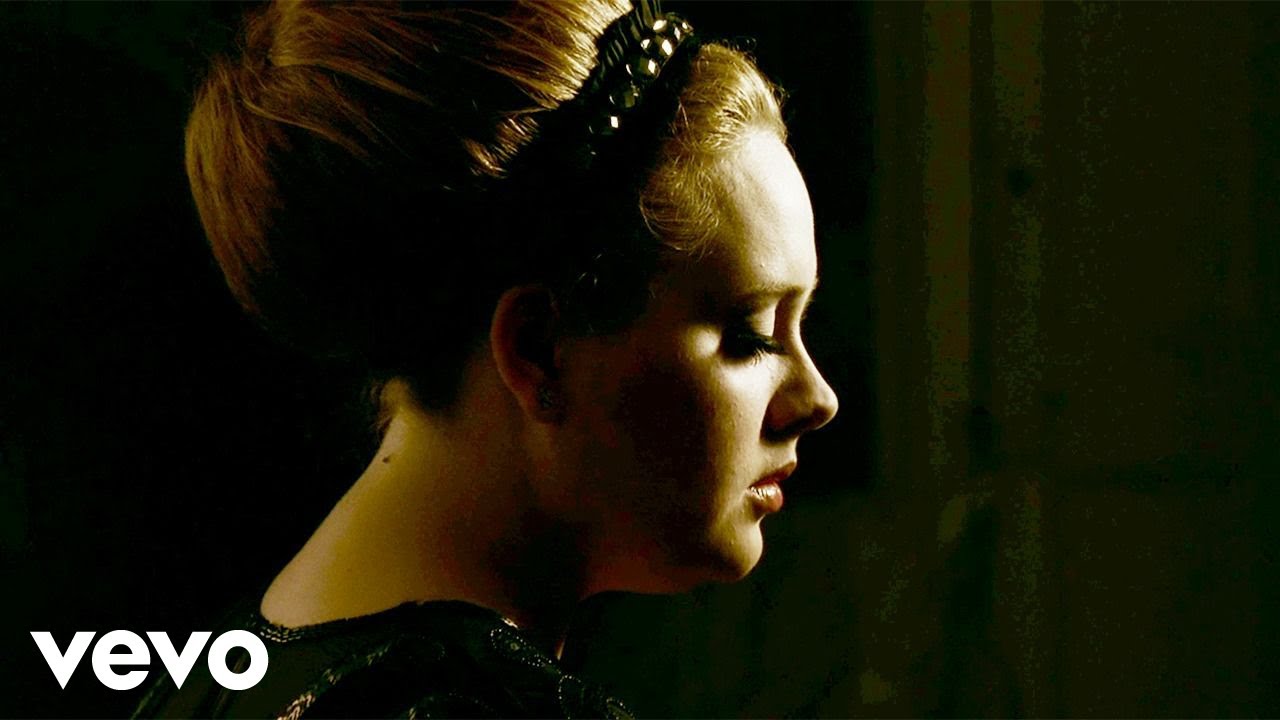




→ More from the 2020s File
View all 2020s hits →




Keep digging