The 2020s File Feature
Maybach
Maybach: 42 Dugg, Future, and the Luxury Car as Hip-Hop Symbol "Maybach" is a collaboration between Detroit rapper 42 Dugg and Atlanta's Future, released as …
01 The Story
Maybach: 42 Dugg, Future, and the Luxury Car as Hip-Hop Symbol
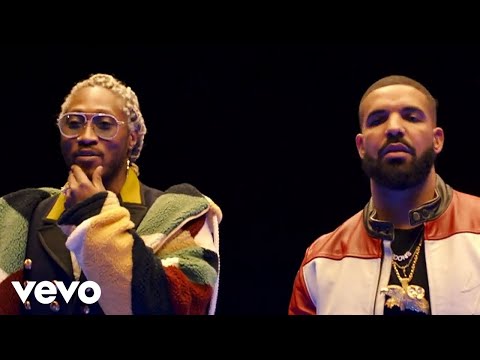
"Maybach" is a collaboration between Detroit rapper 42 Dugg and Atlanta's Future, released as part of Dugg's breakout period in the early 2020s. The track became one of the defining moments in 42 Dugg's rise from regional Detroit talent to nationally recognized hip-hop figure, benefiting from his distinctive vocal style and the commercial gravity of Future's featured appearance. The song debuted on the Billboard Hot 100 on June 5, 2021, entering at position 68, its peak position, and remained on the chart for 9 weeks, with chart positions reflecting a complex pattern of activity that included re-entries in the autumn of 2021.
42 Dugg, born Dion Marquise Hayes on November 25, 1994, in Detroit, Michigan, had developed his musical career under the mentorship of Lil Baby, whose Quality Control connections had helped introduce Dugg to a broader audience through a series of collaborations starting in 2019. The success of the joint project Free Crack 3 with Lil Baby in 2020 had significantly elevated Dugg's profile, and "Maybach" arrived during a period when he was building a body of solo work that could sustain independent commercial momentum.
The Role of Future and the Atlanta Connection
Future, born Nayvadius DeMun Wilburn on November 20, 1983, in Atlanta, was by 2021 one of the most prolific and commercially successful artists in hip-hop, with a discography that included multiple number-one albums and a series of chart-topping collaborative projects. His distinctive autotune-heavy vocal style, which he had developed into a highly personal and widely imitated instrument, was instantly recognizable and carried significant commercial value as a featured presence on any track.
The pairing of Dugg's Detroit grit with Future's Atlanta melodic melancholy created an interesting tonal contrast. Detroit rap has historically emphasized a rougher, more percussive vocal approach, while Atlanta's melodic trap tradition, of which Future is a primary architect, prioritizes a more liquid, emotionally ambient quality. "Maybach" navigated this contrast by giving each artist sufficient space to operate within their own register while the production created a shared sonic environment that accommodated both.
Production and the Maybach as Symbol
The Maybach automobile, manufactured by the Daimler luxury brand as one of the most expensive production vehicles available, has a long history as a status symbol within hip-hop culture. The car's associations with extreme wealth, exclusivity, and a particular kind of understated luxury made it a natural referent for artists whose work centers on aspirational materialism. Jay-Z had famously referenced the Maybach extensively in his mid-2000s work, and the brand's relaunch in the early 2010s as a Mercedes-Benz sub-brand maintained its cultural currency within hip-hop.
The production for "Maybach" was built to match the car's aesthetic, emphasizing smooth, luxury-coded sonic textures alongside the bass-heavy rhythmic elements of trap. The beat creates a sense of effortless forward motion, a sonic analog to the automobile imagery in the lyrics. This kind of thematic coherence between lyrical content and production environment is a marker of careful track construction.
42 Dugg's Vocal Distinctiveness
One of the elements that made "Maybach" commercially effective was 42 Dugg's highly distinctive vocal style, which features an unusual pitch and a delivery that falls somewhere between singing and rapping with a quality that listeners found immediately recognizable. This distinctiveness is a commercial asset in a crowded market where differentiation at the level of voice can be as valuable as lyrical content or production quality. Dugg's voice is not easily confused with anyone else's in contemporary hip-hop, and "Maybach" showcased this quality prominently.
His lyrical approach combines street imagery with the kind of luxury materialism that has defined contemporary trap music, but the specificity of his Detroit references and the particular cadences of his delivery localize the content in ways that distinguish him from Atlanta-rooted artists operating in similar thematic territory. The Detroit rap tradition, with its emphasis on a particular kind of hard-edged authenticity, was present in Dugg's work even as he adopted stylistic elements common to the Quality Control sound.
Chart History and Streaming Patterns
The song's chart history reveals an interesting pattern: a debut at number 68 in June 2021, followed by a drop to number 80 the following week, then a gap before re-entries at 85, 85, and 77 in October and November 2021. This re-entry pattern is characteristic of tracks that receive renewed streaming attention months after release, often triggered by playlist additions, social media moments, or the release of related artist projects that send listeners back into their catalogs.
The 9-week total chart run and the approximately 199 million YouTube views accumulated by the track demonstrate its genuine reach and durability. For an artist in 42 Dugg's position in 2021, a Hot 100 debut at 68 with Future represented a significant commercial marker and helped establish him as a solo commercial force independent of his collaborations with Lil Baby. The track's success contributed to the trajectory that would see Dugg continue to build his national profile through subsequent releases.
02 Song Meaning
Maybach: Luxury, Status, and the Aspirational Grammar of Trap
"Maybach" operates within one of hip-hop's most enduring thematic traditions, the deployment of ultra-luxury goods as markers of social transformation and proof of self-determination. The Maybach automobile, which occupies the apex of the German luxury car hierarchy and carries a price point that places it beyond the reach of virtually all consumers, functions in the song not as mere conspicuous consumption but as a claim about distance traveled from origin conditions. The speaker who rides in a Maybach is presenting evidence of a distance from poverty so complete that the most expensive available object has become ordinary.
This logic of conspicuous arrival is native to a hip-hop tradition that stretches back decades, but 42 Dugg and Future bring specific biographical and geographic contexts that give it particular weight. Both artists come from environments where economic insecurity was not abstract but immediate, and the transition to wealth they describe is not hypothetical but documented. The Maybach as symbolic object carries additional meaning when the speaker's origin point is established, because the distance represented by the symbol becomes legible.
Future's Melodic Melancholy and the Luxury Paradox
Future's contribution to the track introduces a dimension that complicates straightforward celebration. His signature delivery, heavy with autotune and characterized by an emotional quality that blends triumph with a kind of haunted weariness, suggests that the arrival at luxury does not necessarily resolve the emotional conditions that preceded it. Future's artistic persona has always navigated a paradox in which material success is genuinely achieved but does not produce the expected emotional relief, a quality that gives his work a depth that pure celebration would lack.
On "Maybach," this quality inflects the track's luxury imagery with an undercurrent of complexity. The Maybach is real; the success is documented; and yet the delivery suggests that something about the journey leaves marks that the arrival does not erase. This emotional ambiguity is one of the things that distinguishes Future's most resonant work from simpler versions of aspirational rap and it enriches "Maybach" beyond what its surface content might suggest.
Detroit Identity and Regional Pride
42 Dugg's contribution carries the specific weight of Detroit's rap tradition, a scene that has historically emphasized a particular kind of unflinching honesty about street conditions and a regional pride that resists assimilation into other cities' dominant aesthetics. Detroit rap from the era of Big Sean and Danny Brown through the more recent work of artists like Sada Baby and 42 Dugg himself maintains a regional distinctiveness that functions as a form of cultural assertion.
When a Detroit artist appears on a track that uses the Maybach as its central image, the regional context adds a layer of meaning. Detroit is a city with a well-documented history of economic decline, industrial collapse, and urban disinvestment, conditions that make the assertion of extreme luxury a more pointed cultural statement than it would be from a more economically stable origin point. The Maybach represents not just personal success but a form of civic defiance, a refusal to accept the material limits imposed by geographic and economic circumstance.
Collective Mobility and Social Narrative
Both artists' lyrics extend the luxury imagery beyond individual achievement to encompass a broader social circle. The Maybach is not occupied alone; it is a vehicle for a community. This is a consistent feature of how successful trap artists narrate their financial rise, framing it not as individual extraction from a social context but as collective uplift. The speaker's wealth enables loyalty to his origin community, and the luxury goods are shared experiences rather than purely private pleasures.
This framing serves both rhetorical and social functions. Rhetorically, it connects the speaker's success to a collectivity that the listener may identify with, making the aspirational content more democratically appealing. Socially, it reflects genuine practices of economic support within close social networks that characterize how many artists from economically precarious backgrounds actually manage their new wealth. The Maybach carrying multiple passengers is thus a realistic image as well as a symbolic one.
The Song's Longevity and Cultural Durability
The track's accumulation of nearly 200 million YouTube views and its 9-week Hot 100 presence suggest that "Maybach" spoke to a large and geographically distributed audience. The luxury car imagery and the aspirational narrative it supports are not culturally specific to Detroit or Atlanta; they translate across regional and even national boundaries because the underlying desire they express is widely shared. The song's meaning, at its most fundamental level, is about the human aspiration to inhabit a life better than the one inherited, and that aspiration crosses demographic lines in ways that make the track's broad commercial reach comprehensible.
→ More from the 2020s File
View all 2020s hits →



Keep digging