The 2010s File Feature
The Time (Dirty Bit)
Recording and Release History of "The Time (Dirty Bit)" by The Black Eyed Peas "The Time (Dirty Bit)" by The Black Eyed Peas is a distinctive entry in the gr…
01 The Story
Recording and Release History of "The Time (Dirty Bit)" by The Black Eyed Peas
"The Time (Dirty Bit)" by The Black Eyed Peas is a distinctive entry in the group's catalog, built around an interpolation of the 1987 film classic Dirty Dancing's signature song "(I've Had) The Time of My Life" by Bill Medley and Jennifer Warnes. The track was released as the lead single from the group's sixth studio album The Beginning in November 2010, and it demonstrated the group's ongoing willingness to blend nostalgic pop-cultural references with contemporary electronic production.
The production of "The Time (Dirty Bit)" was handled primarily by will.i.am, the group's lead producer and one of the members alongside Taboo and apl.de.ap, along with Fergie, whose prominence had grown considerably during the The E.N.D. era. The production approach was consistent with the style that had driven the extraordinary success of The E.N.D. (2009), emphasizing synthesizer-heavy electronic dance textures, compressed 4/4 kick drum patterns, and a club-ready energy that was specifically designed for DJs and radio programmers catering to dance music audiences.
The interpolation of "(I've Had) The Time of My Life" was a deliberate and central creative choice. The original song, written by Franke Previte, John DeNicola, and Donald Markowitz, had won the Academy Award for Best Original Song in 1988 and remained one of the most recognized film songs in popular music history. By opening "The Time (Dirty Bit)" with a stylized, Auto-Tuned rendering of the original's melody and lyric, The Black Eyed Peas immediately activated enormous reservoir of nostalgic recognition in listeners across multiple generations.
The title's parenthetical "(Dirty Bit)" referred to the phrase that recurred as the group's ad-lib throughout the track, a nonsense exclamation that became a sonic signature of the record and fit naturally into the call-and-response patterns of electronic dance music. The phrase was playful and deliberately memorable, designed to function as the kind of hook that sticks in the mind long after the song has ended.
On the Billboard Hot 100, "The Time (Dirty Bit)" debuted at number 12 on November 27, 2010, one of the strongest debut positions of The Black Eyed Peas' career up to that point. The song climbed to its peak position of number 4 on December 18, 2010, where it held for one week before beginning a gradual descent. The song spent 20 weeks on the Hot 100, demonstrating sustained commercial strength through the holiday season and into early 2011.
The timing of the release, arriving just before the holiday season, was strategically significant. Electronic dance music was in the midst of its American mainstream breakthrough in late 2010, and "The Time (Dirty Bit)" positioned The Black Eyed Peas squarely within that movement. The track's success reinforced the group's status as reliable commercial hitmakers who could identify and execute on emerging trends.
Internationally, "The Time (Dirty Bit)" was even more successful than in the United States. The song reached number one in the United Kingdom, Germany, Ireland, Australia, and numerous other markets, reflecting the broader global embrace of EDM-influenced pop during this period. Its UK number-one performance was particularly impressive given the competition from other major acts during the holiday season.
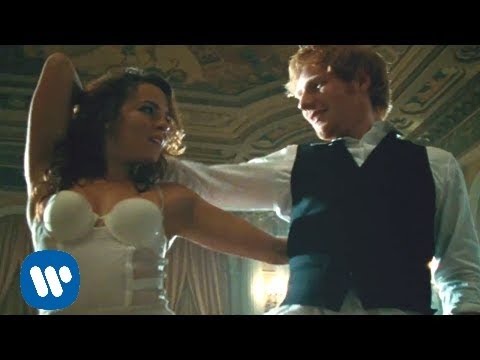
The music video featured the group performing in elaborate production sets with club and party imagery, consistent with the song's celebratory themes. The visual presentation was sleek and high-energy, matching the production's maximalist aesthetic and ensuring heavy rotation on music video platforms still active in 2010.
Radio airplay was extensive across pop and dance formats. Hot adult contemporary and pop radio embraced the track's nostalgic hook combined with contemporary production, while dance and club DJs used it as a reliable floor-filler during one of electronic dance music's most commercially vibrant periods in the United States. The combination of accessibility and club energy made it versatile programming across multiple formats.
The Beginning album itself debuted respectably on the Billboard 200, though it did not replicate the extraordinary performance of its predecessor The E.N.D. "The Time (Dirty Bit)" remained the album's commercial standout, and its global success ensured that The Black Eyed Peas maintained their position among the top-selling pop acts of 2010-2011. The track's streaming figures have grown substantially in subsequent years as listeners continued to encounter it through nostalgia playlists and cultural references to both the original Dirty Dancing source material and the early 2010s EDM pop era.
02 Song Meaning
Meaning and Themes in "The Time (Dirty Bit)" by The Black Eyed Peas
"The Time (Dirty Bit)" by The Black Eyed Peas is fundamentally a celebration of the present moment, specifically the experience of being in a club or party environment and feeling fully alive within it. The song's central theme is the joy of collective celebration, the feeling that a particular night, a particular gathering, represents something worth memorializing. By invoking the phrase "the time of my life," the track positions its subject as peak experience rather than ordinary entertainment.
The interpolation of "(I've Had) The Time of My Life" from the 1987 film Dirty Dancing is the song's most significant thematic device. The original song carries enormous cultural weight as a monument to a transformative personal experience, the story of a young woman's summer of self-discovery culminating in a public act of defiant joy. By sampling that melody and lyric, The Black Eyed Peas imported decades of accumulated emotional meaning into their production, creating an immediate resonance for listeners who carried memories of the original film and song.
This use of nostalgic material within a contemporary frame is a recurring strategy in popular music, and "The Time (Dirty Bit)" executes it with particular effectiveness. The contrast between the original song's relatively straightforward, earnest delivery and the Auto-Tuned, electronically processed rendering in the Black Eyed Peas version creates a productive tension. The original's sincerity is not mocked; it is filtered through a contemporary sonic lens that updates it for a new context while preserving its emotional charge.
The song's lyrics, beyond the interpolation, focus on the immediate pleasure of dancing, socializing, and losing oneself in music. There is no narrative complexity; the song does not tell a story so much as describe an ongoing state of pleasurable immersion. This simplicity is deliberate and appropriate, as it matches the function the song is designed to serve in a club or party environment where lyrical complexity would be a distraction rather than an asset.
Cultural reception of the song engaged with both its contemporary pop-EDM context and its nostalgic dimension. Audiences who had grown up with Dirty Dancing in the 1980s and 1990s found the sampling clever and affectionate. Younger listeners encountering the original melody for the first time through the Black Eyed Peas track were often motivated to seek out the source material, creating an unusual intergenerational bridge through pop music.
The phrase "dirty bit," which serves as the track's repeated ad-lib, is largely meaningless as a semantic unit but highly effective as a sonic hook. Its function is rhythmic and textural rather than narrative. This represents a well-established tradition in dance music of privileging memorable sound over specific meaning, a recognition that in the context of dancing, the body responds to rhythm and cadence before it processes words.
The song's themes of collective joy and the celebration of peak experience connect it to a broad tradition of party anthems that use music's temporal and emotional power to create the experience of shared transcendence. The Black Eyed Peas had built a substantial portion of their commercial success on exactly this kind of material, from "I Gotta Feeling" onward, and "The Time (Dirty Bit)" extended that tradition with characteristic polish and a skillful deployment of pop-cultural memory.
→ More from the 2010s File
View all 2010s hits →



Keep digging