The 2010s File Feature
Treasure
Treasure: Creation, Recording, and Chart History Bruno Mars released "Treasure" in May 2013 as the third single from his second studio album Unorthodox Jukeb…
01 The Story
Treasure: Creation, Recording, and Chart History
Bruno Mars released "Treasure" in May 2013 as the third single from his second studio album Unorthodox Jukebox, which had been issued by Atlantic Records in December 2012. The song was conceived as an explicit homage to the funk and soul music of the late 1970s and early 1980s, drawing particularly on the glossy dance-floor productions associated with Earth, Wind and Fire, Shalamar, and similar acts. For Mars, who had built his reputation on eclectic genre versatility, "Treasure" represented a focused exercise in period authenticity rather than a general pop synthesis.
The recording was produced by The Smeezingtons, the production team composed of Mars, Philip Lawrence, and Ari Levine, who had handled the majority of the Unorthodox Jukebox sessions. The arrangement was constructed with live instrumentation at its foundation, featuring bass guitar, brass, and live drums that mimicked the sonic signature of classic Motown and post-disco recordings. Mars and his collaborators were deliberate about avoiding the programmed, synthetic textures that dominated contemporary pop production at the time, choosing instead to achieve a warm, analog-adjacent sound through careful studio work.
Additional production on the track was contributed by Jeff Bhasker, who had been involved in several key sessions during the Unorthodox Jukebox recording period. Bhasker's background bridging hip-hop and electronic production with live instrumentation made him a useful collaborator for a track that needed to feel genuinely vintage while still sitting comfortably within the commercial pop landscape of 2013. The horn arrangements in particular were recorded with live musicians and gave the song much of its period-accurate energy.
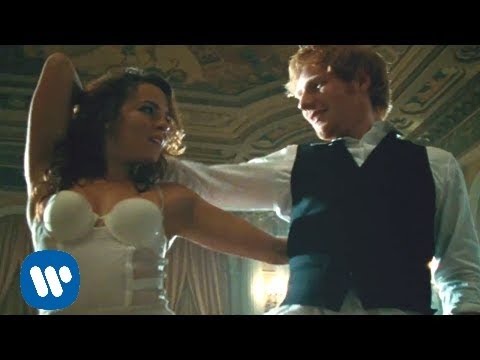
The music video, directed by Cameron Duddy, was shot in a style that referenced 1970s television dance programs and variety show aesthetics, complete with vintage fonts, soft-focus photography, and choreography drawn from the era. The visual complement reinforced the song's retro identity and became widely circulated on television and online platforms, contributing significantly to the single's visibility. The video's warm nostalgic tone matched the audio's emotional register and helped cement the song's identity as a deliberate act of musical archaeology.
On the Billboard Hot 100, "Treasure" debuted at number 71 on June 1, 2013, and began a consistent climb that would take it to its peak position of number 5 during the chart week of August 3, 2013. The song spent 23 weeks on the Hot 100, demonstrating sustained commercial traction across the summer months. It charted concurrently on multiple Billboard formats, including the Pop Songs, Adult Pop Songs, and Adult Contemporary charts, reflecting the breadth of its audience appeal.
Internationally, "Treasure" performed strongly in markets including the United Kingdom, Australia, and Canada, where it reached the top ten on national charts. The song's genre nostalgism translated well across different cultural markets, suggesting that the 1970s funk and soul vocabulary it invoked carried sufficient cross-generational recognition to support international commercial success. In the United Kingdom, the single peaked within the top five, making it one of Mars's most successful international releases from the Unorthodox Jukebox cycle.
Critical reception to "Treasure" was largely enthusiastic. Reviewers praised the track's production fidelity and Mars's vocal performance, noting the way the song captured the kinetic energy of vintage funk without feeling like mere imitation. Several publications included it among the stronger singles of 2013, and it contributed to the broader critical reassessment of Unorthodox Jukebox as an album that demonstrated Mars's range as a performer and his ability to work within genre conventions without being limited by them.
The song's accumulation of more than 771 million YouTube views in subsequent years confirmed its status as one of the defining pop moments of the early 2010s, a period when the nostalgic turn in mainstream pop was just beginning to gain critical and commercial traction.
02 Song Meaning
Treasure: Themes, Meaning, and Cultural Reception
"Treasure" is built around the romantic conceit of describing a beloved person as something precious and rare. The narrator addresses his romantic interest directly, using the language of discovery and value to express admiration. The metaphor of treasure is not developed in an elaborate or complex way; instead, it functions as a recurring compliment that structures the song's emotional argument, which is simply that the person being addressed is worthy of pursuit and devotion.
The song belongs firmly to the tradition of feel-good funk and soul ballads in which the primary purpose is celebration rather than introspection. Unlike much contemporary pop songwriting, "Treasure" does not dwell on doubt, heartbreak, or complexity. Its emotional register is unambiguously positive, conveying that the narrator has found something genuinely wonderful and wants to share that recognition with the object of his affection. This directness was unusual enough in the context of 2013's pop landscape to feel refreshing rather than simple.
Thematically, the song draws on a long tradition of romantic flattery in Black American popular music, in which elaborate compliments delivered over infectious grooves serve as both sincere expressions of feeling and invitations to dance. The dual function, emotional and physical, is a defining feature of the genre, and "Treasure" honors it faithfully. The instrumental arrangement and the lyrical content work together to create a unified experience in which the romance and the music are inseparable.
Culturally, the song was received as a self-conscious but genuinely skilled piece of genre revival. Critics noted that Mars had done more than borrow surface-level aesthetic cues from the 1970s; he had internalized the structural logic of the music well enough to write something that could plausibly have been a hit in its reference period. That accomplishment was seen as a meaningful artistic statement at a time when nostalgia in pop often manifested as shallow sampling rather than compositional fluency.
The broader cultural impact of "Treasure" extended beyond its immediate chart run. It contributed to a sustained conversation about retro-soul and funk revival in mainstream pop, a conversation that would accelerate over the following years with the success of other similarly positioned acts. Mars's success with "Treasure" helped demonstrate that audiences were willing to engage with period-accurate production at the highest commercial levels, a fact that had implications for how record labels and producers approached genre-referential pop in subsequent years.
For younger listeners who encountered "Treasure" through streaming or YouTube, the song often functioned as an introduction to the larger tradition of funk and soul it represented. The music video's nostalgic visual language reinforced this educational dimension, offering aesthetic cues that invited curiosity about the historical precedents behind the sound. In this respect, the song occupied a useful cultural position as both a commercial pop artifact and an accessible entry point into a richer musical history.
→ More from the 2010s File
View all 2010s hits →



Keep digging