The 2000s File Feature
Gotta Go
Gotta Go — Trey Songz (2005) "Gotta Go" arrived in 2005 as one of the earliest signals that Trey Songz was capable of competing in the crowded contemporary R…
01 The Story
Gotta Go — Trey Songz (2005)
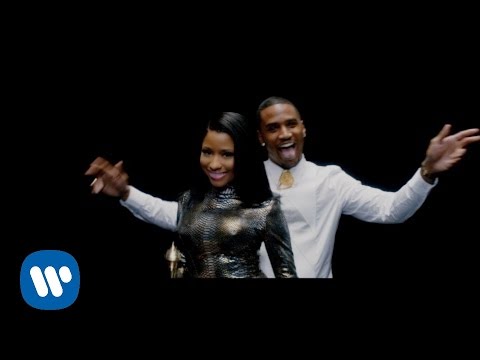
"Gotta Go" arrived in 2005 as one of the earliest signals that Trey Songz was capable of competing in the crowded contemporary R&B market, a marketplace that in the mid-2000s was defined by a demanding audience that expected both vocal sophistication and production polish in equal measure. The song appeared on his debut studio album "I Gotta Make It," released through Atlantic Records in September 2005, and it demonstrated from the outset that the young Virginia-born singer possessed instincts beyond those of a typical industry newcomer.
Tremaine Aldon Neverson, who performs under the stage name Trey Songz, was born in Petersburg, Virginia in 1984 and grew up in a musical environment shaped by gospel, soul, and the emerging sounds of Southern R&B. He was discovered by producer Troy Taylor, who signed him to Atlantic and oversaw the development of his early recordings. Taylor's production approach on "Gotta Go" drew on the spare, groove-centered R&B aesthetic that had been influential since the late 1990s, favoring a clean rhythmic foundation over dense layering, which allowed Songz's voice to occupy the center of the track without competition.
The album "I Gotta Make It" was the product of years of preparation and showcased a range that moved from uptempo tracks aimed at radio to slower, more intimate material. "Gotta Go" was selected as a single because it represented the balance Atlantic believed would most effectively introduce Songz to a mainstream audience. The song's structure, built around a rhythmically direct beat and a melodic hook that emphasized Songz's smooth upper register, was calibrated for the kind of contemporary R&B radio that dominated the mid-2000s airwaves.
The mid-2000s R&B landscape was one in which the influence of Usher, whose 2004 album "Confessions" had broken sales records and redefined commercial expectations for male R&B artists, was pervasive. New artists entering the market were inevitably measured against that benchmark, and Trey Songz was no exception. "Gotta Go" positioned him in a lineage of smooth R&B vocal performers without simply imitating any specific predecessor, carving out a space that was identifiably his own.
The production credits on the "I Gotta Make It" album reflected the collaborative approach Atlantic used to develop new artists, bringing in multiple producers to find the best match for the artist's voice and sensibility. The result was an album that, while not uniformly consistent, contained enough strong material to establish Songz as a serious commercial prospect. The debut album peaked on the Billboard 200 and demonstrated that Atlantic's investment in the young artist had a foundation in genuine commercial viability.
Critical response to the debut was measured but largely positive, with reviewers noting Songz's vocal ability as the album's primary asset. His voice had an ease and fluency that suggested a performer who had internalized the conventions of R&B deeply enough to move within them naturally rather than self-consciously. This quality, the ability to make technically demanding vocal performances sound effortless, would become the defining characteristic of his subsequent career and was already evident in "Gotta Go."
The song's radio performance helped lay the groundwork for what would prove to be an unusually durable career arc. In the years following "I Gotta Make It," Trey Songz developed into one of the most consistent commercial presences in R&B, releasing a series of albums that built progressively larger audiences and generated multiple Billboard Hot 100 hits. That trajectory began with the groundwork laid by "Gotta Go" and the debut album's modest but real commercial performance.
Atlantic's promotional strategy for the debut involved significant touring and personal appearance commitments, building a fanbase through direct audience contact rather than relying exclusively on radio exposure. This approach reflected an understanding that Songz's appeal was partly rooted in his live performance abilities and physical presence, qualities that translated well to the promotional appearances and television performances that formed a key part of R&B marketing in the mid-2000s.
Looking at "Gotta Go" in the context of Trey Songz's full career, it functions as a clear first chapter. The vocal approach, the subject matter drawn from the textures of romantic experience, and the smooth production aesthetic that would characterize his later and more commercially successful work are all present in embryonic form. It is a record that documents the beginning of a significant career in contemporary R&B rather than a standalone commercial achievement.
02 Song Meaning
The Meaning Behind "Gotta Go" by Trey Songz
"Gotta Go" situates itself within one of R&B's most enduring narrative traditions: the account of a romantic encounter constrained by circumstance and time. The song's central tension, between desire and obligation, between what the narrator wants and what external demands require, gives it an emotional texture that resonates with the lived experience of its target audience. The title phrase captures a specific kind of bittersweet feeling, the moment when something genuinely good must be interrupted not by choice but by necessity.
Trey Songz delivers the lyric with a vocal ease that reinforces the song's emotional content. The smoothness of his delivery suggests a narrator who is genuinely caught between two competing pulls, not dramatically anguished but genuinely reluctant. This register, warm and regretful without being overwrought, would become a hallmark of his approach to romantic subject matter throughout his career. It is a tone calibrated to communicate sincerity without sacrificing the lightness that makes a song like this function on a dancefloor as well as in more intimate listening contexts.
The mid-2000s R&B context in which the song was released shaped the expectations audiences brought to it. Contemporary R&B in that period was deeply interested in the textures of romantic experience rendered in specific, recognizable emotional detail, and "Gotta Go" participates in that aesthetic. The song does not deal in abstract romantic ideals but in a concrete, relatable situation: two people whose time together is being cut short, and the feelings that produces.
The production framework that surrounds Songz's vocal performance is worth considering for what it contributes to the song's meaning. The spare rhythmic arrangement creates a sense of forward motion that mirrors the song's subject matter, a momentum that is always pulling against the desire to linger. The musical structure thus embodies the emotional content in a way that elevates the record beyond a simple lyrical statement.
For Songz as an emerging artist, "Gotta Go" served as an introduction to an audience that would need to understand not just what kind of singer he was but what kind of storyteller. R&B audiences in the mid-2000s were sophisticated consumers of the genre's conventions, and they expected new artists to demonstrate fluency in those conventions before beginning to subvert or extend them. "Gotta Go" demonstrated that fluency clearly. It showed an artist who understood the genre's emotional vocabulary and could deploy it with genuine feeling rather than mechanical competence.
The theme of romantic obligation constrained by circumstance would recur in various forms throughout Songz's subsequent catalog, which suggests that this subject matter resonated with something genuine in his artistic sensibility. His best-known later works return repeatedly to the space between desire and its practical complications, making "Gotta Go" legible in retrospect as an early articulation of concerns that would define a long creative career. The song is therefore meaningful not only as a standalone record but as a first statement of themes that would be developed and deepened over the following decade and a half.
→ More from Trey Songz
View all Trey Songz hits →



→ More from the 2000s File
View all 2000s hits →

Keep digging