The 2000s File Feature
Gotta Make It
Gotta Make It — Trey Songz Featuring Twista A Young Artist Finding His Footing The summer of 2005 was a competitive time to be a new R by the late 2000s, he …
01 The Story
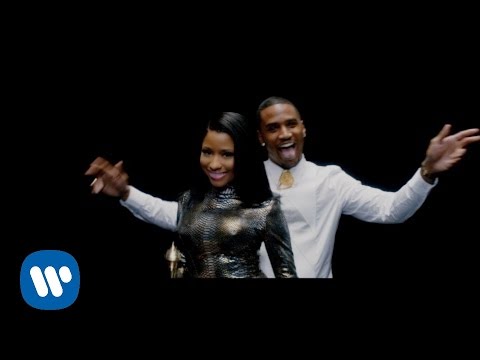
Gotta Make It — Trey Songz Featuring Twista
A Young Artist Finding His Footing
The summer of 2005 was a competitive time to be a new R&B singer trying to break through on radio. Usher had dominated the previous year with one of the best-selling albums in pop history. Chris Brown was preparing to launch. And in the middle of this crowded landscape, a twenty-year-old Trey Songz from Petersburg, Virginia, released his debut single and discovered that the path to stardom was neither instant nor linear. Gotta Make It earned him his first Billboard Hot 100 placement, debuting at number 89 on August 13, 2005, and peaking at number 87 the following week before spending a total of seven weeks on the chart as it gradually faded.
Seven weeks and a peak of 87 was not a commercial breakthrough in the traditional sense. But it was a foothold, proof that Trey Songz could get his music heard and hold attention for longer than a single news cycle. For an artist at the very start of his career, that was not nothing. It was the beginning of a story that would eventually produce genuine stardom.
Twista's Cameo and the Feature Economy
Featuring Twista on a debut single was a canny choice. The Chicago rapper had achieved his own commercial breakthrough in 2004 with Slow Jamz alongside Kanye West and Jamie Foxx, and his extraordinary technical ability as a fast rapper had made him a recognizable name to hip-hop and R&B audiences simultaneously. Twista's verse on Gotta Make It gave the track credibility in the hip-hop crossover space while Trey Songz's melodic contributions anchored it in R&B.
The hip-hop and R&B crossover feature had become standard practice by 2005, with R&B singers routinely incorporating rap verses to extend their appeal and demonstrate cultural fluency. Trey Songz's choice of Twista was smart because Twista operated in a musical space adjacent to melodic R&B rather than the harder trap sound that might have felt incongruous. His rapid delivery actually complemented the track's energy rather than disrupting it.
The Sound of the Track
Trey Songz had a voice with obvious natural gifts from the start: warm, flexible, capable of both smooth melody and the kinds of emotional inflections that R&B audiences responded to. His debut album I Gotta Make It, from which this single was drawn, was produced under Atlantic Records, where he was working with executives who recognized the raw material but needed time to develop it into something commercially complete.
The production on the track reflected the mid-2000s R&B sound: programmed drums, synthesized strings, a tempo that sat comfortably in the upper range of slow jam territory without fully crossing into club music. It was the kind of record designed for radio airplay in the afternoon and early evening slots where R&B programmers built their audience engagement.
Chart Performance in Detail
The chart trajectory of Gotta Make It tells a story of a radio single that found its audience gradually through rotation rather than exploding on contact. Entering at 89, climbing briefly to 87, then dipping to 99, then recovering to 92 before its fifth week, the track demonstrated the pattern of a record that had genuine appeal with specific listeners who called in requests and drove repeat plays without achieving the broader crossover that would have pushed it higher. Seven weeks on the Hot 100 represents meaningful radio traction for any debut single, especially for an artist with no prior track record to leverage.
Atlantic Records continued to invest in Trey Songz's development following the moderate reception of this debut. The patience proved justified; by the late 2000s, he had evolved into a genuine star with multiple platinum records and a reputation as one of the premier vocal talents in R&B.
The Beginning of a Career
Looking at Gotta Make It from the perspective of Trey Songz's eventual trajectory, the track reads as an early draft of what he would become. The voice was there; the confidence was developing; the commercial machinery around him was still calibrating. His subsequent albums, particularly Ready in 2009, represented a significant step forward that rewarded the patience both he and his label invested in the gradual construction of a career.
Gotta Make It served its purpose: it put Trey Songz's name and voice in front of enough listeners to establish a foundation for everything that followed.
Press play and hear the starting point of a significant R&B career, raw and earnest in ways that his later, more polished work would not quite replicate.
"Gotta Make It" — Trey Songz's first step onto the 2000s charts.
02 Song Meaning
Gotta Make It — Ambition, Youth, and R&B's Promise
The Aspirational Mode
Debut singles occupy a peculiar position in any artist's catalog. They are almost by definition the work of someone still becoming themselves, shaped by label input, market research, and a genuine uncertainty about which version of the artist will connect most powerfully with an audience. Gotta Make It is exactly this kind of record. Its title is a statement of intent as much as a lyrical premise, a young man declaring his ambitions before the world has given him any particular reason to believe in them.
The lyrical content moves through themes of determination and aspiration, the drive to succeed against uncertainty, to make something of the talent and the work and the hunger that propelled a twenty-year-old from Petersburg, Virginia, into a recording studio under the lights of a major label. These themes are not original. But sincerity and originality are different virtues, and the sincerity of Trey Songz's early work has a quality that his more polished later records sometimes trade for sophistication.
The R&B Tradition of the Hustle Narrative
R&B has its own strain of hustle narrative that differs subtly from hip-hop's version of the same story. Where rap's aspiration narrative often centers on material acquisition and street-level success, R&B's tends to center on love, recognition, and the desire to be seen as someone worthy of the things worth having. Trey Songz's version of the hustle narrative is fundamentally romantic in this broader sense: the ambition is about becoming someone who matters, not merely someone who has accumulated things.
This distinction maps onto the audience expectations for R&B in 2005. The genre's listeners were seeking emotional connection as much as entertainment, and a young singer expressing earnest determination to make good connected to those expectations in ways that a purely boastful track would not have.
Twista and the Craft of Contrast
Twista's contribution to the track provides an interesting tonal contrast. His technical virtuosity, the extraordinary speed of his delivery combined with the clarity that distinguishes his rapping from pure speed exercises, creates a different kind of aspiration: the aspiration of craft itself, of doing something at a level that most people cannot approach. Placing Twista alongside a young Trey Songz created a productive tension between the established technician and the developing voice, which gave the track a dimension it would not have had as a pure R&B vehicle.
In the context of 2005's hip-hop and R&B crossover culture, this kind of pairing was standard but not mechanical. The best R&B and hip-hop collaborations of the era found genuine complementary chemistry; this track achieved that chemistry through the contrast between Twista's technical fireworks and Trey Songz's earnest melodic ambition.
What a Debut Single Tells You
A debut single is a hypothesis. The artist and label are proposing to the market that this voice, in this mode, doing this thing, is worth paying attention to. The seven-week Hot 100 presence of Gotta Make It suggests the hypothesis was partially confirmed: enough listeners agreed that the voice was worth hearing that the track held chart territory across the summer. The peak of number 87 tells you the thesis was not yet fully proven, that the artist had not yet found the precise version of himself that would connect most powerfully.
Trey Songz's subsequent career validated the initial investment that a Hot 100 debut represented. By the time he reached his commercial peak in the late 2000s and early 2010s, the hunger expressed in this debut single had been realized in ways that justified the ambition.
"Gotta Make It" — the earnest opening chapter of Trey Songz's 2000s journey to R&B stardom.
→ More from Trey Songz Featuring Twista
View all Trey Songz Featuring Twista hits →



→ More from the 2000s File
View all 2000s hits →
Keep digging