The 2000s File Feature
Get Drunk And Be Somebody
"Get Drunk And Be Somebody" — Toby Keith The King of the Blue-Collar Anthem When "Get Drunk And Be Somebody" hit country radio in early 2006, Toby Keith was …
01 The Story
"Get Drunk And Be Somebody" — Toby Keith
The King of the Blue-Collar Anthem
When "Get Drunk And Be Somebody" hit country radio in early 2006, Toby Keith was at the absolute peak of his commercial dominance in Nashville. The man from Moore, Oklahoma had spent the previous decade building one of the most formidable careers in country music, combining a genuine working-class sensibility with an instinct for the kind of anthems that resonated in arenas, on car radios, and in bars from Texas to New England. The track debuted on the Billboard Hot 100 on January 21, 2006 at number 93, and climbed steadily over a 20-week run, reaching its peak position of number 47 on April 22, 2006.
Toby Keith in 2006
By 2006, Toby Keith had accumulated a commercial record that few country artists could match. His patriotic post-9/11 track "Courtesy of the Red, White and Blue (The Angry American)" had made him a polarizing but undeniably powerful cultural figure, and his string of number one country hits had given him consistent radio domination across the decade. "Get Drunk And Be Somebody" appeared on his 2005 album Honkytonk University, a collection that leaned fully into the kind of blue-collar working-class country entertainment that Keith had made his signature. The Honkytonk University era was Keith at his most commercially confident: records built for his audience rather than for critics, delivering exactly what his fanbase wanted to hear.
The Party Song as Country Tradition
Country music has a long and unashamed tradition of the drinking song, the party anthem, and the celebration of weekend relief after a week of hard work. From Hank Williams onward, the permission to let loose, to step outside the routines of labor and responsibility, has been a persistent theme in the genre. "Get Drunk And Be Somebody" sits squarely in that tradition, treating the act of drinking and cutting loose not as shameful excess but as earned recreation, the Friday night reward for the Monday through Friday grind. Keith understood this tradition intimately, and his ability to deliver it with conviction rather than winking condescension was what kept his audience loyal. These were songs made by someone who meant them, not by someone performing a version of working-class life from a distance.
The 20-Week Chart Run
The song's chart trajectory reveals the mechanics of traditional country radio success. Beginning in the lower reaches of the Hot 100 in January, the track built momentum week by week as country airplay accumulated, reflecting the format's tendency to reward patient, consistent artists rather than explosive debuts. Twenty weeks on the Hot 100 is a significant run, indicating genuine radio traction rather than streaming-driven ephemeral attention. Country radio in 2006 operated on a deliberate rotation logic: a song earned its chart position through repeated spins, which meant songs that held charted territory over months rather than days. Keith's track did exactly that, suggesting his audience requested it consistently and programmers kept spinning it.
Keith's Legacy and the Song's Place in It
Toby Keith would continue making music and charting successfully for years after 2006, remaining one of country music's most bankable artists through the following decade. But "Get Drunk And Be Somebody" captures him in a specific mode: the unapologetic entertainer whose priorities were clarity, fun, and connection with the people who bought his records and filled his shows. His career has been characterized by a consistent willingness to be exactly what his audience wanted rather than what critics might have preferred. The track's success on country radio and the Hot 100 confirms that there was, and remains, a very large audience for that offer. For listeners who want to understand the specific kind of country entertainment that dominated the mid-2000s, "Get Drunk And Be Somebody" is an honest and capable example of the form.
Turn it up on a Friday afternoon and see if it doesn't work exactly as advertised.
"Get Drunk And Be Somebody" — Toby Keith's singular moment on the 2000s charts.
02 Song Meaning
"Get Drunk And Be Somebody" — Permission, Release, and the Working-Class Weekend
The Philosophy of Friday Night
There is a legitimate philosophy embedded in the tradition of the drinking song, one that country music has articulated more explicitly and more honestly than almost any other popular genre. The core of it is this: that people who spend their weeks in labor, in obligation, in the constrained posture of responsibility, deserve a designated space of release. "Get Drunk And Be Somebody" by Toby Keith is a declaration on behalf of that philosophy. The title itself makes the argument plainly: to get drunk, in this worldview, is an act of self-assertion, a way of stepping briefly out of the identity defined by work and duty and into an identity defined by pleasure and choice. The lyrical logic is egalitarian and unapologetic, aimed at an audience that does not need to be persuaded that release is legitimate, only confirmed in what it already believes.
The Working Class as Subject and Audience
Country music's relationship with working-class identity is foundational and complex. At its best, it reflects genuine solidarity with the material and emotional realities of people whose lives are defined by physical labor, limited economic mobility, and strong community ties. At its less distinguished moments, it can romanticize conditions that deserve critique rather than celebration. Toby Keith has occupied both ends of this spectrum across his career. "Get Drunk And Be Somebody" lands firmly in the celebratory mode, treating the weekend release valve not as a symptom of deprivation but as a ritual with its own dignity and meaning. The title's suggestion that getting drunk constitutes "being somebody" is, read generously, a comment on how the working week can strip people of a sense of self that the weekend briefly restores.
Drinking Songs and the Honky-Tonk Tradition
The lineage of the drinking song in American country music runs from the earliest commercial recordings through the honky-tonk era, the outlaw movement, and into the contemporary mainstream. What connects them is not simply the subject matter but the social function: these are songs meant to be played in bars, at parties, and in situations where the song and the activity it describes are happening simultaneously. The drinking song is always somewhat theatrical, a soundtrack for its own performance, and Keith understood this perfectly. His delivery on "Get Drunk And Be Somebody" is that of a man who is already at the party, inviting you to join rather than observing from outside.
Toby Keith and the Art of Not Apologizing
Part of what made Toby Keith commercially formidable in the 2000s was his complete refusal to apologize for his audience or himself. In an era when country music was also producing polished crossover pop and thoughtful singer-songwriter material, Keith remained committed to making the kind of music that his specific, large, and loyal audience wanted. The directness of a title like "Get Drunk And Be Somebody" reflects this posture: here is a song that does not ask permission, does not hedge, and does not worry about whether critics will find it sophisticated. It trusts its audience to know what it wants and to appreciate being given it without qualification. That trust is itself a kind of respect.
The Song in the Culture of 2006
Mid-2000s country music existed in a particular cultural moment: the genre was commercially dominant, country radio was one of the most powerful formats in American broadcasting, and the kind of blue-collar entertainment that artists like Keith specialized in was finding enormous audiences. The song's 20-week Hot 100 run reflects that commercial health. Radio programmers responded to listener requests for the track over months, suggesting it had genuine staying power beyond an initial burst of attention. Songs that run for twenty weeks on the chart do so because real people are choosing them repeatedly, and that choice is its own kind of cultural statement about what a significant portion of the country wanted to hear in the spring of 2006.
→ More from Toby Keith
View all Toby Keith hits →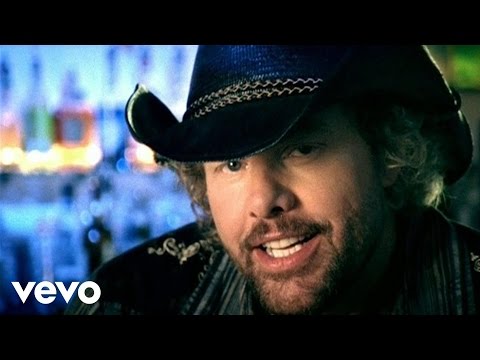



→ More from the 2000s File
View all 2000s hits →

Keep digging