The 2000s File Feature
When The Stars Go Blue
When The Stars Go Blue — Tim McGraw and the Journey of a Borrowed Song A Song That Traveled Some songs are born in one place and find their truest audience s…
01 The Story
When The Stars Go Blue — Tim McGraw and the Journey of a Borrowed Song
A Song That Traveled
Some songs are born in one place and find their truest audience somewhere else entirely. "When The Stars Go Blue" is that kind of song. Ryan Adams wrote it and recorded it for his 2001 album Gold, where it appeared as a hushed, melancholic folk-rock meditation in keeping with the record's Americana sensibility. Adams was at the height of his critical reputation at the time, beloved by the college radio and indie press circuit but not yet a mainstream country presence. The song was beautiful and received, but it had not yet reached the audience it eventually would.
The journey to Tim McGraw took a detour through a transatlantic collaboration. The Corrs, the Irish pop-rock group, recorded a version with Bono of U2 in 2003, which brought the song to a much larger international audience and demonstrated its adaptability across different registers and production styles. By the time McGraw arrived, the song had already proven itself through multiple incarnations.
Tim McGraw at the Peak of His Powers
In 2006, Tim McGraw was one of the most commercially successful country artists in the United States. His partnership with Faith Hill, both as a married couple and as occasional musical collaborators, gave him a cultural visibility that extended well beyond the country music core audience. He had scored a series of enormous hits through the late 1990s and early 2000s, from "Don't Take the Girl" through "Live Like You Were Dying," and he had demonstrated a consistent willingness to push at the boundaries of what mainstream country radio would support.
"When The Stars Go Blue" appeared on his 2006 album Let It Go, a release that found McGraw experimenting with production approaches and musical textures beyond the polished Nashville sound that had defined much of his earlier commercial peak. His version of the Adams song was produced with a spare, atmospheric quality that honored the original's emotional weight while giving McGraw's warm baritone room to move through the lyric at its own pace.
Chart Performance Across Two Formats
The single debuted on the Billboard Hot 100 on April 15, 2006, entering at number 57 and climbing steadily through the spring. It reached its peak of number 37 on May 27, 2006, spending a total of 20 weeks on the chart. That 20-week run was a strong performance that demonstrated the song's consistent pull with radio listeners across the extended spring and summer season.
The track's performance on the country chart was where it made its primary commercial impact, as expected for a McGraw release. The Hot 100 showing was the crossover bonus that reflected the song's ability to speak to listeners outside the core country demographic, something that Ryan Adams' original had also demonstrated years earlier through a completely different pathway.
The Lyric's Universal Pull
Adams wrote a lyric of such emotional economy that it resisted easy categorization as country, folk, or pop, which explained its adaptability. The imagery circles around loss and longing, around the specific kind of grief that attaches to places and times rather than simply to people. McGraw's delivery brought a lived-in quality to the words, a sense of someone who had actually stood in the kind of moment the song describes and was reporting back from that experience. His voice, warm and slightly weathered by 2006, suited the song's emotional register in ways that would have been impossible from a younger or less road-tested performer.
The song's instrumentation on the McGraw version was carefully restrained, avoiding the orchestral production typical of country power ballads and instead maintaining a spaciousness that allowed the lyric's imagery to breathe. This was a deliberate artistic choice, and it paid dividends in the quality of the final recording.
One Song, Many Lives
The story of "When The Stars Go Blue" is ultimately a story about song as a living thing that passes through different hands and finds different meanings in each. Ryan Adams' original, the Corrs and Bono collaboration, and McGraw's country version are three very different artifacts, but they share a core that proved durable across genre lines and production styles. McGraw's Hot 100 showing in 2006 was the song's largest commercial expression in the United States, and it cemented a place in his catalog for a recording that manages to be both unmistakably him and somehow larger than any single artist's ownership of it. If you want to understand how great songs outlive their origins, press play and trace the journey yourself.
"When The Stars Go Blue" — Tim McGraw's singular moment on the 2000s charts.
02 Song Meaning
When The Stars Go Blue — Loss, Place, and the Endurance of a Well-Written Song
Grief Anchored in Landscape
Ryan Adams wrote "When The Stars Go Blue" as a meditation on loss that locates its emotional weight not in abstract feeling but in specific images of place and time. The lyric populates its emotional landscape with images of desolate streets, darkening skies, and the particular loneliness of certain hours. This grounding of grief in landscape is a technique with deep roots in the folk and country traditions that Adams drew on throughout his career, and it gives the song a concreteness that purely psychological accounts of loss cannot achieve.
When Tim McGraw brought his voice to the song in 2006, he was inheriting this landscape and making it his own. Country music has always understood that the land and the weather are emotional facts as much as physical ones, and McGraw's tradition gave him a natural relationship to that kind of imagery.
The Adaptability of Restraint
One reason "When The Stars Go Blue" has survived multiple interpretations is that Adams wrote it with considerable restraint. The lyric does not over-explain its emotional situation; it trusts the imagery to carry the weight without spelling out the backstory. This restraint created space for each interpreter to bring their own emotional context to the performance, which is why the song sounds differently authentic in Adams' folk-rock register, in the Corrs' pop-rock setting, and in McGraw's country framework.
Songs that work this way, that hold their emotional logic loosely enough to accommodate multiple performers and contexts, are the ones that last longest. They are not songs about one specific situation; they are songs about a category of human experience, and that generality is a form of precision rather than vagueness.
Country Music and the Permission to Ache
One of the things country music does better than almost any other genre is give its listeners permission to acknowledge grief without resolving it. The tradition is full of songs that simply sit with loss, that do not rush to consolation or redemption, that honor the experience of pain as something real and worth describing. "When The Stars Go Blue" belongs to this tradition, even though its origins are in the indie rock world rather than Nashville.
McGraw's audience understood this permission instinctively. Country listeners in 2006 were a sophisticated audience for emotional complexity in music, accustomed to songs that treated adult feelings with seriousness and without condescension. The song met them exactly where they were.
What the Song Says About Songs
There is something almost meta-textual about the journey of "When The Stars Go Blue" through different artists and contexts. Each version tells the same story slightly differently, filtered through the performer's identity, production choices, and the cultural moment of the recording. Following the song across its interpretations becomes a way of understanding how meaning is not fixed in a composition but emerges from the encounter between a text and a performer, between a recording and a listener, in a specific time and place.
McGraw's version, with its 20 weeks on the Billboard Hot 100 in 2006, represents the song's moment of maximum mainstream country visibility. But the song existed before that moment and has continued to find listeners after it. That ongoing life is the best measure of what Adams originally created: something with enough emotional truth to keep resonating long after the circumstances of any individual recording have faded into history.
→ More from Tim McGraw
View all Tim McGraw hits →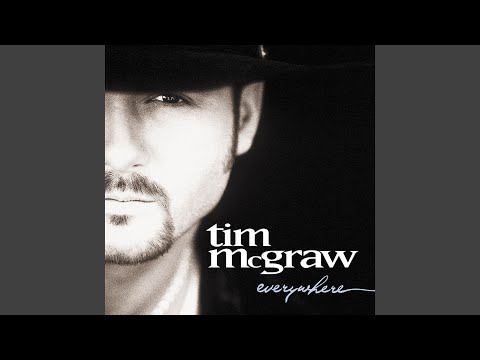




→ More from the 2000s File
View all 2000s hits →




Keep digging