The 2000s File Feature
Some Things Never Change
"Some Things Never Change" — Tim McGraw's Summer 2000 Hot 100 Entry Country's Commercial Titan at the Turn of the Century The year 2000 found Tim McGraw oper…
01 The Story
"Some Things Never Change" — Tim McGraw's Summer 2000 Hot 100 Entry
Country's Commercial Titan at the Turn of the Century
The year 2000 found Tim McGraw operating from a position of unambiguous commercial dominance. Through the second half of the 1990s, he had become one of the defining figures of the country music boom, a performer whose combination of traditional instincts and pop-accessible production had generated a run of number one country singles and platinum album certifications. His marriage to fellow country star Faith Hill had turned them into Nashville's most visible power couple, and his presence on both country radio and the broader pop chart was a given rather than a surprise.
"Some Things Never Change" arrived as a single from his album Set This Circus Down, part of a prolific recording schedule that McGraw maintained through this period. The track debuted on the Billboard Hot 100 on May 13, 2000, taking its place in a pop landscape where country crossover was no longer unusual but remained commercially significant when it occurred.
The Sound of Summer 2000
Country pop in 2000 was a mature commercial format with established conventions. The production language had been worked out through the late 1990s: clean acoustic and electric guitar combinations, rhythm sections that bridged Nashville tradition with contemporary pop clarity, vocal production that balanced warmth with radio-ready brightness. McGraw had contributed significantly to establishing this sound, and "Some Things Never Change" operated confidently within it.
The title phrase carried an immediately legible emotional register: an assertion of constancy in a world of flux. In 2000, the phrase might have pointed in several directions at once. The decade was barely begun, and the anticipatory anxiety of Y2K had just dissipated. The dot-com economy was showing its first cracks. Against this backdrop, a song anchored in the idea that some things endure, that certain constants outlast the noise of the moment, offered a kind of reassurance that was broadly appealing.
Chart Performance
The single's Hot 100 run extended across 14 weeks, a sustained presence that reflected McGraw's reliable commercial footprint. Entering at number 76, it climbed steadily through May and June, reaching its peak position of 58 on July 1, 2000. The ascent was gradual but consistent, mirroring the kind of slow radio build that characterized country crossover singles during this era. Pop radio did not always embrace country tracks immediately, but when a Tim McGraw single gained sufficient country airplay traction, its crossover into the broader Hot 100 universe followed almost inevitably.
On the country charts, where McGraw's commercial performance was most authoritative, the track added to a run of singles that had made him one of the most dominant country artists of his generation. By 2000, a new McGraw single was understood to be a competitive entry on country radio regardless of its subject matter or stylistic variation.
McGraw's Voice and the Country Pop Balance
Part of what made Tim McGraw such an effective commercial figure in this period was his voice's particular combination of qualities. His baritone carried the warmth associated with traditional country while also possessing enough clarity and roundness to sit comfortably in pop production contexts. He did not sound like a genre artifact being crossover-marketed; he sounded like a natural inhabitant of whatever sonic space he occupied.
This vocal versatility made songs like "Some Things Never Change" work on multiple radio formats simultaneously. Country listeners heard a Nashville artist; pop listeners heard a clean, appealing voice with strong melodic instincts. The song did not require listeners to make genre accommodations; it simply presented itself as good pop music with country DNA.
A Record in Context
The broader arc of Tim McGraw's career in 2000 was still ascending. His biggest mainstream pop crossover moments were still ahead, including the massive 2004 success with "Live Like You Were Dying." In this context, "Some Things Never Change" is a mid-period document: a confident, well-executed single from an artist who had mastered his format and was expanding steadily into adjacent commercial territory.
Fourteen weeks on the Hot 100 and a peak of 58 placed the song in the company of dozens of similar McGraw performances from this period, each representing a step in the construction of one of country music's most durable commercial careers. Press play to hear what Nashville's commercial machinery sounded like at its smoothest.
"Some Things Never Change" — Tim McGraw's singular moment on the 2000s charts.
02 Song Meaning
The Meaning Behind "Some Things Never Change" by Tim McGraw
Constancy in a Restless World
There is a particular kind of comfort in the assertion that something will not change. Against the perpetual churn of experience, the accumulation of losses and transitions that adult life inevitably brings, the idea of constancy functions as an anchor. "Some Things Never Change" builds its emotional architecture on exactly this foundation: the premise that certain truths, certain feelings, certain people or commitments persist regardless of how much else transforms around them.
Tim McGraw's delivery of this material brought the kind of settled conviction that the subject demanded. A song about constancy performed with anxiety or uncertainty would undermine its own premise. McGraw's baritone carried natural authority, and that quality served the lyrical content well, communicating that the singer had genuinely arrived at the kind of hard-won stability the song described rather than wishing for it from a distance.
Country Music and the Rhetoric of Permanence
Country music has long maintained a complicated relationship with permanence. On one hand, the genre has celebrated enduring institutions: marriage, family, the land, tradition, faith. On the other, its most emotionally powerful songs often explore exactly how fragile these apparently permanent things turn out to be, how love dissolves, how families fracture, how the old ways fade despite the best intentions of those who valued them.
"Some Things Never Change" occupies the affirming side of this dialectic. It insists on the reality of constancy rather than mourning its loss. In 2000, this was a commercially legible choice: country radio's core audience included a significant segment of listeners who responded to affirmation over lamentation, who wanted to hear their values reflected back to them as durable rather than embattled.
The Turn-of-the-Millennium Context
The year 2000 carried unusual symbolic weight. The century's turn had generated both anxiety and reflection, a collective taking-stock of where American life had arrived and where it might be headed. In this context, popular songs that asserted continuity and durability touched a specific cultural nerve. The Y2K panic had subsided, but its underlying anxiety about technological change and social fragmentation had not entirely dissolved.
A song assuring listeners that certain things endure was not merely sentimental reassurance in this environment; it was a small act of cultural counter-programming, a pushback against the prevailing narrative of relentless change that the digital revolution and its boosters were promoting. Whether or not Tim McGraw's audience articulated the song's appeal in these terms, the emotional response it generated was rooted in something real about the moment.
Themes of Relationship and Identity
At its most intimate level, the song addresses personal relationships, the particular person or connection that the narrator experiences as a constant in an otherwise shifting landscape. This framing places it within the large body of country and pop songs that define love as a form of stability, a fixed point from which to navigate everything else.
What makes this framing work when executed well is its acknowledgment, however implicit, that constancy is earned rather than given. The song does not assert that everything will always be fine; it asserts that certain things will remain true, a distinction that carries real emotional difference. The specificity of what remains constant in a given life is always personal, and the best songs in this mode leave enough room for listeners to populate the general assertion with their own particulars.
"Some Things Never Change" — Tim McGraw's singular moment on the 2000s charts.
→ More from Tim McGraw
View all Tim McGraw hits →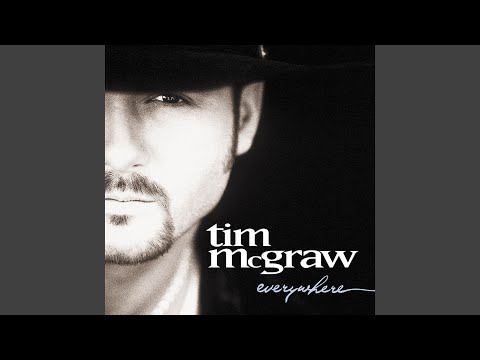




→ More from the 2000s File
View all 2000s hits →




Keep digging