The 2000s File Feature
My Little Girl
"My Little Girl" — Tim McGraw's Tender 2006 Country Ballad A Song Born from Celluloid There is a particular emotional frequency that father-daughter songs oc…
01 The Story
"My Little Girl" — Tim McGraw's Tender 2006 Country Ballad
A Song Born from Celluloid
There is a particular emotional frequency that father-daughter songs occupy in American popular music, and "My Little Girl" found that frequency with remarkable precision. The song arrived as part of the soundtrack for the 2006 film Flicka, a family adventure centered on a young girl's relationship with a wild horse, and Tim McGraw, who appeared in the film as the girl's father, recorded the track in connection with his acting role. That origin gave the song an unusual authenticity: the emotion it expressed was not purely abstract. McGraw himself was already a father of three daughters at the time, and the connection between his screen role and his personal life gave the recording an emotional charge that listeners recognized.
Tim McGraw in 2006
By 2006, Tim McGraw had spent more than a decade as one of country music's most commercially reliable performers. His discography included a remarkable run of number one singles on the Billboard Hot Country Songs chart, and his albums consistently debuted in the top positions on the Billboard 200 rather than simply the country chart. He was operating, in other words, at a level of commercial consistency that very few country artists had maintained for as long. The decision to record "My Little Girl" for the Flicka soundtrack extended his already substantial crossover appeal: a family-oriented film with a male protagonist navigating parenthood gave him a commercial context that reached audiences beyond his core country base.
Chart Performance and Trajectory
The song demonstrated impressive chart staying power, spending a full twenty weeks on the Billboard Hot 100 from its debut on September 30, 2006. It entered at number 99 before climbing steadily, reaching its peak position of number 35 on November 4, 2006, one of the more substantial crossover pop chart peaks for a country track in that period. The gradual climb from near the bottom of the chart to the top 40 across multiple weeks is a chart trajectory associated with genuine word-of-mouth momentum and sustained radio rotation. Country radio embraced the track warmly, and the family-film connection provided an additional promotional context that kept the song in public conversation for an extended period.
The Sound and Its Appeal
McGraw's vocal delivery on "My Little Girl" stays within the warm, conversational register that had made his career: accessible enough for pop radio, rooted enough in country tradition to satisfy his core audience, and emotionally direct enough to cross demographic lines. The production surrounds his voice with acoustic warmth, gentle rhythm section work, and an arrangement that builds without ever becoming overloaded. The track avoids sentimentality through sincerity, a distinction that the best country ballads navigate with care. Listeners could hear that the emotion on the recording was real rather than performed, and that authenticity was the source of the song's broad appeal. It did not need to be a technically innovative recording to be an effective one; what it needed was to be true, and it was.
Legacy and Enduring Relevance
In the years since its release, "My Little Girl" has become one of the more frequently played Tim McGraw tracks at significant family moments: father-daughter dances at weddings, high school graduations, and the various ceremonies through which families mark the passage of time. That cultural function is the highest form of longevity a sentimental ballad can achieve. The song has outlasted the film that gave it its initial context and exists now as a freestanding piece of country-pop sentiment that new generations of listeners continue to discover at the moments in their lives when its emotional content becomes personally relevant. Tim McGraw has recorded many successful songs, but "My Little Girl" is among his most enduring precisely because its subject matter is permanently renewable.
Put it on and let it take you back to wherever and whatever you hold most dear.
"My Little Girl" — Tim McGraw's singular moment on the 2000s charts.
02 Song Meaning
"My Little Girl" — Fatherhood, Time, and American Sentiment
The Father-Daughter Bond in Country Music
Country music has long maintained a particular investment in family relationships as lyrical territory, and the father-daughter dynamic occupies a privileged position within that tradition. "My Little Girl" works within this lineage while finding a specific emotional angle: the perspective of a parent watching a child grow toward independence, the awareness that the time of closeness is finite, and the complex mix of pride and loss that attends that recognition. This is not a simple celebration of childhood; it carries the weight of passing time that gives the best country ballads their emotional depth.
Parental Love as Universal Register
One reason the track crossed over from country into the broader pop conversation was that its emotional subject matter required no genre fluency to access. The experience of loving a child and watching that child grow is among the most universally shared of human experiences, and a song that captures it with sincerity reaches listeners who would not otherwise seek out country music. "My Little Girl" did not need to convert listeners to country; it needed only to find them at a moment in their lives when its particular emotional content was relevant. That is a different and more powerful form of commercial reach.
The Film Context and the Authentic Emotion
The relationship between the song's origins in the Flicka soundtrack and its emotional authenticity is worth examining. Soundtrack songs commissioned for specific dramatic contexts sometimes feel instrumental and impersonal, written to serve a narrative purpose rather than emerging from genuine feeling. "My Little Girl" avoided that trap partly because McGraw's real-life identity as a father of daughters made the subject matter personally resonant, and partly because the lyrical perspective was framed broadly enough that it spoke beyond the specific narrative of the film. The song is not "about" Flicka; it simply found its occasion there.
Permanence and the Wedding Playlist
The ultimate measure of a sentimental ballad's longevity is whether it survives into new contexts and serves new emotional occasions. "My Little Girl" has become a reliable presence at father-daughter wedding dances, at graduation ceremonies, and at the kinds of private family moments that fall outside any commercial context. That survival into intimate use represents a form of cultural permanence that chart positions and album sales cannot fully measure. The song has done the thing that all lasting popular music does: it has become available as a vehicle for other people's most important feelings, rather than remaining solely the artist's expression of his own.
"My Little Girl" — Tim McGraw's singular moment on the 2000s charts.
→ More from Tim McGraw
View all Tim McGraw hits →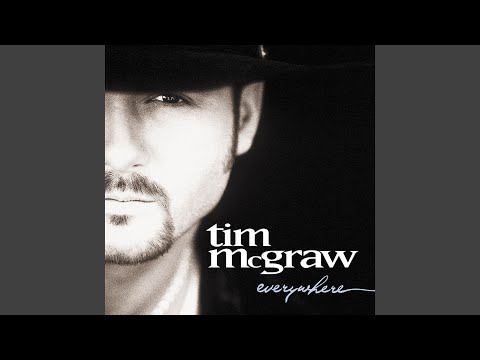


→ More from the 2000s File
View all 2000s hits →




Keep digging