The 2000s File Feature
Nasty Girl
Nasty Girl — The Notorious B.I.G. Featuring Diddy, Nelly, Jagged Edge Avery Storm (2005) "Nasty Girl" arrived in the spring of 2005, nearly eight years after…
01 The Story
Nasty Girl — The Notorious B.I.G. Featuring Diddy, Nelly, Jagged Edge & Avery Storm (2005)
"Nasty Girl" arrived in the spring of 2005, nearly eight years after the death of The Notorious B.I.G., as part of the posthumous album Duets: The Final Chapter, a project assembled by Bad Boy Records and Biggie's estate that paired previously recorded vocals from the Brooklyn rapper with a roster of contemporary artists. The single became one of the most commercially successful entries in the long tradition of posthumous rap releases, reaching audiences who had grown up after Biggie's 1997 murder while also resonating with fans who had followed his career from the beginning.
Christopher Wallace, known as The Notorious B.I.G. or Biggie Smalls, had been one of the central figures in 1990s hip-hop before his death in Los Angeles on March 9, 1997, the victim of an unsolved drive-by shooting. His two official studio albums, Ready to Die (1994) and the posthumous Life After Death (1997), are widely regarded as among the most important rap records ever made, and the continuing commercial and cultural interest in his work made posthumous projects commercially viable years and even decades after his death.
Duets: The Final Chapter was released by Bad Boy Records in November 2005 and represented Sean Combs's (Diddy's) effort to extend the Biggie catalog while introducing his vocals to collaborators who had emerged after his death. The album was controversial among some fans and critics who questioned the artistic integrity of stitching Biggie's archived vocals alongside new recordings, but it was commercially successful, debuting on the Billboard 200 and generating significant radio and video airplay.
"Nasty Girl" was the lead single from the album and the track that received the most substantial radio promotion. The production was built around a prominent sample of the 1981 Vanity 6 song "Nasty Girl," the Prince-penned and produced track from the group he assembled as a female counterpart to The Time and Morris Day's musical universe. The sample gave the 2005 recording an immediately recognizable hook and a nostalgic reference point for listeners old enough to remember the early 1980s R&B landscape.
The assembled cast of contributors brought the song considerable commercial firepower. Nelly was at the height of his mainstream popularity, having spent much of 2002 through 2004 as one of the best-selling rap artists in America. Jagged Edge, the Atlanta R&B group, contributed the kind of melodic vocal support that had characterized their string of hits on So So Def throughout the late 1990s and early 2000s. Avery Storm provided additional R&B vocal texture. Diddy himself appeared, his presence serving as a kind of authenticating link between Biggie's era and the contemporary production environment of 2005.
"Nasty Girl" reached number 16 on the Billboard Hot 100 and performed substantially better on the Hot Rap Songs chart, where it received heavy rotation. The song also performed well on the Hot R&B/Hip-Hop Songs chart, reflecting the crossover appeal generated by the combination of Biggie's vocal presence, the recognizable sample, and the contribution of R&B artists like Jagged Edge and Avery Storm.
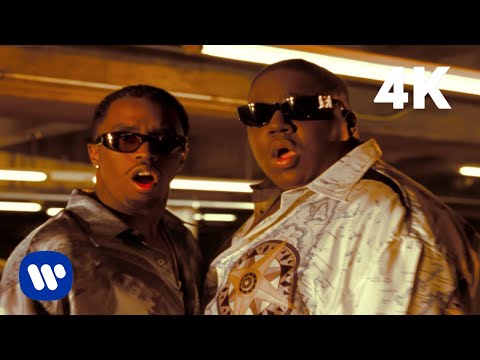
The music video, directed in Diddy's characteristically lavish style, became a staple of BET and MTV programming in early 2006, giving the song a visual presence that reinforced its radio success. Diddy's investment in the promotional apparatus around the release was substantial, reflecting both the commercial stakes of a major posthumous Biggie release and his personal commitment to maintaining his former partner's legacy in the marketplace.
Critical reception for "Nasty Girl" was mixed. Supporters of the project argued that the song demonstrated Biggie's enduring ability to connect with audiences regardless of when the surrounding production was made, and that his vocal performance, captured years before his death, retained all the charisma and technical skill that had made him legendary. Critics of the posthumous album format argued that the assembled nature of the track made it difficult to assess as a genuine creative work, since Biggie could not have consented to the specific combination of collaborators and production choices made after his death.
The song's chart success contributed to broader conversations about the ethics and aesthetics of posthumous releases in hip-hop, a genre that had seen a significant number of such projects by 2005. Tupac Shakur's estate had released numerous posthumous albums since his 1996 death, and the commercial success of those projects demonstrated that audiences were willing to engage with archival material if the framing was compelling. "Nasty Girl" showed that the formula could work even when the posthumous material was substantially reworked through new collaborations.
For Bad Boy Records, the success of the single was significant in a period when the label was navigating a challenging commercial environment. The mid-2000s rap landscape had shifted considerably from the late-1990s context in which Bad Boy had been one of the dominant forces, and a successful Biggie single provided both commercial revenue and a reminder of the label's historical importance.
The Duets album and "Nasty Girl" in particular remain points of debate in discussions of Biggie's legacy, representing the tension between the desire to preserve and share an artist's remaining work and the discomfort of presenting posthumous collaborations as equivalent creative acts to work made with the artist's full participation and consent. Whatever one's position in that debate, the song's commercial success demonstrated the extraordinary durability of Biggie's appeal well into the twenty-first century.
02 Song Meaning
The Meaning of "Nasty Girl" by The Notorious B.I.G. Featuring Diddy, Nelly, Jagged Edge & Avery Storm
"Nasty Girl" operates in the celebratory, pleasure-focused register that represented one important strand of The Notorious B.I.G.'s creative output, distinct from the introspective street narratives and existential meditations that characterized his most critically celebrated work. The song is essentially a party record, an ode to physical attraction and romantic pursuit delivered with the wit and swagger that made Biggie one of the most compelling voices of his era. Understanding it requires placing it in the context of both his overall catalog and the posthumous project that assembled it.
Biggie's vocal contribution to the song demonstrates his remarkable range as an MC. Even in a relatively lighthearted context, his technical command is evident in the precision of his rhyme schemes, the musicality of his phrasing, and the ease with which he inhabits the playful tone the track demands. He was never a one-note artist, and his ability to be genuinely funny and charming while maintaining the rhythmic authority that defined his style was part of what made his catalog so durable.
The sample from Vanity 6's 1981 recording of the same title adds a layer of intertextual meaning that rewards listeners familiar with the original. Prince's production for Vanity 6 was itself a playful and provocative exploration of sexuality and desire, and by sampling it the 2005 recording positions itself within that tradition of Black popular music's engagement with physical pleasure as a subject worthy of serious artistic attention. The gesture connects Biggie, however retroactively, to a lineage of R&B and funk artists who approached sexuality with creativity and wit rather than shame or aggression.
The contributions of Nelly, Jagged Edge, and Avery Storm give the song its contemporary R&B texture, their melodic vocal performances providing counterpoint to Biggie's rap verses and to Diddy's spoken and performed sections. This structural arrangement, alternating between rap and sung vocals, was a well-established format in late-1990s and early-2000s hip-hop/R&B crossover recordings, and the assembled cast executes it competently.
For Biggie's catalog specifically, "Nasty Girl" represents the more hedonistic and playful side of his persona, one that was present even in Ready to Die and Life After Death but that has sometimes been overshadowed in critical retrospectives by the darker, more introspective material. His ability to move between a song exploring mortality and despair and a song celebrating female beauty and physical desire without any loss of authenticity or craft was one of the qualities that distinguished him from many of his contemporaries.
The song also carries unavoidable meaning as a posthumous construction. Every element surrounding Biggie's vocal was assembled without his participation or consent by the estate and label who controlled his legacy. This raises genuine questions about authorship and about what it means to interpret a "Biggie song" when Biggie had no role in selecting the collaborators, the sample, or the production approach. Thoughtful listeners engage with this dimension even when enjoying the recording on its own terms.
Diddy's presence gives the track an additional layer of meaning for those familiar with the Bad Boy story. His performance functions partly as a tribute and partly as a continuation of the professional and personal partnership that had defined much of Biggie's commercial career. There is something elegiac in his participation, even in the context of an explicitly celebratory recording.
Ultimately, "Nasty Girl" illustrates the complex relationship between an artist's recorded legacy and the commercial and personal interests of those who survive to manage it. It preserves a genuine artifact of Biggie's vocal artistry in a context that did not exist during his lifetime, and it demonstrates that even a posthumous and commercially motivated project can preserve and transmit something real about an artist's gifts. Whether that is sufficient justification for the project's existence is a question each listener must answer for themselves.
→ More from The Notorious B.I.G. Featuring Diddy, Nelly, Jagged Edge & Avery Storm
View all The Notorious B.I.G. Featuring Diddy, Nelly, Jagged Edge & Avery Storm hits →

→ More from the 2000s File
View all 2000s hits →




Keep digging