The 2000s File Feature
Gimme The Light
Gimme The Light by Sean Paul: Dancehall Conquers the Hot 100, 2002 In the early months of 2002, a sound that had been building momentum in urban markets and …
01 The Story
Gimme The Light by Sean Paul: Dancehall Conquers the Hot 100, 2002
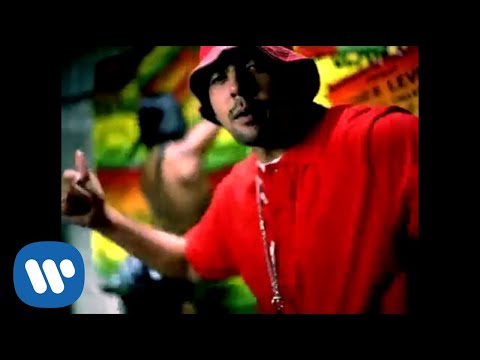
In the early months of 2002, a sound that had been building momentum in urban markets and college radio for years finally announced itself to the full American mainstream. Sean Paul's Gimme The Light was part of that announcement: a record that brought Jamaican dancehall to the Billboard Hot 100 and held its ground there for a run that would astonish anyone who thought dancehall was too regional, too rhythmically specialized, or too lyrically distinct to cross over into the American pop mainstream.
Sean Paul and the Dancehall Crossover
Sean Paul Henriques had been building his reputation in Jamaica and in the Jamaican diaspora for several years before Gimme The Light broke him into the American mainstream. His style combines the rhythmic framework of dancehall reggae with vocal delivery that moves between singing and toasting in a way that made his music accessible to listeners unfamiliar with the genre's conventions. His production partnerships, particularly his work with producers who understood how to bridge dancehall and American R&B aesthetics, were central to this accessibility.
By 2002, the infrastructure for dancehall crossover had improved significantly. Urban radio stations in major American markets had been playing dancehall-influenced records with increasing frequency, and the success of artists who blended Caribbean rhythms with American hip-hop and R&B had demonstrated to major labels that this territory was commercially viable. Sean Paul's Atlantic Records signing and the promotional support behind Gimme The Light reflected this changed landscape.
A 39-Week Chart Marathon
The chart story of Gimme The Light is one of the most remarkable in its year. The single entered the Billboard Hot 100 on May 4, 2002, debuting at position 97. Its ascent was gradual rather than explosive; the record spent weeks in the lower half of the chart building its audience before finally climbing toward the top. The single peaked at number 7 during the week of December 7, 2002, a full seven months after its debut. The total chart run was 39 weeks, an extraordinary demonstration of commercial endurance that placed Gimme The Light among the most persistent records of the year.
A peak of 7 on the Hot 100 for a dancehall record in 2002 represented a genuine breakthrough, both commercially and culturally. The record was not charting as a novelty or a crossover curiosity; it was competing on even terms with the biggest pop and hip-hop records of the year.
The Sound That Made the Crossing
Gimme The Light works across audiences because it maintains the rhythmic identity of dancehall while presenting it in a production context that borrows elements from contemporary R&B and hip-hop. The riddim provides the dancehall rhythmic foundation; the melodic hooks in Sean Paul's delivery give the record pop accessibility; the subject matter of a night out and the desire for the spotlight is universal enough to translate without requiring cultural explanation. This balance between specificity and accessibility is what made the crossing possible: the record was authentically Jamaican and broadly enjoyable simultaneously.
Gateway to a Changed Landscape
Gimme The Light arrived just ahead of a period when Sean Paul would achieve even greater mainstream success, demonstrating with this first major American chart breakthrough that the momentum was real and sustainable. The record's performance opened doors, in the music industry's practical terms, that subsequent releases would walk through. More broadly, its success contributed to the gradual normalization of Caribbean-inflected sounds on American mainstream radio, a process that would continue to accelerate through the decade. The 39-week chart run remains one of the most compelling pieces of evidence that Gimme The Light was not merely catching a trend but genuinely connecting with a broad American audience on its own musical terms.
Sean Paul would go on to accumulate further chart successes and collaborations with artists across multiple genres, but Gimme The Light retains a special place in his catalog as the record that first demonstrated his American crossover viability on the largest possible stage. The combination of rhythmic authenticity, melodic accessibility, and lyrical universality that made the record work in 2002 remains a template for how Caribbean music can engage the American mainstream without surrendering what makes it distinctive and alive.
Press play and let that riddim remind you what a perfect piece of dancehall pop sounds like when everything falls into place.
Gimme The Light — Sean Paul's singular moment on the 2000s charts.
02 Song Meaning
The Meaning Behind Gimme The Light: Visibility, Dancehall Culture, and the Desire to Be Seen
Gimme The Light operates on multiple levels simultaneously, and understanding its full meaning requires engaging with each of them. On the surface, the song is about wanting the spotlight, craving the attention of a room, the desire to be noticed and admired in a social setting. At another level, it is a celebration of dancehall culture and the specific social rituals of the Jamaican dance hall. At yet another level, the record's success in America was itself a form of meaning-making, a statement about whose music gets to be mainstream and when.
The Desire for the Spotlight
The central emotional content of Gimme The Light is the experience of wanting to be seen. The speaker arrives at a social gathering and wants attention, wants the light to fall on them, wants recognition and response from the people around them. This is a completely understandable human desire, and Sean Paul's delivery captures it with the kind of easy confidence that makes desire feel like certainty: he is not begging for attention but claiming it.
This confidence in the face of social performance is a recurring quality in dancehall music, which has always been a genre partly about self-presentation and the competition for attention in communal spaces. The dance hall was literally a place where individuals performed for each other, where dancers and singers competed for the crowd's recognition, where the quality of your movement and your style determined your social standing. Gimme The Light brings this cultural practice into an international context while maintaining its original flavor.
Dancehall as Living Tradition
To understand what Sean Paul was doing in 2002, it helps to understand the broader dancehall tradition he was drawing on. Jamaican dancehall music developed through the 1970s and 1980s as a distinct form of reggae, faster in tempo, more direct in its lyrical content, more focused on the social experience of the dance than on the spiritual and political concerns of roots reggae. By the 1990s, dancehall had developed its own international following, particularly among Caribbean diaspora communities in the United Kingdom, the United States, and Canada.
Sean Paul's particular achievement was to find a production and vocal style that could carry the essence of dancehall into contexts unfamiliar with the genre. The toasting delivery, the Jamaican patois inflections, the riddim-based construction of the music were all present but packaged in a way that did not require prior knowledge to enjoy. This is a form of translation, and like all good translations it preserved the spirit of the original while making it accessible to a new audience.
Language, Accent, and American Pop Acceptance
One of the more remarkable aspects of Gimme The Light's mainstream American success is that it achieved it without significantly diluting Sean Paul's Jamaican accent or speech patterns. American pop radio in 2002 was not particularly accustomed to lead vocals that were not in standard American or British English, and the fact that the record climbed to number 7 on the Hot 100 while maintaining its linguistic authenticity was meaningful. It demonstrated that American audiences were capable of connecting with music in which the voice itself carried cultural information they did not share, provided the musical communication was strong enough.
This matters beyond the specific case of Sean Paul because it indicates a kind of porousness in the American mainstream that was often underestimated. The success of Gimme The Light contributed to arguments that the market was more flexible than gatekeepers assumed.
The Night Out as Universal Subject
The specific subject matter of Gimme The Light: a night out, wanting to be noticed, the energy of a social gathering, is one of the most universally legible in popular music. Every culture that has dance music has songs about going out, about wanting to look good and be seen, about the particular electricity of a crowd in motion. Sean Paul tapped into this universal subject while delivering it in a distinctly Jamaican musical language, and the combination proved irresistible to audiences across demographic categories. The feeling of wanting the spotlight is not culturally specific; the sound of dancehall was. Together they made a record that communicated across every barrier the industry sometimes assumes are impassable, which is why 39 weeks on the Hot 100 feels like the minimum of what this record deserved.
→ More from Sean Paul
View all Sean Paul hits →



→ More from the 2000s File
View all 2000s hits →
Keep digging