The 2000s File Feature
I'm Feeling You
"I'm Feeling You" — Santana, Michelle Branch, and the Wreckers Find Common Ground A Guitarist in Perpetual Motion By the autumn of 2005, Carlos Santana had s…
01 The Story
"I'm Feeling You" — Santana, Michelle Branch, and the Wreckers Find Common Ground
A Guitarist in Perpetual Motion
By the autumn of 2005, Carlos Santana had spent the better part of six years in what could fairly be called the greatest commercial renaissance in rock history. Supernatural, his 1999 collaboration album, had returned him to the center of American pop culture in a way that almost nobody had predicted. The album produced massive crossover hits by pairing Santana's signature guitar work with a rotating cast of contemporary vocalists, and it won eight Grammy Awards including Album of the Year. The model it established would define his output for years to come.
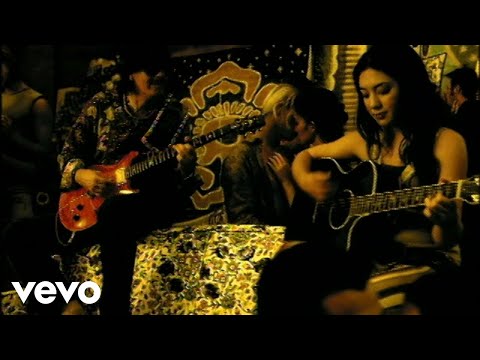
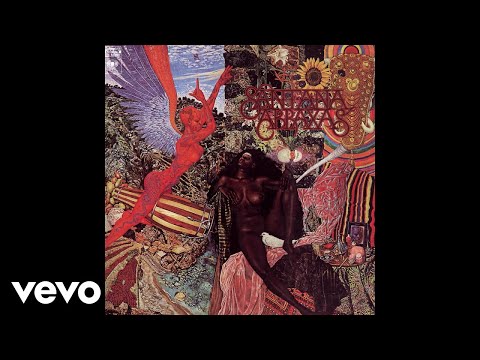
So when Santana arrived with All That I Am in October 2005, the follow-up to 2002's Shaman, the template was already well understood. The record would feature guest vocalists across its track listing, and one of the most appealing pairings on the album brought together Michelle Branch and The Wreckers, the country-leaning duo she had formed with Sharon Littlejohn, for the mid-tempo track I'm Feeling You.
An Unlikely Chemistry That Made Complete Sense
Michelle Branch had her own story of crossover success to bring to the collaboration. Her debut album The Spirit Room, released in 2001, had made her one of the defining singer-songwriters of early-2000s pop rock, with hits that combined guitar-driven arrangements with a confessional lyrical style. She was, in other words, exactly the kind of artist whose voice could hold its own alongside the warmth and authority of Santana's guitar.
The chemistry on I'm Feeling You is subtle but real. Branch's voice carries a natural vulnerability that contrasts productively with Santana's fluid, unhurried guitar lines. The production on the track is polished without being sterile, leaving room for the interplay between the vocal and the guitar to breathe. The Wreckers contributed harmony vocal work that added texture without overwhelming the central melodic relationship.
The Chart Journey
The single debuted on the Billboard Hot 100 on October 1, 2005, entering at position 96. Its climb was gradual and somewhat uneven: the chart run showed positions of 96, 90, 81, 55, and 57, confirming that the track built its audience steadily over the course of several weeks. The peak position of number 55 arrived on November 19, 2005, representing the strongest concentration of radio airplay and sales activity during the single's run. The single spent eight weeks on the chart in total, a solid showing for an album track rather than a lead single.
The chart context of late 2005 was competitive. Mariah Carey's The Emancipation of Mimi campaign was still generating hits, and the mid-2000s pop landscape was crowded with acts commanding significant radio real estate. An eight-week chart run at a peak of 55 indicated genuine but not dominant commercial traction.
Santana's Collaborator Economy
What makes I'm Feeling You interesting as a historical artifact is what it reveals about Santana's post-Supernatural strategy. Where many artists in his position might have attempted a more conventional solo album, Santana leaned fully into collaboration as an artistic mode. His guitar became the constant, and the human voices around it changed from project to project, creating an ongoing conversation rather than a static statement.
The pairing with Branch and The Wreckers was, in retrospect, a savvy one. Branch had demographic reach with younger pop audiences that complemented Santana's older rock fanbase, and the track served as mutual promotion in both directions. Santana got the vocal freshness; Branch and the Wreckers got access to the massive Santana platform.
A Partnership Worth Hearing
Not every collaboration on a star-studded album justifies its existence, but I'm Feeling You is one that does. The song holds together because both participants were committed to something genuine rather than simply fulfilling a commercial obligation. Santana's guitar work throughout the track has the kind of measured expressiveness that his best moments always carry. Put it on and you will hear why the pairing worked.
"I'm Feeling You" — Santana Featuring Michelle Branch & The Wreckers' singular moment on the 2000s charts.
02 Song Meaning
"I'm Feeling You" — Connection, Longing, and the Guitar as Emotional Voice
The Language of Feeling
The title of I'm Feeling You arrives with a double meaning built into it. At its simplest, it declares emotional attunement, the sensation of being fully present to another person. At a slightly deeper level, it implies a kind of recognition, the moment when someone truly understands what another person is experiencing without needing it explained. Both readings are active in the song, and that ambiguity is one reason the track resonates beyond its polished radio surface.
The lyrical themes of the song center on emotional availability, on the willingness to be vulnerable and to meet someone else in that vulnerability. Michelle Branch had built her early career on songs that explored exactly this territory, writing about love and longing with a directness that made her work feel personal rather than generic. I'm Feeling You fits naturally into that thematic landscape.
Guitar as Emotional Parallel
What separates this recording from a purely conventional pop-rock ballad is the way Santana's guitar functions as an emotional counterpart to the vocal. Rather than simply providing accompaniment, his playing engages in something closer to a dialogue. When Branch sings about connection and recognition, the guitar responds with phrases that echo and extend what the voice has just expressed. This is Santana at his characteristic best: using melody on the instrument the way a vocalist uses melody in song.
The instrument has always been central to how Santana communicates. His playing draws on a range of influences, from Afro-Cuban rhythms to rock and blues, and those influences show up even in a relatively understated arrangement like the one built around I'm Feeling You. There is warmth in the guitar tone, something almost human in its sustain and phrasing, and that warmth amplifies the emotional content of Branch's vocal.
The Mid-2000s Emotional Register
In 2005, mainstream American pop was undergoing one of its periodic reckonings with emotional sincerity. The era's dominant sounds ranged from confessional singer-songwriter pop to polished R&B, with a significant appetite in both formats for music that addressed longing and connection in direct, unironic terms. A track like I'm Feeling You fit into that broader appetite without straining against it.
Michelle Branch and The Wreckers were, at that point, associated with a kind of accessible emotional candor that resonated with listeners who found certain corners of mainstream pop too calculated. The Santana collaboration amplified that quality by grounding it in a musical legacy that listeners associated with genuine expressiveness.
Collaboration as Artistic Statement
There is a specific emotional logic to pairings between vocalists and instrumentalists who function on broadly equal terms. When neither participant overshadows the other, the resulting music carries a sense of conversation rather than hierarchy. I'm Feeling You achieves that balance, and the balance itself becomes part of the meaning. Two artists are demonstrating, in musical terms, exactly what the lyrics describe: genuine attunement.
That is not a small thing in the landscape of commercially produced pop music, where the pressures toward formula can sometimes reduce collaboration to marketing exercise. The track's emotional honesty comes through in the way the participants actually listen to each other, sonically speaking, and respond in kind. That is what gives the song its lasting resonance beyond the modest chart run it achieved.
→ More from Santana Featuring Michelle Branch & The Wreckers
View all Santana Featuring Michelle Branch & The Wreckers hits →


→ More from the 2000s File
View all 2000s hits →




Keep digging