The 2000s File Feature
Fast Cars And Freedom
Fast Cars and Freedom: Rascal Flatts and the Country Mainstream in 2005 By 2005, Rascal Flatts had emerged as one of the most commercially potent acts in con…
01 The Story
Fast Cars and Freedom: Rascal Flatts and the Country Mainstream in 2005
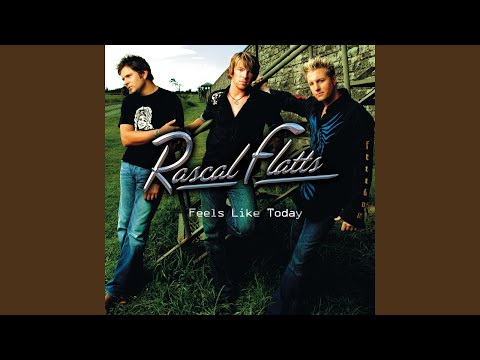
By 2005, Rascal Flatts had emerged as one of the most commercially potent acts in contemporary country music, a trio whose combination of arena-ready vocals, polished production, and romantic lyrical sensibility had built an unusually broad fanbase across both traditional country radio listeners and pop-crossover audiences. "Fast Cars and Freedom" arrived as a single from their fourth studio album Feels Like Today, which had been released in 2004 and was generating an extended chart run that would eventually make it one of the best-selling country albums of the mid-2000s.
Feels Like Today debuted at number one on the Billboard 200, an unusual achievement for a country record in an era when crossover country artists were beginning to demonstrate that the genre's commercial ceiling was considerably higher than the industry had previously assumed. The album spent considerable time in the upper reaches of the Billboard Country Albums chart and produced a string of hit singles that sustained Rascal Flatts' commercial momentum through 2004 and 2005. "Fast Cars and Freedom" was among the strongest of those singles, reaching the upper tier of country radio charts and generating the kind of sustained airplay that built the band's reputation as reliable hit-makers.
"Fast Cars and Freedom" peaked at number two on the Billboard Hot Country Songs chart and received heavy rotation on country radio stations across the United States during the spring and summer of 2005. The song was co-written by Gary LeVox and Jay DeMarcus, two members of the trio, which was a continuation of the band's practice of involving its own members in the songwriting process and thus ensuring a personal investment in the material. Rascal Flatts had built their identity in part on this emotional authenticity, a quality that their production team amplified through carefully crafted arrangements that prioritized emotional impact over sonic innovation.
The production of the track was handled within the framework of Nashville's professional songwriting and production ecosystem of the mid-2000s, an era when producers like Dann Huff were bringing a more polished, rock-influenced production sensibility to country music that made it appealing to listeners who had grown up on arena rock and soft rock. The arrangement of "Fast Cars and Freedom" drew on this tradition, layering acoustic and electric guitar textures over a rhythm section that gave the song a sense of momentum and forward motion consistent with its thematic content.
Rascal Flatts had been signed to Lyric Street Records, the Disney-affiliated Nashville imprint, since their debut in 2000. The label had built their career methodically through a series of increasingly successful albums, each one expanding the band's audience and radio presence. By the time Feels Like Today arrived, the band was selling out arenas and competing with the biggest acts in country music for chart position and radio play. Their touring operation was one of the most financially productive in the genre, which provided a commercial foundation that made each single release a significant event in the country music calendar.
The music video for "Fast Cars and Freedom" was produced with the glossy, cinematic aesthetic that had become standard for major country acts by the mid-2000s, featuring imagery of open roads, rural landscapes, and domestic romance that mapped directly onto the song's thematic content. This visual language was deeply embedded in country music's cultural mythology, and Rascal Flatts deployed it effectively to reinforce the emotional message of their music without seeming derivative or formulaic.
The song's commercial success was part of a broader trend in early-2000s country music that saw acts like Rascal Flatts, Keith Urban, and Tim McGraw expanding the genre's mainstream audience by incorporating production values and emotional registers borrowed from pop and soft rock. Feels Like Today sold over three million copies in the United States, a certification that placed it among the decade's most successful country albums and confirmed the commercial viability of the more polished, emotionally direct approach that Rascal Flatts had helped pioneer.
In the years that followed, "Fast Cars and Freedom" became a staple of the band's live set, a song that connected reliably with audiences at concerts across the country and that represented the kind of romantic, aspirational country pop that remained commercially durable well beyond its initial chart run. The track's placement on Feels Like Today contributed to an album campaign that remained active long after its initial release date, with continued touring and radio play sustaining the project's commercial life into 2005 and beyond.
02 Song Meaning
The Meaning of "Fast Cars and Freedom": Romantic Escape and the Open Road in Country Music
"Fast Cars and Freedom" engages two of the most enduring archetypes in American country music: the automobile as a vehicle for liberation and self-expression, and the domestic romantic relationship as a source of genuine happiness rather than constraint. By combining these two images, the song articulates a vision of life that is both mobile and rooted, suggesting that freedom and commitment are not opposites but natural companions when the partnership is right.
The open road has served as a central metaphor in country music since at least the 1950s, carrying connotations of westward movement, escape from limitation, and the discovery of an authentic self that the settled world does not always make available. Rascal Flatts invokes this tradition while domesticating it: the fast cars of the title are not instruments of flight from responsibility but rather settings for shared experience between romantic partners. The song reframes freedom as something that can be experienced with another person, not only in solitude or rebellion.
This romantic dimension of the song places it within the specific territory that Rascal Flatts had made their own in country music of the early 2000s: emotionally direct celebrations of committed love that were neither sentimental to the point of cliche nor cynical about the possibilities of lasting romantic partnership. The band's fans responded to this emotional register with unusual loyalty, and "Fast Cars and Freedom" offered them a particularly vivid version of it, combining sensory specificity, open landscapes, and a sense of forward momentum that felt genuinely joyful rather than merely optimistic.
The song's emotional authenticity is reinforced by the songwriting participation of Gary LeVox and Jay DeMarcus, members of the trio, which gives the romantic themes a personal credibility that purely commercial songwriting might not generate. When the narrator describes the pleasures of speed and open space alongside the specific warmth of a trusted companion, the sincerity of that description lands differently than it might in a more clearly manufactured product. This sense of lived experience, or at least of deeply felt imagination, was central to the band's commercial identity.
The freedom described in the song is also notably uncomplicated by the anxieties that characterized much of the country music of the same period. Where some contemporaries explored themes of loss, instability, or the difficulty of maintaining relationships under economic or social pressure, Rascal Flatts largely occupied a more optimistic emotional territory. "Fast Cars and Freedom" sits firmly in that territory, offering listeners a few minutes of uncomplicated pleasure in a world that the song presents as capable of delivering on its romantic promises. That quality, modest as it sounds in description, was commercially powerful in a market where listeners often turned to country music precisely for its capacity to affirm rather than complicate their emotional lives.
Looking at the song within Rascal Flatts' catalog, "Fast Cars and Freedom" occupies a comfortable place near the center of their artistic identity: melodically strong, emotionally accessible, and thematically grounded in the romantic and geographical imagery that defined their appeal. It does not push at the edges of what they were capable of, but it demonstrates those capabilities with enough confidence and craft to stand as one of the more enduring tracks from Feels Like Today in the memories of the band's substantial fanbase.
→ More from Rascal Flatts
View all Rascal Flatts hits →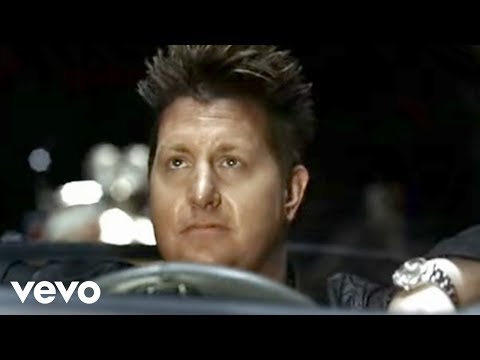

→ More from the 2000s File
View all 2000s hits →

Keep digging