The 2000s File Feature
Bojangles
Bojangles by Pitbull: Miami Swagger Meets Mainstream Hip-Hop, 2006 "Bojangles" is a hip-hop track by Miami rapper Pitbull, released in 2006 as a single from …
01 The Story
Bojangles by Pitbull: Miami Swagger Meets Mainstream Hip-Hop, 2006
"Bojangles" is a hip-hop track by Miami rapper Pitbull, released in 2006 as a single from his album El Mariel. The song was released through TVT Records and produced in the Miami bass and crunk-adjacent style that Pitbull had been refining since his debut, blending club-oriented production with his energetic, percussive delivery. The track is Pitbull's own composition and performance, entirely distinct from the classic song of the same name associated with Sammy Davis Jr. and later recorded by various artists; the shared title is a coincidence of language rather than any musical or thematic connection.
By 2006, Pitbull had established himself as a significant regional force in Miami hip-hop and had begun his push toward national commercial recognition. His 2004 debut album M.I.A.M.I. had produced regional hits and introduced his style to a broader audience, but it was the work he did during 2005 and 2006 that began to translate regional credibility into genuine mainstream visibility. "Bojangles" was part of that transition, appearing on radio playlists that extended well beyond Florida and finding an audience in the club-focused segments of both hip-hop and pop radio.
The production of "Bojangles" employed the high-tempo, percussion-driven framework that Miami bass music had developed over the preceding two decades, updated with the production values that were standard in commercial hip-hop of the mid-2000s. The track's energy was built around a relentless rhythmic drive and a hook designed for club environments, where volume and momentum mattered more than lyrical nuance. Producer work on the track reflected the influence of the South Florida production community that Pitbull had been embedded in throughout his early career.
The song entered the Billboard Hot 100 and demonstrated that Pitbull's appeal was reaching beyond his regional base. It also charted on the Billboard Hot Rap Tracks chart, confirming that hip-hop audiences were responding to his approach even as he was simultaneously courting pop radio. The dual chart presence reflected a strategic positioning that would become central to his commercial approach throughout his career: relevant enough in hip-hop to maintain credibility, accessible enough in production to attract mainstream pop radio play.
El Mariel was released in 2006 and received mixed critical notices but performed respectably commercially. The album's title referenced Mariel, Cuba, from which Pitbull's family had emigrated, and it embedded his Cuban-American identity explicitly in the branding and thematic content of the project. "Bojangles" sat within that framework as a club track that emphasized energy and confidence, qualities that Pitbull had made central to his persona from the beginning of his career.
The mid-2000s context shaped the song's reception in important ways. Hip-hop in 2006 was a commercially dominant genre with multiple competing aesthetic camps, from the lyrically sophisticated to the deliberately minimalist. Pitbull's approach leaned toward the latter, prioritizing rhythmic impact and catchiness over lyrical complexity, and that positioning was divisive among critics even as it generated commercial traction. "Bojangles" was entirely representative of this approach and therefore attracted both the supporters and the skeptics that Pitbull's style generally provoked.
Looking back from a perspective that takes in Pitbull's subsequent career trajectory, which included multiple number 1 Billboard Hot 100 singles, high-profile collaborations with artists including Ne-Yo, Jennifer Lopez, and Marc Anthony, and a global touring profile of genuine scale, "Bojangles" appears as an early marker in a commercial ascent that few observers predicted at the time. The song did not suggest the pop-crossover superstar that Pitbull would become, but it demonstrated the foundational qualities, energy, charisma, and club-oriented production instincts, that would eventually power his mainstream breakthrough.
The track has been revisited by listeners interested in tracing Pitbull's commercial development, and it appears on playlists dedicated to mid-2000s hip-hop and club music. Its place in his discography is that of a significant regional-to-national stepping stone, a track that showed his ambition was larger than the Miami scene that produced him while still drawing deeply on that scene's musical language.
02 Song Meaning
The Meaning of Pitbull's "Bojangles": Hustle, Miami Identity, and Club Confidence
Pitbull's "Bojangles" operates within the tradition of hip-hop tracks that celebrate the performer's own lifestyle, ambition, and cultural identity. The song is less a narrative than a portrait, an energetic self-presentation by an artist who is asserting his presence, his origins, and his refusal to be minimized or overlooked. In this respect it belongs to a lineage of confidence-forward hip-hop that runs from the genre's earliest days through the various regional styles of the 2000s.
The Miami dimension of the song's meaning is central rather than peripheral. Pitbull consistently positioned himself as a product of a specific place and community, and the sonic choices in "Bojangles" reflect that grounding. Miami bass music, with its emphasis on low-end percussion and high-energy club production, is not merely a stylistic backdrop but a cultural declaration. By working within that tradition, Pitbull was signaling continuity with the South Florida musical community that raised him, even as the track's ambitions were clearly directed at a national audience.
His Cuban-American identity is woven into the fabric of the song's persona, even when it is not explicitly stated in the lyrics. The particular kind of swagger that Pitbull projects connects to a Cuban-American cultural sensibility that combines Latin pride with the street-level ambitions of Miami's hip-hop scene. The "Bojangles" persona is someone who has worked hard, come from somewhere specific, and is not going to pretend otherwise for the comfort of an audience that might prefer a less marked performer.
There is also a consistent theme of hustle in the song's emotional register. Pitbull's persona across his early recordings was that of someone who understood the game of commercial music, who was willing to work the system while maintaining his own sense of who he was. "Bojangles" embodies that combination: it is clearly designed for commercial club play, but it does not strip out the performer's identity in the process. The hustle being described is not purely financial; it is also the hustle of making your own cultural identity legible within a mainstream commercial context.
The song's relationship to the club environment is worth noting as a thematic element. Hip-hop tracks designed for clubs operate with a specific logic: they need to work at high volume, in rooms with lots of people, where the communal energy of dancing and movement is part of the experience. The themes of confidence, celebration, and social visibility that run through "Bojangles" are not incidental; they reflect the actual conditions of the environment the song was made for. This alignment between thematic content and intended performance context is part of what made the track effective.
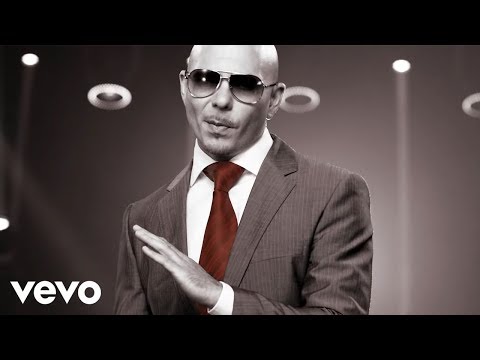
Looking at the song within the arc of Pitbull's catalog, "Bojangles" represents a phase in which his persona was still being consolidated. The fully formed Pitbull of his international pop-crossover period, with his signature "Mr. 305" and later "Mr. Worldwide" branding, the bald head and tuxedo image, and the collaborations with the biggest pop names in the world, was still several years away. But the essential ingredients were present: the energy, the confidence, the club-forward production sensibility, and the refusal to make his origins invisible.
The song's meaning for fans who followed Pitbull through his career trajectory is partly retrospective. Heard now, "Bojangles" sounds like the foundation of a commercial empire that its creator was in the process of building, a document of ambition and identity from before the breakthrough rather than after it. That kind of early-career artifact often takes on greater significance with the passage of time, as the gap between aspiration and achievement closes and the original recording can be heard as both what it was and what it predicted.
The cultural confidence the song projects, grounded in a specific place, a specific heritage, and a specific musical tradition, is ultimately its most enduring thematic quality. Miami hip-hop has always had a particular relationship to place-pride, and "Bojangles" is a fully realized expression of that relationship.
→ More from Pitbull
View all Pitbull hits →

![We Are One (Ole Ola) [The 2014 FIFA World Cup Official Song] by Pitbull Featuring Jennifer Lopez & Claudia Leitte](https://i.ytimg.com/vi/TGtWWb9emYI/maxresdefault.jpg)

→ More from the 2000s File
View all 2000s hits →


Keep digging