The 2000s File Feature
Number One
Number One — Pharrell Featuring Kanye West: Chart History and Cultural Context "Number One," the collaboration between Pharrell Williams and Kanye West, emer…
01 The Story
Number One — Pharrell Featuring Kanye West: Chart History and Cultural Context
"Number One," the collaboration between Pharrell Williams and Kanye West, emerged in the summer of 2006 as one of the more structurally interesting crossover singles of that mid-decade period in hip-hop. Released under Star Trak Entertainment and Interscope Records, the track appeared on Pharrell's debut solo album, In My Mind, which arrived in stores on July 25, 2006. The album had been long anticipated by fans of the Neptunes production duo, as it marked Pharrell's first full-length statement as a solo artist rather than primarily as a behind-the-scenes architect of other people's sound.
The song pairs Pharrell's signature falsetto-inflected vocal style against a guest verse from Kanye West, who at the time was riding the commercial and critical peak ushered in by his Late Registration era. West had spent much of 2005 and early 2006 as arguably the most discussed rapper in the industry, and his presence on any track carried considerable promotional weight. For Pharrell, securing that verse was both a strategic move and a natural extension of his longstanding relationship with West, whom he had worked with extensively in the Neptunes' production corridor.
The production on "Number One" leaned into the sunnier, more melodic side of Pharrell's aesthetic. Where some of the Neptunes' most celebrated work had been angular and deliberately sparse, this track wrapped its drum programming in a warmer harmonic texture, layering keyboards in a way that underscored the song's reflective, somewhat wistful character. Pharrell handled the track's production himself, consistent with his practice of retaining creative control over his solo material rather than farming out beats to collaborators.
"Number One" peaked at number 16 on the Billboard Hot 100, a respectable showing for an album track from an artist whose profile was more strongly associated with production credits than with mainstream pop radio. The single received moderate airplay across urban contemporary and rhythmic radio formats, and its chart trajectory illustrated both the appeal and the ceiling of a project like In My Mind, which had generated genuine industry excitement but faced the challenge of translating a producer's credibility into pure artist-album sales.
The broader context of 2006 hip-hop provides useful framing. That year, the Billboard Hot 100 was increasingly shaped by digital download tracking, which had been fully incorporated into chart methodology in 2005. Songs could now chart based in part on paid digital sales, and this shifted the dynamics of which tracks from an album received promotional investment. "Number One" benefited from this environment, as its digital availability made it accessible to fans who had followed the duo's work without necessarily purchasing the physical album.
The In My Mind album itself received mixed critical reception. Many reviewers praised its sonic ambition and the quality of individual moments, while others suggested that Pharrell's songwriting on his own record lacked the sharpness he consistently delivered when working on behalf of other artists. "Number One" was generally cited as one of the stronger cuts, partly because the West collaboration gave it an energy and competitive dimension that some of the more introspective tracks on the album did not have.
Kanye West's verse drew considerable attention upon the single's release. West was in a notably prolific period, appearing on collaborations across the industry while simultaneously building toward what would become his Graduation era. His appearance on "Number One" fit a pattern of high-profile guest spots that kept him visible between album cycles. The chemistry between the two artists felt organic to listeners familiar with their shared history, and it gave the track a conversational dynamic that distinguished it from a straightforward solo performance.
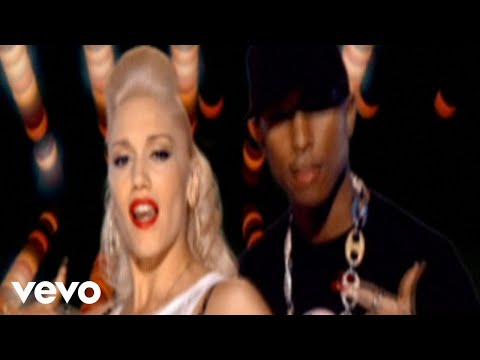
The single was serviced to radio in the summer of 2006, timed to coincide with the album's release window. Interscope put promotional resources behind the record, and the music video received rotation on major video channels, helping maintain the track's visibility during its chart run. The visual treatment reflected Pharrell's established aesthetic sensibility, blending fashion-forward styling with a low-key narrative approach.
In retrospect, "Number One" occupies a specific place in the catalog of both artists, representing a moment when Pharrell was testing the boundaries of his solo commercial potential and West was at a particular apex of his collaborative productivity. The track spent several weeks in the Hot 100's upper reaches before gradually receding as the album cycle wound down, and it remained a reference point for discussions about the Neptunes' influence on mid-2000s hip-hop production aesthetics.
The song's legacy is modest but real. It did not become a defining single for either artist in the way that other collaborations from the era did, but it documented a creative intersection between two producers who were also, each in his own way, navigating the expectations placed on artists who had built their reputations primarily through the records they made for other people. For Pharrell specifically, "Number One" served as evidence that he could sustain a compelling record around his own voice when the right collaborator was present.
02 Song Meaning
Number One — Pharrell Featuring Kanye West: Themes and Artistic Meaning
"Number One" positions itself as a meditation on ambition, self-assessment, and the particular psychology of artists who have spent extended periods operating near the top of their industry. The song's title functions as both a literal assertion and a more layered inquiry: what does it mean to be at the top, and what is the cost of maintaining that position? Pharrell and Kanye West approach these questions from complementary angles, with Pharrell's vocal sections carrying a more introspective and emotionally open register while West's contribution introduces a harder, more externally directed perspective.
The lyrical territory across the track concerns the distance between public success and private experience. Both artists were, at the time of the song's release, figures who had achieved extraordinary commercial success while also navigating the specific strains that come with sustained high-profile visibility. The song explores the tension between confidence and vulnerability, between the performance of dominance that hip-hop as a genre often demands and the more complicated interior states that accompany that performance. This duality was very much part of the cultural conversation in mid-2000s hip-hop, as artists like West had helped shift the genre toward greater emotional transparency without abandoning the competitive rhetoric that had always been central to the form.
Pharrell's contributions to the track emphasize relationships and gratitude alongside ambition. His vocal approach throughout the song is warmer and more confessional than a straightforward bravado record would typically be, suggesting that "number one" status is understood here as relational, achieved in the context of meaningful connections rather than purely as an isolated competitive achievement. This emotional texture distinguished the track from more conventional hip-hop boastfulness and aligned it with the more nuanced approach to masculine identity that Pharrell had been developing across his work with N.E.R.D. and in his production output.
Kanye West's verse engages more directly with the competitive and professional dimensions of the song's central theme. West was in a period of his career when he frequently addressed his own position in the industry, his relationships with fellow artists, and the dynamics of commercial versus critical success. His appearance on "Number One" extended that preoccupation, adding a layer of industry self-awareness to what might otherwise have been a more purely personal statement from Pharrell. The contrast between the two artists' approaches gives the song its structural interest, creating a dialogue rather than a monologue.
The production choices reinforce the thematic content in measurable ways. The warmth of the keyboard arrangement and the relatively relaxed tempo signal that this is not a purely aggressive or combative record. The sonic environment Pharrell created for the track matches its emotional register, which is confident but not hostile, celebratory but touched by a quality of reflection that prevents the song from becoming simple self-congratulation. The melodic framework supports the idea that success, as depicted here, is something to be contemplated as much as declared.
In the context of Pharrell's solo catalog, "Number One" is significant because it addresses the specific ambivalence of an artist who has spent the majority of his career elevating other people's records. The song can be read as Pharrell staking a claim for recognition on his own terms, using the vocabulary of hip-hop assertiveness while also acknowledging the complexity of creative identity when that identity has been so thoroughly enmeshed with collaboration. West's presence on the track, rather than diluting that statement, actually amplifies it by demonstrating that the most credible artists in hip-hop at that moment wanted to make records with Pharrell as an artist, not just commission beats from him as a producer.
The song's meaning accumulates additional resonance when understood against the arc of both artists' subsequent careers. Both Pharrell and West would go on to have some of the most commercially successful and critically discussed years of their careers in the decade following "Number One," making this 2006 collaboration a document of two artists at a transitional moment, aware of their position and actively shaping their own narratives around it.
→ More from Pharrell Featuring Kanye West
View all Pharrell Featuring Kanye West hits →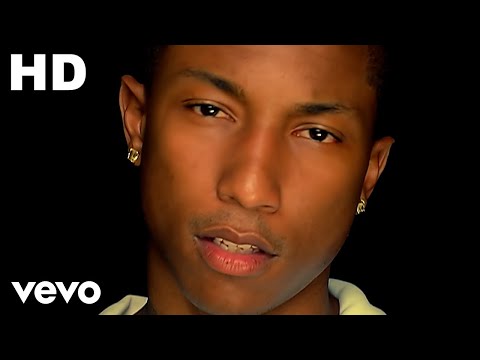
→ More from the 2000s File
View all 2000s hits →
Keep digging