The 2000s File Feature
Show Me The Money
"Show Me The Money" — Petey Pablo's Late-Career Rally in 2006 A Voice from the Carolina Underground Petey Pablo had arrived with considerable force at the st…
01 The Story
"Show Me The Money" — Petey Pablo's Late-Career Rally in 2006
A Voice from the Carolina Underground
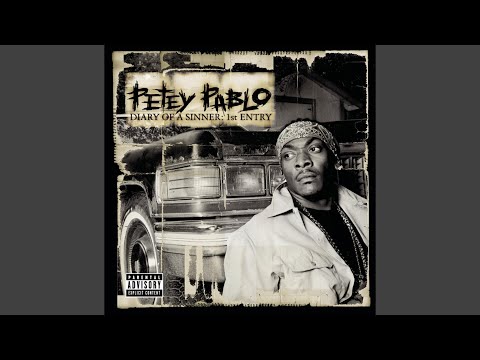
Petey Pablo had arrived with considerable force at the start of the decade. His 2001 debut single "Raise Up" was a genuine phenomenon, an anthem built around state pride and raw energy that made him one of the most distinctive voices out of the Carolinas. His debut album Diary of a Sinner: 1st Entry established his credentials, but the follow-up had taken longer than anticipated. By 2006, the rap landscape had shifted considerably. Southern hip-hop remained dominant, but the specific moment Petey Pablo had inhabited at the beginning of the decade had moved on. Into that context, he released Still Writing in My Diary: 2nd Entry, and "Show Me The Money" became its primary promotional vehicle.
The Sound of Mid-Aughts Southern Rap
The mid-2000s Southern rap sound was muscular, bass-heavy, and built for automobile speakers. "Show Me The Money" understood that assignment. The track leaned into club-ready production with the kind of hard-hitting low end that defined Southern rap radio during that period. Petey Pablo's delivery had always been exuberant and physically animated, and the track gave him space to operate in his natural register: loud, confident, and specific about desire. The track debuted at number 58 on the Billboard Hot 100 on September 2, 2006, which also represented its peak position on that chart. It then spent five weeks on the chart, declining gradually from that initial peak showing.
Context Within the 2006 Rap Landscape
The fall of 2006 was a particularly crowded moment in hip-hop. Jay-Z had returned with Kingdom Come, Lil Wayne was in the middle of his mixtape dominance period, and Southern rap was generating chart hits from multiple directions. Within that competitive field, "Show Me The Money" occupied a specific lane: it was an exuberant, financially focused club track from an artist whose prior work had shown what he could do when a song caught the right moment. The five-week chart run reflected the competitive nature of that environment more than it reflected any deficiency in the track itself. Songs that might have lingered longer in a less crowded cycle moved through quickly during periods of exceptional chart activity.
The "Show Me The Money" Phrase as Cultural Currency
The phrase "show me the money" carried heavy cultural baggage by 2006. It had entered the popular lexicon via the 1996 film Jerry Maguire, where Cuba Gooding Jr.'s delivery had turned it into one of the decade's most quoted lines. Petey Pablo's use of the phrase in a rap context ten years later was a nod to that shared cultural memory while also grounding it in hip-hop's long tradition of frank financial aspiration. The intersection of film culture and rap lyricism gave the track an immediate accessibility for listeners who might not have been regular Petey Pablo followers. The title alone functioned as a hook before the song even played.
A Career in the Rearview
Petey Pablo's career trajectory after "Show Me The Money" reflected the difficult economics of mid-career rap in the streaming transition era. The album did not replicate the commercial impact of his debut, and subsequent releases faced diminishing returns. Yet "Raise Up" had secured his place in the canon of Southern rap anthems, and "Show Me The Money" demonstrated that his energy and personality remained intact years after that initial breakthrough. The track serves as a document of a specific transitional moment in both his career and in the broader landscape of Southern hip-hop, a genre rapidly evolving toward the trap era that would come to dominate the following decade. Listen to the production choices and you can hear a style on the cusp of its own reinvention.
"Show Me The Money" — Petey Pablo's singular moment on the 2000s charts.
02 Song Meaning
"Show Me The Money" — Ambition, Desire, and the Rap Economy of Aspiration
Money as a Rap Lyric's Oldest Subject
Hip-hop has been talking about money since its earliest formation, and that conversation has never been simple. The desire for financial security and status that appears throughout the genre's history reflects a genuine material reality: many of the artists who built rap came from environments where money represented not just comfort but survival, safety, and the capacity to help family. "Show Me The Money" operates within that tradition, deploying financial aspiration as its central subject with the directness that Southern rap in particular had made its signature mode. Petey Pablo's approach to the theme was always more exuberant than calculated, more about energy than ideology, which gave his work on this track a liveliness that purely mercenary rap lyrics often lack.
The Pop Culture Reference as Shared Language
By invoking a phrase so deeply embedded in popular consciousness through its association with the film Jerry Maguire, the track created an immediate bridge between different audience segments. The phrase functioned as a kind of shorthand: anyone who understood the reference was already half-engaged with the track before the hook landed. The use of recognizable cultural touchstones in rap hooks was a well-developed strategy by 2006, part of a broader tendency to treat popular film, television, and sports as common ground that could expand a track's audience beyond core hip-hop listeners. The phrase's prior association with athletic aspiration and financial negotiation made it particularly fitting for a rap context.
Club Culture and the Economics of Sound
The production values on "Show Me The Money" were calibrated for spaces where the financial aspiration in the lyric was most legible: the nightclub, the strip club, the venue where spending money on a good time was the entire point of the evening. Southern rap's relationship to club culture in this period was explicitly about a shared fantasy of abundance, where the music promised that the night could be as lavish and uncomplicated as the track sounded. That fantasy had social functions beyond simple escapism; it offered listeners a temporary experience of the financial ease that the lyric described, a sound system-mediated version of having arrived.
What the Track Reveals About Its Era
Heard now, "Show Me The Money" is a vivid document of a specific period in Southern rap, the moment just before trap music's stripped-down minimalism reshaped the genre's sonic vocabulary. The production still had a certain fullness and warmth that the colder, more mechanical sounds of the following decade would move away from. The track's particular musical texture, its bass priorities, its vocal energy, its relationship to the club floor, captures a style at a transitional point. For students of Southern rap's evolution, it is a useful marker of where the genre was heading and what it was leaving behind in 2006.
→ More from Petey Pablo
View all Petey Pablo hits →
→ More from the 2000s File
View all 2000s hits →




Keep digging