The 2000s File Feature
The Fixer
The Fixer: Pearl Jam Returns with Backspacer in 2009 "The Fixer" served as the lead single from Pearl Jam's ninth studio album Backspacer , released on Septe…
01 The Story
The Fixer: Pearl Jam Returns with Backspacer in 2009
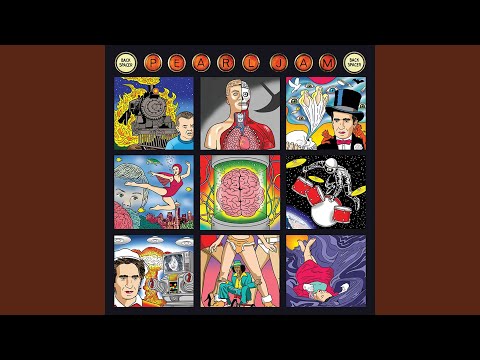
"The Fixer" served as the lead single from Pearl Jam's ninth studio album Backspacer, released on September 20, 2009 through Monkeywrench Records in partnership with Island Records. The song was released as a single preceding the album, generating radio airplay and helping to build anticipation for a project that represented a significant commercial and critical moment for the band. "The Fixer" debuted at number one on the Billboard Mainstream Rock Songs chart, becoming one of Pearl Jam's most immediately successful radio singles in years and demonstrating that the band retained substantial rock radio influence nearly two decades into their career.
The song was produced by Brendan O'Brien, who had previously worked with Pearl Jam on several of their most significant recordings and whose production sensibility was deeply compatible with the band's approach to guitar-driven rock. O'Brien's production on "The Fixer" prioritized energy and directness over the kind of sonic experimentation that had characterized some of Pearl Jam's mid-period work. The result was a track that felt immediate and radio-ready in a way that recalled the more direct moments of their early career without simply recycling that era's formulas.
Pearl Jam had released Pearl Jam, their self-titled album, in 2006, which had debuted at number two on the Billboard 200 and demonstrated the band's continued commercial viability. By 2009, the rock landscape had shifted considerably, with alternative rock radio and the mainstream rock format having undergone substantial changes in terms of audience demographics and listening patterns. The rise of digital distribution had disrupted the physical singles market, and Pearl Jam's decision to release Backspacer through their own Monkeywrench Records in a deal that included distribution through Target retail stores exclusively in the United States was a commercially unconventional choice that reflected the band's longstanding desire to maintain control over their artistic and commercial fate.
The Target exclusive distribution deal for Backspacer generated considerable industry discussion at the time, as it represented one of the more prominent examples of a major legacy rock act choosing retail partnerships over traditional label distribution. The album debuted at number one on the Billboard 200 with approximately 189,000 copies sold in its first week, Pearl Jam's first album to reach number one since Vs. in 1993. That chart position was both a commercial vindication and a demonstration that the Target partnership could deliver results competitive with traditional distribution.
Pearl Jam's career by 2009 occupied a specific and somewhat unusual position in rock music. The band had survived the commercial contraction of grunge and alternative rock in the late 1990s, the disillusionment of the popular rock landscape in the early 2000s, and numerous internal challenges including the departure of original drummer Dave Abbruzzese and the tragic Station nightclub fire in 2003, in which nine Pearl Jam fans died during a crush incident during a concert in Denmark in 2000. These experiences had shaped a band with an unusually deep commitment to fan welfare and an equally unusual capacity for sustained artistic relevance.
The recording of Backspacer took place relatively quickly compared to some of the band's more labored projects, and the resulting album reflected that efficiency in its energy and focus. Eddie Vedder, Jeff Ament, Stone Gossard, Mike McCready, and Matt Cameron collectively created a record that critics described as among their most consistently enjoyable since the early years of their career. "The Fixer" was frequently cited as the embodiment of this renewed energy, its driving tempo and muscular guitar work demonstrating that the band had neither grown complacent nor retreated into nostalgia.
The song's time at number one on the Mainstream Rock chart was its most concrete chart achievement, though it also crossed over to the Adult Alternative Songs chart and received attention on several format-specific measures. Pearl Jam's relationship with rock radio had been complicated at various points in their career by their refusal to produce music videos during the MTV era, their litigation against Ticketmaster over service charges, and other countercultural stances that occasionally disrupted the conventional promotional machinery. By 2009, these tensions had largely subsided, and the band enjoyed a period of warm relations with their industry context.
Critically, "The Fixer" was received as a strong opening statement for an album that delivered on its promise of revitalized purpose. Rolling Stone and other major outlets praised both the single and the album it represented, reading in Pearl Jam's renewed directness a kind of earned confidence, the sound of a band that no longer needed to prove anything but was choosing to rock hard anyway. That framing captured something essential about where Pearl Jam stood in 2009, a band in their fourth decade of existence operating with the freedom that genuine legacy provides.
02 Song Meaning
The Meaning of "The Fixer": Action Against Helplessness
"The Fixer" is a song about the impulse to repair, restore, and engage with the world as a place where human effort matters. Its central emotional stance is one of active resistance against despair, proposing that when something is broken, the appropriate response is not resignation or mourning but the practical work of fixing it. In the context of 2009, a year defined by economic crisis, political exhaustion following the Bush era, and collective anxiety about the future of American institutions, the song's message of purposeful engagement carried a particular timeliness.
Eddie Vedder's vocal performance on the track communicates genuine urgency without tipping into hysteria. The narrator's declaration that he is someone who fixes things rather than simply observing or lamenting is delivered with the conviction of a person who has internalized this as an identity rather than a performative stance. This distinction is important: the song does not preach activism from a position of detachment but embodies it in the very energy and forward momentum of its musical delivery. The music and the message are unified in a way that makes the statement feel authentic rather than sloganistic.
Pearl Jam as a band had long been associated with social and political engagement, from their battles with Ticketmaster over fan access issues in the mid-1990s to Vedder's various public statements on political matters over the years. "The Fixer" fits within that tradition but approaches it from a more personal angle than some of their explicitly political material. The song's subject is not a specific grievance or policy position but a fundamental orientation toward life, a commitment to action as a response to difficulty regardless of the specific form that difficulty takes.
The lyrical construction of "The Fixer" works through a series of conditions and responses, establishing a pattern in which every problem is met with a corresponding determination to address it. This structural logic reinforces the song's thematic content through form as well as content, making the repetitive affirmation of the fixing impulse feel cumulative and inevitable rather than repetitive. By the song's end, the listener has absorbed the narrator's worldview through the rhythm of the argument itself.
The song connects to a broader theme in Pearl Jam's catalog that might be described as earned optimism, a stance that acknowledges difficulty and darkness while refusing to let those acknowledgments become the final word. Tracks like "Better Man," "Given to Fly," and "Just Breathe" all participate in this emotional register, offering affirmation that has been tested against genuine hardship rather than simply declared. "The Fixer" adds to this tradition a particular emphasis on agency, positioning the individual will to act as the primary resource available against entropy and despair.
For listeners discovering the song in the autumn of 2009, the emotional content resonated with the specific anxieties of the post-financial-crisis moment. The impulse to fix things, to restore what had been broken by forces that seemed to operate beyond individual control, was exactly the kind of empowering emotional framework that audiences were seeking during a period of significant collective vulnerability. The song offered not solutions to specific problems but a model of emotional and practical orientation that could be applied to any difficulty.
Within the arc of Vedder's songwriting, "The Fixer" represents the mature expression of a sensibility that had always valued engagement over cynicism. His earlier writing had often explored darker territories, the weight of expectation, the difficulty of connection, the pain of loss. "The Fixer" does not deny those territories but refuses to make them permanent or definitive. Its emotional resolution is not the resolution of specific problems but the affirmation of the capacity and the will to address them, which is a different and arguably more durable form of hope.
→ More from Pearl Jam
View all Pearl Jam hits →

→ More from the 2000s File
View all 2000s hits →




Keep digging