The 2000s File Feature
Freedom
The Story of Freedom by Paul McCartney Imagine the closing weeks of 2001, a year that had cracked the world open. The shock of September 11 still hung over A…
01 The Story
The Story of "Freedom" by Paul McCartney
Imagine the closing weeks of 2001, a year that had cracked the world open. The shock of September 11 still hung over America, and music suddenly carried a different weight. Into that charged atmosphere stepped one of the most famous musicians alive, offering not a complicated meditation but a plain, defiant statement of resolve. "Freedom" was Paul McCartney's direct response to the moment, a simple anthem meant to be sung back rather than studied.
A Legend Responding to His Times
By 2001 McCartney needed no introduction. As one half of the songwriting team behind The Beatles, he had already reshaped popular music more than once, and his solo and Wings catalog had kept him a global star for decades. Yet here he was, late in a towering career, choosing to write something deliberately uncomplicated in a moment that called for clarity over cleverness. That instinct, to reach for the universal, had always been one of his great strengths.
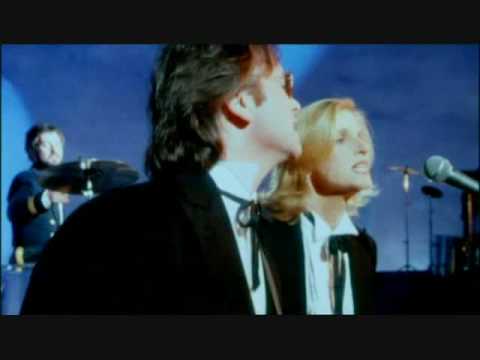
The song emerged in the immediate aftermath of the attacks, and McCartney performed it at The Concert for New York City, the all-star benefit staged at Madison Square Garden in October 2001 to honor first responders and raise funds for victims. That stage gave the song its public debut and its emotional context.
An Anthem Built for the Crowd
Musically, "Freedom" is stripped to its essentials. The arrangement is straightforward rock, anchored by a simple, repeatable refrain designed for an arena full of people to shout in unison. There is no irony in it and no ambiguity. McCartney sings about the right to live freely as a value worth defending, and the music supports that message with directness rather than nuance. It is a singalong, plain and proud, and that was entirely the point.
The recording captured the raw, communal feeling of that benefit performance, the sound of a crowd reaching for something to hold onto. McCartney had always understood the power of a melody that an entire room could sing back, a gift evident across his whole career, and he applied it here in the most direct way imaginable. The song works less as a studio creation than as a shared event, a moment of collective voice.
A Veteran Choosing Simplicity
There is something telling in the fact that one of the most sophisticated songwriters of his generation chose, in this moment, to write something so plain. McCartney could have offered a complex, layered composition. Instead he reached for the most basic tools available, a few chords and a single repeated idea. That decision reflects a kind of wisdom about what a frightened public needed. The song prioritized usefulness over artistry, a deliberate choice to serve the moment rather than impress the critics. Not every great writer would have had the humility to do that.
A Short Chart Appearance
On the Billboard Hot 100, the song's run was brief. "Freedom" debuted at number 97 on December 15, 2001, entering at the very position that would also be its highest. It held at number 97 the following week, on December 22, 2001, before exiting the chart. The single spent just 2 weeks on the Hot 100, a modest commercial footprint for such a high-profile release. The numbers, though, hardly capture the song's purpose, which was never really about chart placement.
A Song Tied to a Moment
"Freedom" will always be inseparable from the autumn that produced it. It is not counted among McCartney's most celebrated compositions, and he himself has spoken of it as a spontaneous reaction to extraordinary circumstances rather than a labored masterpiece. That honesty suits the song. It has gathered more than 411,000 views on YouTube, where it endures as a document of how even the greatest songwriters reach for plain words when the moment demands them.
Press play and you hear less a polished single than a hand extended in a hard season, an invitation to stand up and sing something simple together.
"Freedom" — Paul McCartney's singular moment on the 2000s charts.
02 Song Meaning
What "Freedom" Really Means
"Freedom" is a song with almost no hidden depth, and that is precisely its meaning. Written in a moment of national trauma, it sets out to do one thing: affirm a single value loudly enough that a frightened audience could rally around it.
A Declaration, Not a Debate
The lyric does not argue or explore. It declares. McCartney states the importance of freedom as a fundamental human right and frames the will to protect it as a shared resolve. The central theme is the defense of personal liberty, presented not as a political position but as a basic, almost instinctive human claim. The simplicity is deliberate, a refusal to complicate something the moment treated as urgent.
Unity in the Face of Fear
Beneath the surface message runs a deeper emotional purpose. The song was built for collective singing, and that communal design is part of its meaning. It speaks to solidarity, the act of standing together when the world feels unsafe. A crowd shouting the same plain words becomes its own kind of reassurance, and the track exists to create exactly that feeling.
The Power of Saying Less
From a writer capable of intricate melodies and clever wordplay, the bluntness here is striking. McCartney chose to strip everything away, trusting that in a raw moment, a complicated song would only get in the way. The restraint itself carries meaning, a recognition that sometimes the most useful art is the most direct. It asks nothing of the listener except to agree and to join in.
A Mirror of Late 2001
The song cannot be separated from its context. Born in the weeks after September 11, it reflects a country searching for language to process shock and grief. McCartney, an Englishman with deep affection for New York, offered his contribution in the form everyone could share. The meaning is bound to that specific, painful autumn.
A Word Heavy With History
The choice of freedom as the song's single subject was not accidental. In the autumn of 2001, that word carried enormous weight in public life, invoked constantly as both comfort and rallying cry. McCartney's song tapped directly into that charged language. The lyric leaned on a value the whole audience already held sacred, asking for no persuasion and offering pure affirmation. The simplicity worked precisely because the word already meant so much to everyone hearing it.
Why It Resonated
For all its simplicity, or because of it, the song connected with listeners who needed something plain to hold. It did not try to explain the unexplainable. It simply named a value and invited everyone to stand behind it. In a season starved for reassurance, that straightforwardness was the entire point, and it is why the song still carries the weight of its moment all these years later.
→ More from Paul McCartney
View all Paul McCartney hits →
→ More from the 2000s File
View all 2000s hits →
Keep digging