The 2000s File Feature
The Shock Of The Lightning
The Story Behind The Shock Of The Lightning by Oasis Picture the autumn of 2008: the music industry is in upheaval, downloads have rewritten the rules, and t…
01 The Story
The Story Behind "The Shock Of The Lightning" by Oasis
Picture the autumn of 2008: the music industry is in upheaval, downloads have rewritten the rules, and the Britpop titans who once ruled Knebworth are now elder statesmen of rock, still standing but operating in a very different landscape. Into that moment Oasis dropped a charging, psychedelic-tinged single that proved the Gallagher brothers still had fire in them. Loud, urgent, and gloriously unpolished, it was the kind of song built to remind everyone that the band could still throw a punch.
A Band In Its Later Chapter
By 2008, Oasis had long since survived the hype, the feuds, and the lineup changes that had dogged them since their mid-nineties imperial phase. "The Shock Of The Lightning" served as the lead single from their seventh studio album, Dig Out Your Soul, released that October. The record found the band leaning into a heavier, more hypnotic groove, trading some of their anthemic singalong sweetness for a darker, more propulsive energy. The single arrived as a statement that the group, deep into their career, still had appetite for the chase.
The Sound Of The Single
The track was written by Noel Gallagher and built on a driving, almost krautrock-style rhythm, its momentum relentless from the first bar. It rode a churning, repetitive groove that owed as much to psychedelic rock as to the Beatles-worship that had always sat at the heart of the Oasis sound. The production was raw and immediate, capturing the feeling of a live take, with Liam Gallagher's sneering vocal riding the wave of guitars. It was a song designed to be felt in the chest more than analyzed in the head.
A Fleeting American Appearance
While Oasis remained a genuine arena force in Britain and much of the world, their American chart presence had always been more modest, and by 2008 the broader US market had moved on from guitar rock toward pop and hip-hop. The single made just one appearance on the Billboard Hot 100, on the chart dated October 25, 2008, where it peaked at number 93. That solitary week tells the story of a band still beloved by a devoted fan base but no longer a mainstream American radio fixture.
Out Of Step With American Radio
The modest US chart showing says less about the song's quality than about the country's changing tastes. By 2008, the American mainstream had largely turned away from the kind of swaggering British guitar rock that Oasis embodied, with pop, hip-hop, and a wave of polished dance-influenced sounds dominating the airwaves. Guitar bands that might have thrived a decade earlier now found the doors to American radio harder to open, no matter how strong their material or how devoted their following. Oasis remained capable of selling out enormous venues abroad and at home, yet the singles chart in the States simply was not built for them anymore. That disconnect, between a band still playing to stadiums and a single that lasted one week on the Hot 100, captures the strange position rock found itself in by the end of the decade.
A Last Burst Of Energy
This single carries a poignant footnote in the band's history. Dig Out Your Soul would prove to be the final Oasis studio album, as the long-simmering tensions between Noel and Liam Gallagher finally fractured the band for good in 2009. That makes this charging, defiant track one of the last great statements from one of Britain's most important rock groups, a reminder of the raw power they could still summon even near the end. There is something fitting about the band signing off with a song this restless and alive, refusing to fade quietly even as the cracks were widening behind the scenes.
Turn it up and let the storm roll over you. This is Oasis, late in the day, still swinging.
"The Shock Of The Lightning" — Oasis's singular moment on the 2000s charts.
02 Song Meaning
The Meaning Of "The Shock Of The Lightning" by Oasis
This is a song about the sudden, electric jolt of attraction and inspiration, the moment when something hits you with the force of a lightning strike. Rather than spinning a detailed narrative, it captures a feeling, the rush of being overwhelmed by desire or revelation, and rides that energy through a propulsive, almost trance-like groove.
The Lightning As Metaphor
The central image is right there in the title. Lightning stands in for a feeling that arrives without warning and refuses to be controlled, whether that is falling for someone or being seized by a creative or spiritual charge. The lyrics gesture toward losing oneself in the moment, surrendering to a force bigger than reason. It is impressionistic by design, prioritizing sensation over a tidy story.
Surrender And Momentum
The song's meaning is inseparable from its rhythm. The relentless, churning groove mirrors the lyrical theme of being swept up and carried away, the music itself enacting the loss of control the words describe. There is a sense of forward motion that never lets up, a refusal to pause and reflect. The message is to feel first and think later, to let the wave take you wherever it goes.
A Reflection Of Its Maker
The track also fits neatly into the broader Oasis worldview. The band always traded in big, elemental emotions, in songs about hope, escape, and the search for something transcendent. This single channels that same instinct, but with a psychedelic, hypnotic twist that suited the band's later, moodier phase. It is the sound of seasoned musicians chasing a feeling rather than a hook, leaning into atmosphere and momentum over the tidy singalong structures of their earlier anthems.
Feeling Over Narrative
One of the song's defining choices is its refusal to spell things out. Rather than telling a clear story, it conjures a mood and trusts the listener to fill in the rest, an approach that suits its theme of being overtaken by something too sudden to articulate. The impressionistic lyrics leave room for personal interpretation, so that one listener might hear a love song while another hears a song about creative or even spiritual awakening. That openness is a feature, not a flaw, allowing the track to mean different things to different people while always pointing back to the same core sensation of being electrified.
Why It Resonated
For the band's loyal following, the song landed because it delivered exactly what they wanted: raw energy, swagger, and a chorus built to be roared back at the stage. Its theme of being struck by sudden, overwhelming feeling is universal, easy to map onto love, ambition, or any moment of intense clarity. Wrapped in driving guitars and Liam Gallagher's defiant vocal, it offered a jolt of pure rock catharsis at a time when that sound was becoming rarer on the charts, a reminder of why the band had commanded such devotion in the first place.
→ More from Oasis
View all Oasis hits →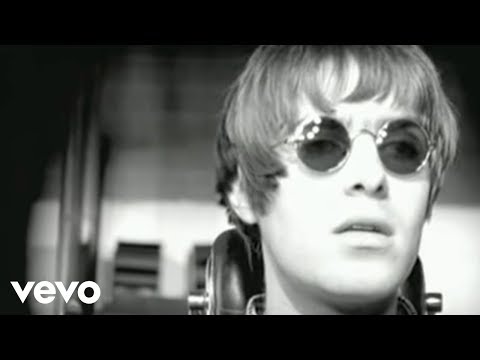

→ More from the 2000s File
View all 2000s hits →




Keep digging