The 2000s File Feature
The Hand That Feeds
The Hand That Feeds — Nine Inch Nails' Defiant Return in 2005 Trent Reznor and the Long Silence The gap between Nine Inch Nails' 1999 album The Fragile and i…
01 The Story
The Hand That Feeds — Nine Inch Nails' Defiant Return in 2005
Trent Reznor and the Long Silence
The gap between Nine Inch Nails' 1999 album The Fragile and its 2005 follow-up With Teeth was one of the more scrutinized silences in alternative rock. Six years had passed, years marked by Trent Reznor's well-documented struggles with addiction and personal crisis, and the rock world had changed substantially in his absence. The nu-metal boom that had dominated heavy guitar music in the early 2000s was already fading; post-punk revival was ascendant in the critical press; and the industry itself was in the middle of a digital distribution upheaval that was rewriting the economics of music careers. Reznor returned into all of this with a version of Nine Inch Nails that sounded simultaneously familiar and recalibrated.
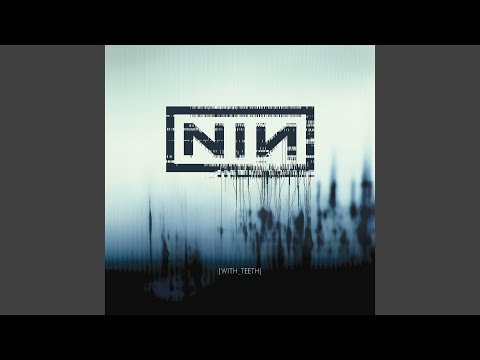
With Teeth was released on Interscope Records in April 2005, and the lead single "The Hand That Feeds" arrived first, establishing the album's sonic territory before the full record dropped. The choice was strategically sound: the track was among the most immediately accessible things Reznor had recorded, built on a propulsive electronic-rock groove that announced a slightly different balance of elements than the denser, more layered productions of the previous decade.
Production and Sonic Character
Trent Reznor produced With Teeth, as he had produced all Nine Inch Nails records, exercising the total creative control that had defined his approach since the project's inception in the late 1980s. On "The Hand That Feeds," that control produced a track built around a locked rhythmic pulse, distorted synthesizers, and guitar work that pushed into the red without losing its shape. The verses carried a coiled, restrained energy; the chorus released it with blunt force. The production was cleaner than much of Nine Inch Nails' earlier work, reflecting both the sonic trends of 2005 and Reznor's stated intention to make a more direct record than the intricate The Fragile had been.
The arrangement gave radio programmers something they could work with while retaining enough aggressive texture to satisfy the core audience that expected Nine Inch Nails to maintain their teeth. It was a difficult balance to strike and the track managed it effectively, which explains why the song became the album's commercial spearhead.
The Billboard Achievement
"The Hand That Feeds" debuted on the Billboard Hot 100 on April 9, 2005, entering at its peak position of number 31. That debut-at-peak performance reflected the pent-up demand generated by the six-year wait and the intensity of the promotional campaign surrounding With Teeth. The single spent 20 weeks on the Hot 100, a substantial run that demonstrated consistent audience engagement across multiple months. For an artist working in the heavier end of the alternative rock spectrum, those numbers were remarkable, confirming that Reznor's return had been received with the enthusiasm that the silence had seemed to promise.
On rock and alternative charts, where Nine Inch Nails had always been a dominant force, the song performed at the very highest levels. The Hot 100 crossover was a measure of how widely the band's return had been anticipated across different listener communities.
Political Context and Reception
The song was widely interpreted as a commentary on the political climate of 2005, particularly the atmosphere of the Iraq War era and the dynamics of power and compliance that critics of the Bush administration were examining. Reznor did not elaborate extensively on the song's targets in public, allowing the imagery and the directness of the lyrical themes to speak without a precise key to their interpretation. That ambiguity served the record well, giving it a political charge without locking it into the specific news cycle of a single month.
The track's theme of refusing to serve a corrupted authority resonated across political lines, attracting listeners who came from very different places ideologically but shared a sense that the institutions surrounding them had lost legitimacy. Rock music has historically channeled that kind of generalized disaffection, and Nine Inch Nails had been doing it more explicitly and more articulately than most since the early 1990s.
The Comeback That Mattered
Looking back at 2005 from any distance, "The Hand That Feeds" holds up as one of the more successful returns in alternative rock history. Reznor came back with a record that was confident rather than defensive, aggressive rather than retrospective, and commercially potent without sacrificing the qualities that made Nine Inch Nails interesting. The song invited a new generation of listeners into the catalog while giving longtime fans a reason to stay engaged. Press play and feel again what it sounded like when one of rock's most uncompromising artists decided that the world needed to hear from him again.
"The Hand That Feeds" — Nine Inch Nails' singular moment on the 2000s charts.
02 Song Meaning
The Hand That Feeds — Power, Compliance, and the Refusal to Submit
The Central Challenge
The animating question at the heart of "The Hand That Feeds" is direct and uncomfortable: at what point does comfort become complicity? The song addresses the human tendency to accept conditions that should provoke resistance, to accept the terms offered by authority figures because rejection carries costs that feel too high. Nine Inch Nails had always been interested in power and its effects on the individual, but earlier work had often approached these themes through a more personal or psychological lens. This track brought them out into the open, addressing systems of authority rather than intimate dynamics.
The imagery of the feeding hand, the institution or authority that provides sustenance in exchange for submission, was both ancient as a metaphor and newly charged in the context of American political life in 2005. The song dared its listeners to examine their own relationship to the systems that sustained them, to ask whether convenience had replaced conscience as the primary guide to behavior.
The Tradition of Political Rock
Political rock has a long and complicated history, from the protest folk that fed into early rock through the punk movement's more systematic antagonism toward established power. Nine Inch Nails occupied an unusual position in this tradition. Reznor had never been an overtly political artist in the way that groups like Rage Against the Machine were, with their explicit identification of ideological targets and their calls to collective action. His political sensibility had always been more oblique, working through atmosphere and suggestion rather than sloganeering. "The Hand That Feeds" was more direct than most of his previous work, which gave it an urgency that some longtime listeners found surprising and others found overdue.
The song entered a cultural moment saturated with political commentary. The Iraq War, the Patriot Act, and the broader conduct of American foreign and domestic policy in the early 2000s had generated a substantial body of artistic response across multiple genres. Nine Inch Nails' contribution was distinguished by its sonic force and by Reznor's refusal to reduce complex moral questions to simple binaries.
Individual Psychology and Collective Behavior
The song's power derives in part from its focus on individual psychology rather than systemic analysis. Political commentary that addresses the audience directly, that asks each listener to examine their own behavior rather than simply condemning distant villains, creates a different kind of discomfort than conventional protest music. Reznor placed the moral burden squarely on the individual, asking not why bad systems exist but why individual people allow themselves to participate in them without resistance.
This approach was characteristic of Nine Inch Nails' broader artistic strategy. The project had always been primarily interested in the internal landscape of the individual confronting a hostile or incomprehensible world. Extending that interest into the political sphere in 2005 felt like a natural evolution rather than a departure, because the fundamental question, what does a person owe themselves in the face of coercive pressure, remained the same.
Why the Track Resonated Across Demographics
Nine Inch Nails' audience in 2005 was broad enough to include listeners who held widely divergent political views. The song's endurance in the rock canon over the subsequent years suggests that its appeal went beyond the specific political moment of its creation. The theme of refusing complicity has a universality that transcends the particular political context in which Reznor wrote it. The feeding hand in the lyric can be read as any institution, any relationship, any arrangement that trades comfort for autonomy. That flexibility of application kept the song feeling relevant long after the specific circumstances of 2005 had receded into history.
The propulsive, physical urgency of the music reinforced the thematic content precisely: this is a song that wants its listeners to act, to move, to respond, not merely to observe. Few rock records of the decade matched that combination of intellectual content and physical force.
"The Hand That Feeds" — Nine Inch Nails' singular moment on the 2000s charts.
→ More from Nine Inch Nails
View all Nine Inch Nails hits →

→ More from the 2000s File
View all 2000s hits →

Keep digging