The 2000s File Feature
Single
"Single" — Natasha Bedingfield's Celebration of Independence The London Voice That Crossed the Atlantic The mid-2000s produced a wave of British pop that fou…
01 The Story
"Single" — Natasha Bedingfield's Celebration of Independence
The London Voice That Crossed the Atlantic
The mid-2000s produced a wave of British pop that found eager audiences on both sides of the Atlantic, and Natasha Bedingfield was among its most commercially successful representatives. Her debut album Unwritten, released in 2004 in the UK and 2005 in the United States, introduced her as a confident, melodically gifted songwriter with a particular gift for anthems that felt personal and universal simultaneously. By the time "Single" appeared in 2006, she had already broken through with the title track "Unwritten," which had become one of the most recognizable pop songs of that era. "Single" arrived in that slipstream, carrying different emotional freight but the same instinct for the declarative hook.
A Declaration, Not a Lament
"Single" made a choice that distinguished it from most pop songs addressing relationship status: it positioned being single as a condition worth celebrating rather than a problem requiring resolution. The track's refusal to treat singlehood as a deficit was commercially bold in a genre that historically treated romance as the default aspiration and its absence as a wound to be healed. Bedingfield's version was unapologetic, even exuberant, framing independence as something to be inhabited with pleasure rather than endured while waiting for something better to arrive.
The production suited that attitude. The track has the propulsive, guitar-forward energy of pop-rock that characterized a particular strand of mid-2000s commercial music, bright and somewhat breathless, moving forward without much pause for doubt. Bedingfield's vocal performance carries an ease that reinforces the lyrical argument, sounding genuinely comfortable rather than defiantly asserting comfort she doesn't feel. That authenticity of tone was part of what made the song connect with listeners who recognized the difference between performance and genuine conviction.
The Chart Climb in Summer 2006
The single debuted on the Billboard Hot 100 on June 24, 2006, entering at number 72. Over the following weeks it climbed through the summer chart cycle, moving from 69 to its peak of number 57 on July 8, 2006, before gradually receding over the subsequent weeks. It spent six weeks on the Hot 100 in total, a reasonable run for a pop track that functioned partly as an album cut and partly as a standalone radio single. The track was working from the momentum of the Unwritten era's commercial goodwill and found enough radio support to register meaningfully on the chart.
Bedingfield in the Pop Landscape of 2006
The mid-2000s American pop landscape was dominated by a mix of R&B crossover, dance-pop, and the genre-blending approach that would later be called "pop-rock." Bedingfield fit into that landscape as a British import with a songwriter's sensibility that set her apart from pure dance-pop acts. Her profile at this point was strong enough to generate genuine mainstream radio consideration for follow-up material after "Unwritten," though matching the crossover success of that breakthrough was always going to be challenging. "Single" performed creditably given those expectations.
The song also arrived in a summer when audiences were particularly receptive to female pop voices with a degree of independence built into their public image. Bedingfield's brand, if it can be called that, was of a young woman who took her own creative and personal agency seriously, and "Single" aligned with that identity clearly.
A Summer Song That Said Something Real
The best summer pop songs tend to be the ones that capture a specific feeling with enough precision that the emotion transcends the season, and "Single" belongs to that category. Its core argument, that freedom and solitude are sources of energy rather than deprivation, remained resonant well beyond its chart cycle and has continued to find new listeners through the streaming era. For anyone who wants to understand the particular texture of mid-2000s British-American pop crossover, Bedingfield's "Single" is an essential and enjoyable data point. Put it on and feel the summer it captured.
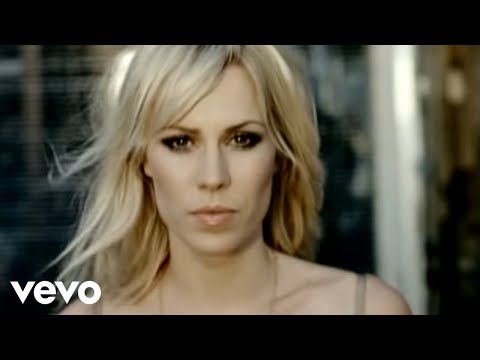
"Single" — Natasha Bedingfield's singular moment on the 2000s charts.
02 Song Meaning
"Single" — Independence, Self-Worth, and the Joy of Being Whole Alone
Reframing the Narrative
Popular music spent the better part of the twentieth century treating romantic partnership as the implicit destination of every personal journey. Songs about being alone were, almost without exception, songs about loss, longing, or the interim state before the next relationship arrived. Natasha Bedingfield's "Single" pushed against that convention with an energy that made the pushback feel easy rather than strained. The song's central argument, that a person without a partner is complete rather than incomplete, was not a new idea in feminist or self-help discourse, but it was relatively unusual as the explicit subject of a mainstream pop single in 2006.
The track did not moralize about this position. It simply inhabited it with obvious pleasure, which was a more effective rhetorical strategy than argument would have been. Listening to Bedingfield's vocal, it is genuinely difficult to hear deprivation or concealed sadness. The lightness is structural, not performed.
The Social Context of 2006
The mid-2000s occupied a particular cultural moment in the negotiation between traditional relationship scripts and the expanding range of adult life choices. Pop culture in this period was beginning to take seriously the idea that single adulthood was not a waiting room but a valid destination, a shift that would accelerate through the following decade. Television, film, and music all participated in this renegotiation, and "Single" arrived at a moment when audiences were receptive to its message in ways that might not have been true a decade earlier or later.
Bedingfield was in her mid-twenties when the track was released, which gave her natural authority to speak from the position the song describes. She was not a teenager idealizing independence or an older artist looking back ruefully on a life without partnership. She was someone whose actual circumstances aligned reasonably closely with the lyrical stance, and that alignment came through in the performance.
Confidence as the Medium
The emotional register of "Single" is best described as confident equanimity. The narrator is not performing happiness over sadness; she is describing a genuine state. That confidence is the track's most valuable asset and its most lasting legacy, offering listeners who needed permission to feel good about their own independence a model for how that feeling could be communicated without defensiveness or apology.
Pop songs function partly as emotional scripts, providing language and rhythm for feelings that listeners struggle to articulate on their own. "Single" performed that function with unusual directness, and its continued presence in streaming playlists dedicated to self-empowerment and independence reflects how effectively it served that need.
The Lasting Resonance
More than fifteen years after its release, "Single" retains its core usefulness. The question it answers, how to feel genuinely good about your own company and freedom, has not become obsolete, and the answer it offers, confidently and melodically, has not lost its power. For listeners who came to Bedingfield through "Unwritten" and are working through her catalog, "Single" is a reminder that her gift for the emotionally direct pop declaration extended well beyond her breakthrough hit.
"Single" — Natasha Bedingfield's singular moment on the 2000s charts.
→ More from Natasha Bedingfield
View all Natasha Bedingfield hits →



→ More from the 2000s File
View all 2000s hits →




Keep digging