The 2000s File Feature
I'm Really Hot
"I'm Really Hot" — Missy Elliott Owning the Room The Queen of the Left Turn The early 2000s were a good time to be Missy Elliott. By 2004 she had accumulated…
01 The Story
"I'm Really Hot" — Missy Elliott Owning the Room
The Queen of the Left Turn
The early 2000s were a good time to be Missy Elliott. By 2004 she had accumulated one of the most distinctive catalogs in hip-hop, a body of work defined by its refusal to stay still. Where most artists found a sound and refined it, Missy and her longtime collaborator Timbaland had built an aesthetic around productive instability, the sense that the next record might sound like nothing that had come before. This Is Not a Test!, the album that produced I'm Really Hot, arrived in November 2003, and by February 2004 its lead commercial single was making its presence felt on the charts.
Missy Elliott, born Melissa Arnette Elliott in Portsmouth, Virginia, had by this point been one of the defining forces in hip-hop for nearly a decade. Her early work with the group Sista had given way to a solo career launched in 1997 with Supa Dupa Fly, an album that announced her as something genuinely new in the genre. By 2004, she had won multiple Grammy Awards and established herself as one of the few artists equally respected for her production sensibilities, her rapping, and her visual creativity. The combination placed her in a category largely by herself.
Timbaland's Fingerprints All Over It
Like virtually all of Missy Elliott's major recordings, I'm Really Hot carried the unmistakable production signature of Timbaland, born Timothy Zachary Mosley. The two had developed their working relationship in Virginia in the early 1990s and had built one of the most productive creative partnerships in modern hip-hop. Timbaland's production style in this period was built on unpredictable rhythmic displacement, the sense that beats would fall where you did not expect them, combined with a fondness for electronic textures that bore no obvious relationship to traditional hip-hop production.
On I'm Really Hot, Timbaland delivered a track with a confident, club-ready energy that suited Missy's declarative persona. The production leaned into the braggadocious theme of the lyric, making the instrumental landscape as assertive as the vocals atop it. The beat served the message, which in a Missy Elliott record was always the baseline expectation.
Chart Life and Commercial Context
The single debuted on the Billboard Hot 100 on February 14, 2004, at position 72. Over the following weeks it climbed steadily, reaching its peak position of number 59 on March 13, 2004, and spending 10 weeks on the chart. The performance reflected the complex commercial environment Missy was navigating: a core audience that was devoted and vocal, but a mainstream radio landscape that had grown more fragmented than the one she had dominated in her commercial peak years around the turn of the decade.
This Is Not a Test! as an album received respectful but somewhat muted critical attention compared to her earlier releases, partly because the bar she had set for herself was extremely high. The singles performed solidly without replicating the crossover impact of earlier recordings like Get Ur Freak On or Work It, which had become cultural touchstones. That earlier catalog was simply difficult to compete with, even for its own creator.
What the Track Represented in Her Career
Missy Elliott's career has a specific quality that separates her from most of her contemporaries: she has never appeared to be chasing the moment. Even when her recordings connected with mainstream audiences, the connection felt like the mainstream arriving at the place where she already was, rather than Missy adjusting her coordinates to find them. I'm Really Hot operates from that same position of self-assurance, a track that does not ask for approval so much as announce a presence.
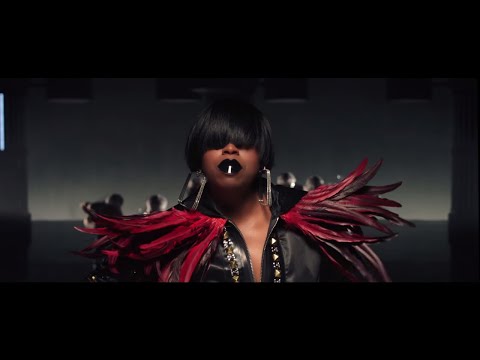
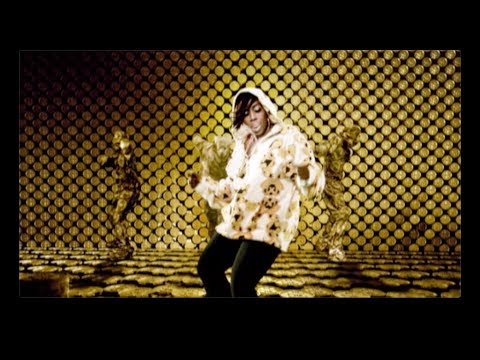
Her visual work around this period, particularly the music videos that accompanied her singles, continued to demonstrate her complete creative vision. The music and the visuals were always conceived as an integrated statement, which made Missy Elliott's singles events in a way that purely audio recordings could not replicate. If you want to understand why she matters, you need both dimensions. Start with the record, then seek out the video, and you will find something that holds up to scrutiny from either direction.
"I'm Really Hot" — Missy Elliott's singular moment on the 2000s charts.
02 Song Meaning
"I'm Really Hot" — Self-Assurance as an Art Form
The Lyric of Confidence
There is a long tradition in hip-hop of the boast as primary mode of address, but the best practitioners of that tradition understand that confidence in lyric form is not simply a matter of asserting superlatives. What distinguishes genuinely effective braggadocious rap from mere self-promotion is specificity, wit, and the ability to make the listener feel that the claim is earned. I'm Really Hot works in this tradition with characteristic Missy Elliott precision. The lyrical posture throughout is one of amusement at the obviousness of the claim rather than defensive assertion of it. Missy does not argue for her status; she proceeds from it.
This distinction matters because it creates a fundamentally different listener relationship. Defensive boasting invites skepticism; assured boasting invites the listener to simply inhabit the same confidence, to feel it rather than evaluate it. The song operates in that second register, which is significantly harder to sustain across a full track.
Female Agency and the Hip-Hop Double Standard
The song's themes of self-assurance and physical confidence carried specific cultural weight coming from a Black female artist in 2004. Hip-hop had a complicated relationship with female confidence at this point in its mainstream evolution; the genre's commercial mainstream had become increasingly concentrated around a particular set of images and expectations that left little space for the kind of self-determined, visually experimental presence that Missy Elliott represented. Her consistent insistence on her own terms constituted a form of cultural argument made through repeated artistic practice rather than explicit statement.
Every Missy Elliott recording that placed female desire, humor, and confidence at its center was participating in a broader conversation about who got to occupy what space in popular music. The song engaged that conversation without needing to spell it out.
Timbaland's Production as Meaning-Making
The beat beneath the lyric is not neutral decoration. Timbaland's production choices on this track actively support the song's themes by creating a sonic environment of authority, something that sounds like it owns the room rather than asking permission to enter. The rhythmic confidence of the arrangement mirrors the lyrical confidence above it, creating a unified statement rather than a text-music relationship where one element dominates the other.
This integration of lyrical and musical meaning is a hallmark of the best Missy Elliott and Timbaland collaborations, where the total effect exceeds what either contribution would achieve independently. The production on this track rewards close listening because its apparent simplicity conceals a precise set of choices about where to place emphasis and where to leave space.
The Track in the Broader Missy Elliott Legacy
Missy Elliott's career has been recognized with multiple Grammy Awards and a place in the songwriting and performance conversation that extends well beyond hip-hop's internal rankings. When the Recording Academy honored her with the Michael Jackson Video Vanguard Award at the 2019 MTV Video Music Awards, the recognition was for exactly the kind of integrated creative vision that tracks like I'm Really Hot exemplify: music, visuals, and persona working as a single statement. That holistic creative approach distinguished her from contemporaries who excelled in one dimension but could not sustain the same quality across all three.
The song is, in miniature, a demonstration of why Missy Elliott's catalog has proven so durable: the confidence it projects feels like a character trait of the artist rather than a studio construct, and character traits do not age out of relevance.
→ More from Missy Elliott
View all Missy Elliott hits →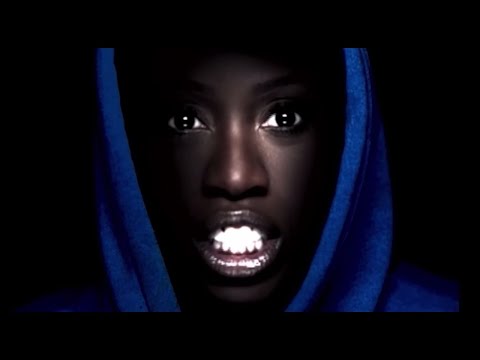


→ More from the 2000s File
View all 2000s hits →
Keep digging