The 2000s File Feature
My Apocalypse
My Apocalypse — Metallica's Death-Metal Closer The Machine at Full Throttle Picture the summer of 2008: the global financial system was beginning to crack, t…
01 The Story
My Apocalypse — Metallica's Death-Metal Closer
The Machine at Full Throttle
Picture the summer of 2008: the global financial system was beginning to crack, two wars ground on overseas, and rock radio had largely abandoned its heaviest corners. Into that atmosphere, Metallica arrived with the most ferocious track on their most anticipated album in nearly two decades. Death Magnetic had the whole metal world holding its breath, and My Apocalypse was its final, snarling punctuation mark, arriving as the album closer and leaving listeners physically winded.
The band's position at that moment was unusual. They had spent the years since 2003's St. Anger quietly rebuilding credibility with their fanbase after that album's divisive reception. Death Magnetic was designed as a return to the speed and technicality of their 1980s catalog, and producer Rick Rubin guided the sessions toward that goal with characteristic economy. Rick Rubin's minimalist approach, which strips away production excess to find the core of a performance, suited Metallica's desire to rediscover what made them dangerous in the first place.
A Track Built for Velocity
My Apocalypse is the shortest track on Death Magnetic and arguably the most concentrated. Clocking in at around five minutes, it compresses the energy of a full thrash workout into a tight, punishing structure. The song opens at near-maximum velocity and refuses to relent. James Hetfield's rhythm guitar work here is particularly precise, laying down a riff architecture that recalls the band's early-career touchstones while sounding entirely contemporary.
Lars Ulrich's drumming across the track is relentless, built on the kind of rapid-fire double-bass patterns that had defined Metallica's speed metal identity since the early 1980s. Kirk Hammett's lead guitar phrases cut through the dense sonic fabric in bursts, serving the song's momentum rather than interrupting it. Robert Trujillo, solidly in his fifth year as the band's bassist by this point, locks in beneath the rhythm section with a low-end rumble that gives the track its physical weight.
Debuting at the Edge of the Chart
As a standalone chart entry, My Apocalypse debuted on the Billboard Hot 100 on September 13, 2008, entering at position 67 and remaining for a single week. That modest placement reflected the track's nature, a deep album cut aimed at devoted fans rather than mainstream radio. Death Magnetic itself debuted at number one on the Billboard 200 that same week, shipping over 490,000 copies in the United States in its first seven days, one of the strongest debuts in hard rock history at that point.
The track's brief chart appearance was partly a function of the era's digital sales infrastructure. As digital downloads became the primary mechanism for album-cut chart positions, any song from a commercially dominant album could register on the Hot 100 during launch week simply through sheer volume of purchases. Fans who bought the complete album digitally contributed to that one-week footprint before attention moved on to other tracks from the record.
The Legacy of the Closer
Within the world of Metallica scholarship, My Apocalypse earned its place as evidence that the band had not lost its technical edge. Critics who had grown frustrated with St. Anger's unconventional choices found in this track a kind of reaffirmation: the ability to play at speed with precision was still there, apparently waiting beneath the surface.
The song became a live staple in the band's touring cycle behind Death Magnetic, frequently deployed as a set closer or late-show accelerant. On stage, its velocity becomes even more apparent; the gap between studio control and live performance narrows on a song this driven by physical execution. Metallica's World Magnetic Tour, which ran through 2008 and 2009, brought the track to arenas and stadiums worldwide, cementing its status as a fan favorite among the album's many highlights.
The Death Magnetic sessions also sparked a lengthy public debate about the album's loudness, with audiophiles and engineers noting that the mastering had compressed the dynamic range significantly. That controversy touched every track on the record, including My Apocalypse, and became one of the defining discussions about early digital-era loudness wars in rock production.
Where It Stands
More than fifteen years on, My Apocalypse represents a specific moment in Metallica's long arc: the point at which they decided velocity and aggression could coexist with commercial ambition, and proved that thesis to audiences who had begun to wonder. For listeners who came to Death Magnetic skeptical, it was the track that most resembled the band at their pre-Black Album best. For longtime devotees, it felt like a promise kept.
Put on some headphones, find the track at full volume, and let the first riff do what it was designed to do.
"My Apocalypse" — Metallica's singular moment on the 2000s charts.
02 Song Meaning
My Apocalypse — Chaos as Catharsis
Destruction as a Theme
The lyrical territory of My Apocalypse fits squarely within Metallica's long tradition of exploring violent, apocalyptic imagery as a form of emotional release. The track conjures scenes of total collapse, presenting devastation not with grief but with a kind of exhilarated surrender to overwhelming force. It is music that invites the listener to imagine catastrophe and find something thrillingly honest in that imagination.
This approach has deep roots in heavy metal's philosophical orientation. The genre has long offered listeners a controlled space to confront fears about mortality, social breakdown, and human fragility. Metallica's particular gift has always been transforming those dark imaginative spaces into something that feels energizing rather than depressing. On My Apocalypse, that alchemy is especially concentrated.
Speed as an Artistic Statement
The sheer velocity of the track is itself a form of meaning. When music moves this fast, the rational mind struggles to process it analytically; listeners respond physically before they respond intellectually. The relentless pace creates a sensation of being swept up in something larger than oneself, which is precisely the emotional register the song's themes describe. The music enacts the apocalypse it names, turning the listening experience into a kind of controlled sensory overwhelm.
This alignment between form and content is one of the reasons the song resonates with fans who might struggle to articulate why they love it. The music argues its case through kinetics. The theme of unstoppable force becomes real because the track itself feels unstoppable.
The 2008 Context
Arriving in September 2008, the track landed against a backdrop of genuine cultural anxiety. Financial systems were visibly straining. News cycles were saturated with images of conflict and institutional failure. For listeners tuned into that frequency of dread, a song that turned apocalyptic imagery into something anthemic offered an unusual kind of comfort: acknowledgment, delivered at full volume.
Heavy metal has always functioned as a pressure valve for social tension, and Death Magnetic as a whole seemed attuned to its cultural moment. My Apocalypse distilled that function into its most extreme form. The track does not offer resolution or reassurance; it offers intensity, which is sometimes exactly what anxiety requires.
Legacy Among the Faithful
Within Metallica's catalog, My Apocalypse occupies a specific niche: it is the kind of track that devoted fans hold up as proof of the band's continued vitality. When critics or casual listeners dismiss a late-career album as lesser work, fans tend to point to the moments of genuine ferocity as counterevidence. This track is one of those moments.
It also functions as a generational entry point. Younger listeners encountering Death Magnetic often cite My Apocalypse as the track that pushed them toward the band's earlier, faster catalog. Its role as a gateway into the deeper archive of 1980s thrash material is part of what gives the song cultural staying power beyond its modest chart performance.
The song is not a message track, not a social statement, not a confessional. It is something rarer in mainstream rock: a piece of music that commits fully to a single emotional pitch and sustains it without apology. That commitment is what makes it memorable.
"My Apocalypse" — Metallica's singular moment on the 2000s charts.
→ More from Metallica
View all Metallica hits →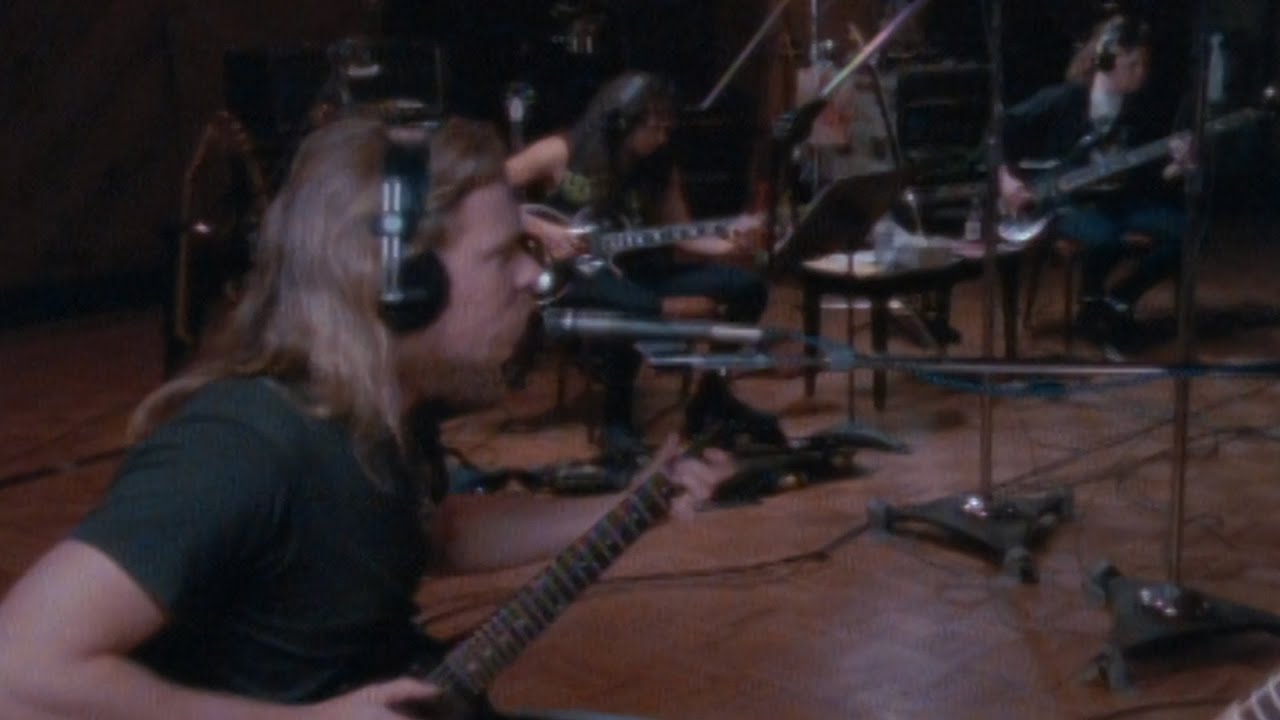

→ More from the 2000s File
View all 2000s hits →




Keep digging