The 2000s File Feature
Breathe, Stretch, Shake
"Breathe, Stretch, Shake" — Mase Featuring P. Diddy's Feel-Good Return The Comeback Nobody Expected When Mason Betha walked away from hip-hop in 1999 to purs…
01 The Story
"Breathe, Stretch, Shake" — Mase Featuring P. Diddy's Feel-Good Return
The Comeback Nobody Expected
When Mason Betha walked away from hip-hop in 1999 to pursue religious ministry, it seemed like one of the more definitive exits in recent pop music history. Mase had been one of the most commercially successful rappers of the late 1990s, his laid-back flow and Harlem charisma making him a natural foil for Bad Boy Records' polished production and P. Diddy's instinct for radio domination. The retirement was genuine, not a marketing move. For several years, Mason Betha was simply not in the music business.
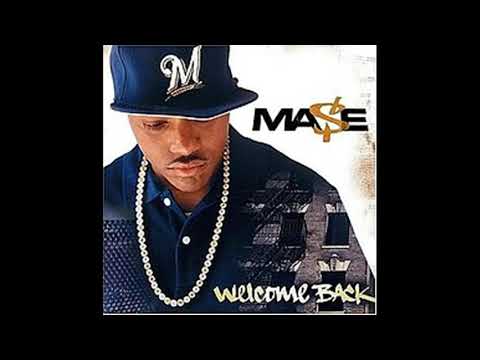
When he came back in 2004 with the album Welcome Back, the landscape had shifted considerably. The glossy sheen of late-90s Bad Boy rap had given way to different sounds, different stars, and different expectations. Mase's return could have been awkward, a time capsule struggling to find its footing in a changed world. Instead, "Breathe, Stretch, Shake" demonstrated that his instincts for catchy, smooth, good-time hip-hop remained entirely intact.
The Sound and Production
The track carries a lightness that was somewhat refreshing in a 2004 hip-hop landscape that had grown progressively harder and more intense in sonic terms. Mase had always favored a low-pressure delivery, a sense that rapping was effortless rather than competitive, and "Breathe, Stretch, Shake" doubles down on that quality. The beat is warm and unhurried, built for movement rather than confrontation, carrying the kind of party-ready energy that made the best Bad Boy productions of the late 1990s so commercially potent.
The hook, built around the title's three-word instruction, functions as an invitation to physical participation, a track designed for dance floors, summer drives, and anywhere people want to move without thinking too hard. P. Diddy's presence on the track provided continuity with their earlier collaborations and gave the single an additional layer of commercial credibility, signaling that the comeback was endorsed by Mase's most important creative partner from his earlier run.
Chart Performance
The single entered the Billboard Hot 100 on August 28, 2004, debuting at position 64. It moved steadily upward from that starting point, reaching 51 in its second week, 41 in its third, and continuing to climb until it reached its peak position of number 28 on October 2, 2004. The 16-week chart run was substantial, demonstrating that Mase's audience had not forgotten him and that the single had real radio legs beyond the initial curiosity about his return.
A peak of 28 and 16 weeks on the chart was a strong commercial showing by any measure, and particularly impressive for an artist whose last major release had come five years earlier and who had spent that intervening period entirely outside the industry. The numbers suggested that nostalgia for Mase's particular style had been building during his absence, creating pent-up demand that the single was able to tap.
Mase's Place in the Late 90s Hip-Hop Landscape
To understand the impact of the comeback, it helps to remember what Mase had represented at his commercial peak. His debut album Harlem World had sold millions of copies in 1997, and his collaborations with Diddy on tracks like "Can't Nobody Hold Me Down" had been genuine crossover phenomena. His departure had left a void for a specific kind of smooth, charismatic Harlem hip-hop that had never been fully filled by anyone else.
The welcome his return generated reflected genuine affection from an audience that had grown up with his music and retained real fondness for what he had created. The single smartly didn't try to sound like 2004 rap at its hardest edges; it sounded like Mase, which was exactly what his audience wanted.
A Summer of Easy Listening
The track's run through the summer and fall of 2004 positioned it as one of the more pleasant commercial surprises of that chart year. In a hip-hop environment that valued aggression and intensity, Mase offered something different: an invitation to relax, move, and not take any of it too seriously. "Breathe, Stretch, Shake" delivered on exactly what its title promised. Play it now and the decade-of-the-iPod feel is immediate, a track that knew its purpose and served it without complications.
"Breathe, Stretch, Shake" — Mase Featuring P. Diddy's singular moment on the 2000s charts.
02 Song Meaning
"Breathe, Stretch, Shake" — Meaning, Themes, and the Joy of the Uncomplicated
Instructions as Liberation
The most immediate interpretive move the song makes is its title structure: three verbs in sequence, presented as instructions. Breathe. Stretch. Shake. The command form carries an implicit argument that what is being described is simple, achievable, and already within the listener's capability. This is not a song that asks you to feel complicated emotions or navigate ambiguous situations; it tells you to move your body and enjoy being alive. That simplicity is deliberate and it constitutes its own kind of artistic statement.
In a hip-hop landscape that, by 2004, was increasingly invested in intensity, seriousness, and competitive display, a track that foregrounds physical relaxation and easy pleasure represents a genuine counterpoint. Mase had always made this kind of accessible, good-time energy his signature, and the song returns to that signature without apology.
The Philosophy of the Easy Good Time
Mase's artistic identity across his career has been built on a particular philosophy of rap delivery: that effortlessness itself communicates a kind of confidence, that not straining shows security rather than laziness. This relaxed approach carries a social dimension, suggesting that the good life is not reached through grinding tension but through the ability to be at ease with yourself and in the presence of others.
The song extends this philosophy into its thematic content. The activities it describes, breathing, stretching, shaking, are all about physical release and presence in the body. The implicit argument is that well-being comes from inhabiting yourself rather than striving toward external goals. For a mainstream hip-hop track, this is an almost wellness-oriented message, predating by many years the mainstream cultural conversation around mindfulness and physical self-care that would later become pervasive.
P. Diddy and the Bad Boy Legacy
The presence of P. Diddy on the track serves as more than a celebrity cameo; it functions as a ratification of the track's connection to a specific cultural moment and aesthetic tradition. Bad Boy Records in its late-1990s prime had developed a very particular kind of hip-hop production, oriented toward polish, accessibility, and crossover appeal, and Diddy's participation in the comeback single signals that those values remain operative.
The reunion also carries a nostalgic charge for listeners who had loved the original Bad Boy era, making the track function simultaneously as a new piece of music and as a kind of celebration of a previous period. This layered quality, where the song works on its own terms while also being enriched by knowledge of the artists' history, is a characteristic of reunion music that is hard to manufacture intentionally but genuinely effective when it occurs naturally.
The Role of Fun in Popular Music
There is sometimes a tendency in music criticism to undervalue songs that prioritize fun over complexity, as though pleasure is a lesser artistic achievement than difficulty. "Breathe, Stretch, Shake" makes no claim to complexity and would not benefit from any being imposed upon it. Its achievement is the creation of something genuinely enjoyable, well-crafted enough in its production and delivery to sustain repeated listening, uncomplicated enough in its intentions to be exactly what it needs to be. Pop music at its most functional operates precisely in this register, and the track's 16 weeks on the Hot 100 confirmed that the audience recognized the value of what it was offering.
→ More from Mase Featuring P. Diddy
View all Mase Featuring P. Diddy hits →

→ More from the 2000s File
View all 2000s hits →
Keep digging