The 2000s File Feature
Tricky, Tricky
"Tricky, Tricky" — Lou Bega Chases the Magic of "Mambo No. 5" The Weight of a Giant Hit When a song becomes the kind of phenomenon that "Mambo No. 5" became …
01 The Story
"Tricky, Tricky" — Lou Bega Chases the Magic of "Mambo No. 5"
The Weight of a Giant Hit
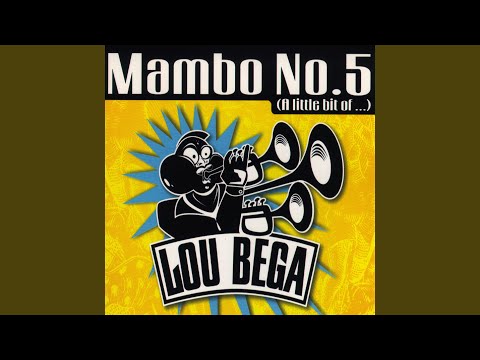
When a song becomes the kind of phenomenon that "Mambo No. 5" became in 1999, the follow-up occupies a peculiar and difficult position. Every new release arrives under the shadow of an impossible standard. Audiences are receptive but demanding, curious but already nostalgic for the original rush. Lou Bega, the German-born singer born David Lubega, understood this terrain when he released "Tricky, Tricky" as a single in early 2000, attempting to translate the mambo-pop charm that had made him briefly inescapable into a second moment of chart presence.
The context of early 2000 was, in some ways, hospitable to what Bega was offering. Pop radio had spent much of 1999 absorbing Latin-inflected sounds, partly in the wake of the mainstream crossover success enjoyed by Jennifer Lopez, Ricky Martin, and others. The market had demonstrated an appetite for rhythmically fluid pop that moved away from the gridded rigidity of late-1990s electronic production. Bega's retro-swing-mambo hybrid fit that mood, at least for a moment.
The Sound and the Strategy
Lou Bega's approach on "Tricky, Tricky" adhered closely to the formula established on his debut album A Little Bit of Mambo, released in 1999. That album had built its style around the interpolation of classic Latin melodies, the most famous being the Perez Prado composition reworked as "Mambo No. 5." The production maintained the bright horns, loose percussion, and throwback feel that gave "Mambo No. 5" its distinctive character. On "Tricky, Tricky," the sonic palette remained consistent, offering listeners the same airy, danceable warmth they had come to associate with the artist.
The song's arrangement leaned into Latin brass and a rolling rhythmic base, presenting Bega's playful vocal persona over a production that felt deliberately timeless. The approach made stylistic sense as a follow-up but also carried an inherent risk: without a melody hook as distinctive as the one that powered the debut hit, the formula itself becomes more visible, and repetition without novelty is a difficult sell.
Chart Performance in Early 2000
The single debuted on the Billboard Hot 100 on January 29, 2000, entering at number 75. The following week it climbed one position to reach its peak of number 74 on February 5, 2000. It remained on the chart for just three weeks before falling away, spending its final charted week at number 87. The brevity of the chart run told a clear story about the limits of the follow-up's commercial reach in the American market.
The single fared somewhat better in European markets, where Bega's appeal had always been slightly more durable, partly because the retro-Latin sound he favored had a different cultural resonance in parts of Germany and the broader Continental market. His debut album had been a genuine phenomenon in Germany, where he had built his artistic identity, and the domestic audience remained engaged even as American radio moved on.
The Industry Reality Behind the Numbers
Three weeks on the Hot 100, peaking at 74, is a modest performance by any standard, but context helps explain the trajectory. "Mambo No. 5" had been so omnipresent that it had, paradoxically, created a kind of saturation effect. The sound was associated not just with pleasure but with overexposure, the particular exhaustion that comes from hearing something everywhere for several months. "Tricky, Tricky" arrived just as that saturation was giving way to a desire for something different, and it suffered accordingly.
The record label, BMG and its associated imprints, had invested heavily in Bega's crossover potential, but the commercial math of the follow-up pointed toward a recalibration. The pattern is familiar in pop history: an unexpected smash, a fast-tracked follow-up that cannot replicate the novelty, and then a gradual repositioning of the artist toward the audiences who remain loyal rather than the broader market that has moved on.
Bega's Career After the Single
Lou Bega continued recording and performing after "Tricky, Tricky," releasing additional albums and maintaining a touring presence in Europe through the 2000s and beyond. His legacy is inextricably tied to "Mambo No. 5," one of the most instantly recognizable pop songs of the late 1990s. That association has kept his name in circulation decades after the chart moment passed, ensuring bookings and recognition at a level that many one-time hitmakers do not sustain.
"Tricky, Tricky" stands as a document of a specific commercial moment: the ambitious follow-up that cannot quite recapture the surprise of discovery. Press play and you hear a talented performer working confidently within a style that had already peaked, trying to find a second wave that the charts ultimately would not deliver.
"Tricky, Tricky" — Lou Bega's singular moment on the 2000s charts.
02 Song Meaning
"Tricky, Tricky" — The Playful Persona and Its Limits
The Flirtation Aesthetic
Lou Bega built his public persona around a specific emotional register: the charming, self-aware flirt who treats romance as a lighthearted game played by consenting adults who understand the rules. "Tricky, Tricky" inhabits this space with the confidence of an artist who knows exactly what he is offering. The song celebrates guile and romantic maneuvering as entertainment, presenting the pursuit of attraction as something pleasurable rather than fraught. The tone is sunny and ironic rather than predatory or desperate, and that distinction matters for understanding why the style had any mainstream appeal at all.
The playfulness is part of a longer tradition in Latin-inflected pop, where the conventions of flirtation and courtship have long served as subject matter for upbeat, danceable material. Bega was not reinventing this tradition; he was adapting it for a European-born artist trying to find purchase in the international pop market of the late 1990s.
Novelty and the Listening Contract
One of the challenges "Tricky, Tricky" faced as a piece of communication is that its primary appeal, the novelty of Bega's hybrid style, had already been delivered by "Mambo No. 5." Audiences enter a follow-up song with different expectations than they bring to a debut single. The surprise has been expended. What a follow-up needs to offer is either a deepening of the artist's established persona or an expansion of it into new territory. "Tricky, Tricky" largely offered the former, which satisfied existing fans while struggling to draw in listeners who wanted something they had not already heard.
This dynamic is not unique to Bega. It is one of the structural realities of pop commerce at the turn of the millennium, when radio formats had become increasingly specific and the window for capitalizing on a hit had narrowed considerably. A sound that felt refreshingly retro in the summer of 1999 could feel like pastiche by the winter of 2000.
The Latin Pop Crossover Moment
The cultural moment into which "Tricky, Tricky" arrived had been shaped by several years of Latin music achieving unprecedented mainstream American visibility. The crossover successes of 1999 had raised the profile of Latin-adjacent sounds broadly, creating a period during which radio was more willing than usual to accommodate rhythmic styles associated with Cuban, Caribbean, and South American traditions. Bega had surfed that wave effectively with his debut, but by early 2000 the wave was beginning to flatten as radio programmers turned their attention toward the sounds that would define the decade ahead.
The music that would dominate the early 2000s would be leaner, more electronic, and more influenced by R&B production. Bega's retro-horn aesthetic, however charming, was pointing backward rather than forward, and that orientation became commercially limiting as the new decade established its own preferences.
The Persona's Staying Power
"Tricky, Tricky" is interesting as a cultural artifact precisely because the persona it presents is so consciously constructed and performed. Bega never pretended to be confessional or emotionally exposed. The character in his songs is always somewhat theatrical, wearing the costume of the suave entertainer rather than offering personal revelation. This made the music well suited to party contexts and casual listening, if less compelling as a sustained artistic statement.
That persona has proven durable in the limited sense that it keeps Bega recognizable and bookable long after his chart career concluded. There is an audience for uncomplicated, well-executed entertainment, and the fact that "Tricky, Tricky" landed at all on the Hot 100 reflects that audience's real if limited commercial weight in the American market of early 2000.
→ More from Lou Bega
View all Lou Bega hits →
→ More from the 2000s File
View all 2000s hits →
Keep digging