The 2000s File Feature
Where Are We Runnin'?
Where Are We Runnin'?: Lenny Kravitz's Philosophical Departure Into World-Conscious Rock By the time Lenny Kravitz released "Where Are We Runnin'?" in 2004, …
01 The Story
Where Are We Runnin'?: Lenny Kravitz's Philosophical Departure Into World-Conscious Rock
By the time Lenny Kravitz released "Where Are We Runnin'?" in 2004, he had already spent fifteen years as one of rock music's most commercially successful retro-futurists, a musician whose deep immersion in the sounds of the 1960s and 1970s had produced multiple Grammy Awards, multi-platinum albums, and an unusual degree of crossover success across rock, R&B, and pop radio. "Where Are We Runnin'?" marked a slight but meaningful shift in his public orientation, toward more explicitly philosophical and socially conscious territory than his earlier, more romantically focused material typically occupied.
The track was released as a single from his seventh studio album, Baptism, which came out in June 2004 through Virgin Records. Kravitz produced, arranged, and played most of the instruments himself, as was his established practice throughout his career. This multi-instrumentalist, self-production approach had been a defining characteristic of his artistic identity since his debut in 1989 and remained central to his creative process through the mid-2000s. The album represented a deliberate effort to push beyond the polished neo-soul retro rock of his peak commercial period toward something rawer and more spiritually probing.
"Where Are We Runnin'?" was recorded in Paris, where Kravitz had maintained a residence for much of his adult life, and the European recording environment contributed to a sonic palette that felt somewhat removed from the American rock and R&B mainstream of 2004, which was by then dominated by post-grunge, nu-metal, and the early stages of what would become the indie rock mainstream. Kravitz occupied an unusual position in this landscape: too rooted in classic rock and soul to be considered current, but too consistently popular to be dismissed as a commercial afterthought.
The song appeared on the Billboard Hot 100 and performed solidly on rock radio, where Kravitz had maintained a reliable presence throughout his career. On the Adult Contemporary chart, which had been a consistent home for his melodic, vocals-forward material, the track also found an audience. The Baptism album itself was a commercial success relative to expectations for a mid-career album from an established artist in 2004, debuting with respectable chart positions in multiple countries and performing particularly well in Europe, where Kravitz had always maintained a devoted following.
The lyrical and philosophical framing of "Where Are We Runnin'?" was more overtly existential than most of Kravitz's previous output. The questions the song posed concerned collective human direction and purpose rather than individual romantic experience, a broadening of scope that was consistent with the direction many established artists took in the early 2000s as global events prompted public reconsideration of personal and social priorities. The song was nominated for a Grammy Award for Best Male Pop Vocal Performance, a recognition that placed it within the mainstream critical conversation even as it addressed subject matter that pushed against easy commercial categorization.
Kravitz had long been celebrated for his ability to absorb and synthesize the sounds of classic rock and soul without producing mere pastiche. "Where Are We Runnin'?" continued that approach while reaching for a grander emotional and intellectual register. The production featured the layered guitar textures, warm analog bass lines, and expressive vocal performances that characterized his best work, all in service of a meditation on contemporary human condition rather than personal romantic narrative. His guitar work on the track was particularly praised, maintaining the blues-rooted expressiveness that had been a consistent critical touchstone for his playing throughout his career.
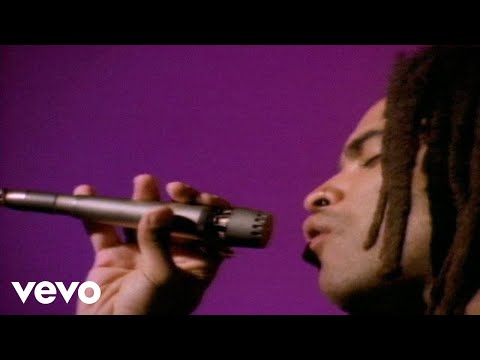
The track received significant promotional support from Virgin Records, including a music video directed with the visual ambition appropriate to a lead single from a major artist's album. The video positioned Kravitz as a thoughtful, globally minded artist concerned with the state of humanity at a moment when such concerns felt urgent to a substantial portion of the mainstream listening public. The song's performance in European markets was particularly strong, where it achieved chart positions that reflected the continent's historically strong affinity for Kravitz's musical references and his willingness to engage with philosophical content in a pop context.
In the context of Kravitz's career, "Where Are We Runnin'?" stands as evidence of an artist at mid-career willing to risk the commercial safety of his established formula in favor of material that reflected his evolving perspective on the world. It was not his biggest commercial hit, but it was among his most critically substantive single releases of the decade.
02 Song Meaning
The Meaning Behind "Where Are We Runnin'?": Urgency, Introspection, and Collective Accountability
"Where Are We Runnin'?" poses its central question as a collective challenge rather than a personal confession. The interrogative structure places the listener inside the frame of inquiry rather than observing Kravitz's individual uncertainty from a distance. This grammatical choice was philosophically significant: the use of "we" rather than "I" transformed what could have been a private meditation into a public question directed at modern humanity as a whole. The song asks where a particular version of civilization is heading, and the implicit answer embedded in the question is that the direction may not be one that serves human flourishing.
The lyrical content, described in paraphrase, concerns the sense that contemporary life involves constant motion without meaningful destination, that the pace and distraction of modern existence may constitute a form of collective avoidance rather than genuine progress. This theme had significant resonance in 2004, a year when the United States and much of the Western world were processing the aftermath of September 2001 and the ongoing conflicts in Iraq and Afghanistan. Questions about direction, purpose, and the choices being made at the level of civilizations rather than individuals carried particular weight in that context, and Kravitz's framing gave the song a specificity of cultural moment without requiring explicit political content.
The spiritual dimension of the song's inquiry reflects Kravitz's longstanding public engagement with religious and philosophical questions. Throughout his career, he had been candid about the role of faith and spiritual practice in his life, and "Where Are We Runnin'?" extended that personal orientation into social commentary. The running metaphor that structures the song suggests both urgency and purposelessness simultaneously: running implies motion and energy, but without a destination it implies anxiety rather than vitality. The song asks listeners to consider whether the pace of their lives reflects genuine purpose or simply the avoidance of stillness and the self-examination that stillness requires.
The choice to ask the question rather than answer it was artistically and commercially significant. Songs that provide answers can feel prescriptive; songs that pose questions invite participation. Kravitz had enough cultural authority by 2004 to frame a public philosophical inquiry without it reading as naive or preachy, and the track walked that line with reasonable skill. The Grammy nomination confirmed that the mainstream critical apparatus recognized the song's ambitions as legitimate rather than merely pretentious.
For Kravitz's catalog, the song marked a development in his artistic voice that had been building across several albums. His earlier work had been celebrated primarily for its sonic archaeology, the precision with which it reconstructed the sounds of classic rock and soul. "Where Are We Runnin'?" suggested an artist increasingly interested in using those sonic foundations to support content that reached beyond nostalgia toward genuine contemporary relevance. The question the song asks remains valid regardless of the specific historical moment in which it is encountered, which accounts in part for its continued resonance in Kravitz's concert repertoire.
The song also reflected Kravitz's identity as a globally conscious figure, a man raised between cultures and resident in multiple countries, who observed American and Western society from a perspective that included but was not limited to the American vantage point. This cosmopolitan perspective gave the song's central question a breadth that domestic critics sometimes missed but that international audiences, particularly in Europe where Kravitz had deep roots, recognized immediately. The sense that the question was being asked not only about American society but about a broader Western modernity contributed to the track's strong European reception.
In summary, "Where Are We Runnin'?" is a song about the relationship between motion and meaning, asking whether the speed and distraction of modern life might themselves be forms of resistance to the deeper inquiry that genuine human flourishing requires. It is among Kravitz's most intellectually ambitious recordings.
→ More from Lenny Kravitz
View all Lenny Kravitz hits →



→ More from the 2000s File
View all 2000s hits →




Keep digging