The 2000s File Feature
Love Don't Live Here
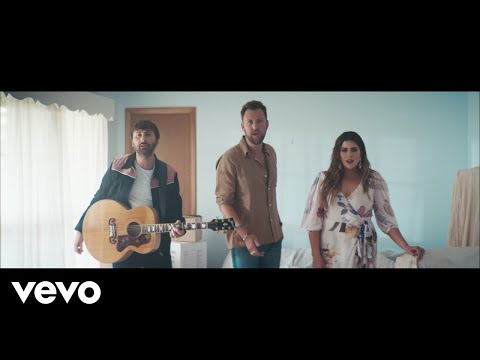
Love Don't Live Here — Lady Antebellum (2008) "Love Don't Live Here" is a country ballad by Lady Antebellum, released in 2008 as the second single from the g…
01 The Story
Love Don't Live Here — Lady Antebellum (2008)
"Love Don't Live Here" is a country ballad by Lady Antebellum, released in 2008 as the second single from the group's self-titled debut album on Capitol Nashville. The song was an important early marker in the career of one of country music's most commercially dominant acts of the late 2000s and early 2010s, establishing the group's signature blend of smooth production, close harmonies, and emotionally direct storytelling about modern romantic relationships. It arrived at a moment when country music was actively negotiating its relationship with pop and adult contemporary sounds, and Lady Antebellum positioned themselves skillfully at that intersection.
Lady Antebellum was formed in Nashville in 2006, comprising Charles Kelley, Hillary Scott, and Dave Haywood. The group's name, which they later changed to Lady A in 2020 following renewed attention to the historical connotations of the antebellum period, reflected their initial aesthetic orientation toward a romanticized version of Southern elegance. Their debut album was produced by Paul Worley and Victoria Shaw, with additional production contributions that reflected Nashville's evolving approach to contemporary country production in the mid-2000s.
"Love Don't Live Here" was written by the group members along with collaborators, a songwriting process that would define their approach throughout their career. The track features the interplay between Charles Kelley's warm baritone and Hillary Scott's more expressive, emotionally raw soprano that would become one of the most recognized vocal combinations in country music. Dave Haywood's contributions as an instrumentalist and vocalist in a support capacity complete the group's sound, giving their recordings a three-dimensional quality that distinguishes them from solo acts in the format.
The song was released to country radio in 2008 and performed well on the Billboard Hot Country Songs chart, helping establish Lady Antebellum's commercial viability on country radio before their breakthrough with "I Run to You" and the massively successful "Need You Now" in 2009 and 2010. The single's performance demonstrated that the group could compete at radio with more established acts and suggested that their blend of country instrumentation and pop sensibility had genuine commercial appeal across a wide demographic range.
Capitol Nashville's decision to release "Love Don't Live Here" as the follow-up to the group's debut single reflected confidence in the track's radio appeal. The label had developed significant expertise in introducing new acts to country radio through carefully sequenced single releases, and the choice of "Love Don't Live Here" as the second single suggested it was viewed as a song that could build on the momentum of the debut without repeating its sonic character. This strategic thinking proved well-founded.
Critical reception to the song and the debut album was generally positive, with reviewers noting the quality of the harmonies and the professional craft of the production. Some critics observed that Lady Antebellum's sound was more polished and pop-adjacent than traditional country, a quality that would attract some listener resistance from purists but proved enormously effective at reaching the broader adult contemporary audience that had been drawn to crossover country acts throughout the previous decade.
The self-titled debut album from which "Love Don't Live Here" was drawn ultimately achieved gold certification from the Recording Industry Association of America, establishing Lady Antebellum as a legitimate commercial force in country music before their subsequent albums achieved dramatically greater commercial heights. The success of this early period established the foundation on which the group would build one of the most remarkable runs of commercial achievement in 2010s country music.
In retrospect, "Love Don't Live Here" reads as a song that was slightly ahead of the precise commercial moment that would validate Lady Antebellum's approach most dramatically. The elements that would power "Need You Now" to its extraordinary chart run, the vocal contrasts, the emotionally vulnerable narrative, the polished but country-grounded production, are all present here in early form, making the track historically significant as a preview of what was coming.
The song's place in Lady Antebellum's catalog is that of a solid, emotionally honest early statement from a group that would go on to become one of the defining commercial forces in the country music of its era, and its genuine craft distinguishes it from many debut-era recordings that were quickly superseded by later commercial peaks.
02 Song Meaning
The Emotional Territory of "Love Don't Live Here"
"Love Don't Live Here" addresses the aftermath of romantic dissolution with the direct, image-grounded language that characterizes the best of Nashville songwriting. The central metaphor, love as a tenant who has vacated a once-inhabited emotional space, is deceptively simple but carries considerable thematic weight. The song's narrator surveys what remains after a relationship has ended and finds not just absence but the specific, textured presence of that absence in everything that was once shared. This is not the dramatic moment of a breakup but the quieter, more devastating experience of living in its aftermath.
Lady Antebellum's particular contribution to this well-worn subject is the vocal arrangement, which positions Charles Kelley and Hillary Scott as two voices inhabiting the same emotional landscape from slightly different positions. The interplay between their voices creates a stereo emotional field, suggesting that this kind of loss is experienced differently by different people even when they are describing the same situation. The harmonies that unite their voices at key moments in the arrangement carry an implicit argument: that even in its absence, the lost love structures how they hear and experience each other.
The song's emotional register is one of quiet devastation rather than operatic grief. The narrator is not performing anguish for an audience; they are simply reporting what they have found in the wreckage of something that mattered. This restraint is characteristic of the best adult contemporary country songwriting, which tends to distrust emotional excess and instead trusts the specific, concrete image to do the work that raw feeling alone cannot accomplish.
The title's grammatical construction, using "don't" rather than "doesn't," is a subtle vernacular marker that places the song firmly within a particular American linguistic tradition. This kind of grammatical informality signals authenticity and community membership in country music, where the sounds and cadences of everyday speech are valued as markers of genuine connection to the lived experiences the music describes. The compressed, informal grammar of the title reinforces the emotional directness of the content.
Within Lady Antebellum's broader catalog, "Love Don't Live Here" establishes several of the thematic preoccupations that would recur throughout their career. The negotiation of romantic loss, the difficulty of moving forward from relationships that once defined one's emotional world, the specific domestic textures of love and its absence: these concerns animate "Need You Now," "Just a Kiss," and many of their subsequent recordings. "Love Don't Live Here" thus reads as an origin document for the emotional world Lady Antebellum would spend the following decade exploring.
The song also reflects the early 21st-century country tradition of treating relationships with a psychological sophistication that earlier generations of country songs sometimes avoided. The narrator of "Love Don't Live Here" does not simplify the experience of loss into either anger or sentimentality but instead holds the complexity of an emotion that contains both without reducing to either. This emotional maturity is part of what made Lady Antebellum's appeal so broad across demographic lines, reaching listeners who might not otherwise identify as country music fans but who recognized in the group's songwriting a fidelity to emotional experience that transcended genre.
→ More from Lady Antebellum
View all Lady Antebellum hits →



→ More from the 2000s File
View all 2000s hits →



Keep digging