The 2000s File Feature
Love Me
Love Me — Justin Bieber's Early Billboard Arrival in 2009 The Year the Internet Made a Star The story of 2009 in pop music is inseparable from the story of h…
01 The Story
Love Me — Justin Bieber's Early Billboard Arrival in 2009
The Year the Internet Made a Star
The story of 2009 in pop music is inseparable from the story of how the internet was reshaping the relationship between talent, discovery, and stardom. YouTube had been commercially available for only a few years, and the music industry was still processing what it meant that a teenager from Stratford, Ontario, could build a large international following by posting videos of himself singing covers in his bedroom. Justin Bieber was fifteen years old when he signed with RBMG Records, a joint venture between Island Def Jam and the management company founded by talent manager Scooter Braun and music executive Usher Raymond. By November 2009, his debut EP My World was preparing to land on an audience that had spent months watching his internet presence grow into something the traditional music industry could no longer ignore.
"Love Me" was one of the tracks on that debut EP, released on November 17, 2009, a record that arrived into a teen pop landscape shaped by the Jonas Brothers, Miley Cyrus, and the remnants of the early-2000s boy band era, but increasingly also by the new realities of digital distribution and social media fandom.
The Song and Its Sources
The track samples the melody of the song "Kiss Me" by Sixpence None the Richer, the 1998 recording that had itself been a slow-building chart success and had appeared prominently in teen-oriented film and television soundtracks. By 2009, that melody carried its own nostalgic charge for older teen listeners who had been children when the original was a radio staple. The interpolation of that melodic hook gave "Love Me" a warmth and familiarity that helped it connect immediately with audiences who might not have consciously recognized the source.
Bieber's vocal performance was deliberately youthful and unaffected, matching the song's age-appropriate emotional content. The production, aimed squarely at pop radio and the early streaming platforms that were just beginning to matter commercially, kept things clean and accessible. The lyric addresses romantic longing from the perspective of a teenager with an earnestness that his young audience found authentic rather than calculated.
A Quick Splash on the Hot 100
The single debuted on the Billboard Hot 100 on November 14, 2009, entering directly at its peak position of number 37, the strongest single-week debut performance in its chart history. This debut-at-peak pattern was characteristic of tracks that benefited from coordinated release strategy and a concentrated burst of downloads or streams in the first week, before radio play had fully taken hold. In the weeks that followed, the track slid to number 67 and then number 95 over its three weeks on the chart.
The brief but meaningful chart appearance confirmed that Bieber's online following could translate into measurable commercial action. Three weeks on the Hot 100, peaking at 37, was a respectable showing for a single from a debut EP, particularly for an artist who had not yet had a full album release or a major radio push behind him. It demonstrated that the audience was real, organized, and willing to purchase.
The EP That Launched Everything
My World became a significant commercial event. It debuted at number six on the Billboard 200 album chart upon release, an extraordinary performance for a debut EP by a fifteen-year-old with no prior chart history. "Baby," the lead single from the project's second part, would go on to become one of the most-viewed videos in YouTube history at the time. "Love Me" was one of several tracks on the record that helped establish the character of the Bieber brand before "Baby" arrived to make everything larger by an order of magnitude.
Looking back, the My World EP represents a pivotal moment in the music industry's reckoning with internet-born celebrity. Before Bieber, the question of whether organic online popularity could produce genuine mainstream commercial success remained somewhat open. The performance of My World and its associated singles answered that question definitively.
Youth, Ambition, and the Digital Frontier
What makes "Love Me" interesting as a historical artifact is what it reveals about where pop music was in late 2009, a moment of genuine transition. The old gatekeeping structures of radio, television, and major-label discovery were still nominally in place, but they were being routed around in real time by an artist whose entire pathway to fame had run through platforms that had not existed a decade earlier. The song itself is a modest, likable piece of teenage pop; its significance is largely contextual. It is one of the first proofs of concept for a model of music industry success that would become entirely standard within a few years. Press play and hear the sound of one era ending and another just beginning.
"Love Me" — Justin Bieber's singular moment on the 2000s charts.
02 Song Meaning
Love Me — Teen Romance, Internet Fame, and the Weight of First Impressions
The Authenticity of Youth
Pop music addressed to teenagers has a long history of being condescending to its audience, of manufacturing an approximation of young experience rather than capturing something real about it. "Love Me" avoids this trap, largely because its performer was genuinely living the emotional situation it describes. At fifteen, Justin Bieber was not acting the part of someone who wanted to be loved; he was a teenager articulating a teenage need. That authenticity was audible, and it was a significant part of why his audience responded with such intensity and loyalty.
The song addresses the desire to be loved not as a complex psychological proposition but as a simple, honest want. The lyric does not complicate its central feeling with irony or self-awareness; it simply states the need directly and asks for reciprocation. In a pop landscape that often favored calculated emotional positioning over genuine vulnerability, that directness was striking.
Nostalgia as a Tool
The decision to build "Love Me" around the melodic DNA of "Kiss Me" by Sixpence None the Richer was not accidental. That 1998 song had saturated a particular moment in teen pop culture, appearing in the film She's All That and several other teen-oriented productions at the end of the 1990s. For slightly older teens in 2009, who had been children when "Kiss Me" was ubiquitous, the interpolated melody carried an embedded emotional memory, a sonic reminder of an earlier, perhaps simpler, romantic era.
This kind of backward glance, building new teen pop on the emotional residue of earlier teen pop, is a recurring strategy in the genre, and it works because young audiences are often nostalgic for the music of their childhoods even while seeking something that feels new and current. Bieber's producers understood this mechanism and used it with considerable skill.
The Fan Relationship Redefined
One of the most significant things "Love Me" represents is an early articulation of the hyper-personal relationship between Bieber and his fan base. His audience had watched him on YouTube performing in his bedroom; they felt they knew him before he was famous in any conventional sense. The intimacy of that parasocial relationship gave a song about wanting love a doubled meaning, the narrator's desire addressed to a romantic partner became, for many listeners, their own sense of connection to the artist himself.
This dynamic, in which pop fandom and romantic feeling become intertwined, was not invented by Bieber or his team. It had powered the Beatles, the Monkees, New Kids on the Block, and the Backstreet Boys. But the internet gave it a new intensity and a new structure, because the closeness fans felt was based on content they had actively sought out rather than passively received through broadcast media.
What It Meant for Pop's Future
Listening to "Love Me" in retrospect, what stands out is how modestly it announced what turned out to be a genuinely significant shift in how pop stars are made. There is no grand ambition in the track, no reach for cultural significance. It is simply a well-constructed piece of teen pop that happened to be released at a moment when the music industry was recalibrating its understanding of where audiences live, how they discover music, and what kinds of relationships they want with the artists they love.
The song's brief but real Hot 100 presence confirmed that Bieber's internet following was commercially meaningful. That confirmation changed the calculus of how labels would approach artist development for years afterward, making "Love Me" historically significant in ways entirely out of proportion to its modest chart peak.
→ More from Justin Bieber
View all Justin Bieber hits →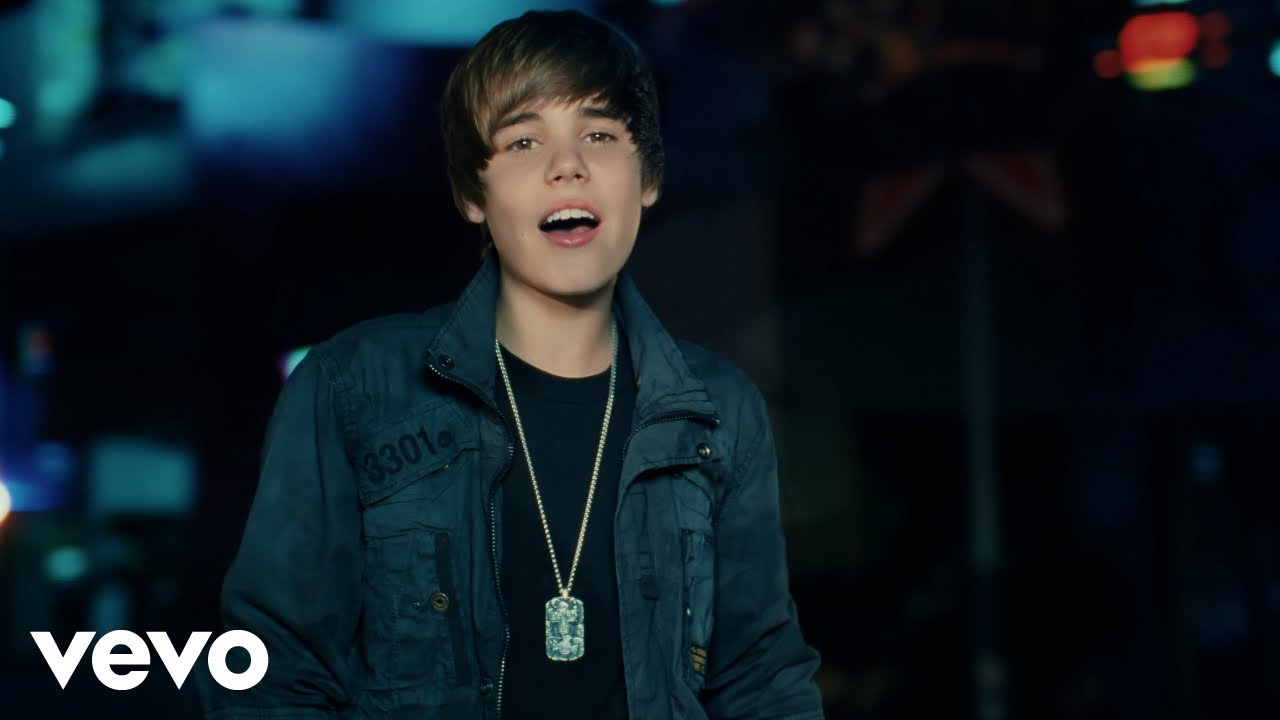

→ More from the 2000s File
View all 2000s hits →

Keep digging