The 2000s File Feature
Year 3000
Year 3000: How the Jonas Brothers Launched a Career With a Borrowed Song When the Jonas Brothers released their cover of "Year 3000" in early 2007, the origi…
01 The Story
Year 3000: How the Jonas Brothers Launched a Career With a Borrowed Song
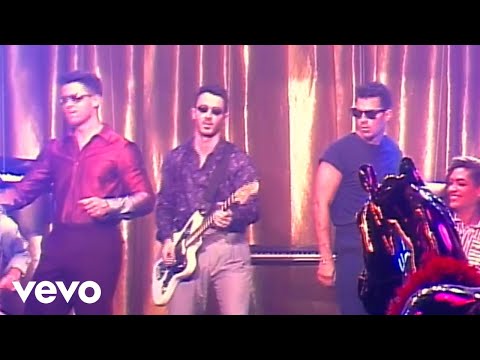
When the Jonas Brothers released their cover of "Year 3000" in early 2007, the original song by the British pop-punk group Busted was already several years old. Busted had released it in 2002 as part of their debut album, and it had become one of the defining novelty-flavored pop tracks of the early 2000s in the United Kingdom, where the band enjoyed significant commercial success before dissolving in 2005. The Jonas Brothers' decision to record the song for their debut era on Hollywood Records was strategic in ways that would only become fully apparent in retrospect: it gave a new act with limited name recognition a proven piece of material with an established appeal among exactly the demographic they were targeting.
The Jonas Brothers, consisting of brothers Kevin, Joe, and Nick Jonas, had signed with Columbia Records in 2005 before being dropped and subsequently signing with Hollywood Records, a Walt Disney Company subsidiary. Their debut album under Hollywood Records was released in August 2006 and introduced them to the Disney Channel audience that would become the foundation of their commercial success. Disney's promotional infrastructure was a crucial element of that success: the network's ability to place acts in front of tens of millions of young viewers, and to integrate music with television programming in ways that reinforced both, gave acts like the Jonas Brothers promotional advantages that independent or non-corporate acts could not match.
"Year 3000" entered the Billboard Hot 100 on February 17, 2007, at position 40, a strong debut that reflected both the promotional push behind it and the pre-existing awareness the brothers had built through their Disney Channel association. The chart performance that followed was somewhat uneven: the record dipped to 58 before rebounding to its peak of number 31 during the week of March 10, 2007, then gradually declined over the subsequent weeks as the promotional cycle wound down. The nine total weeks on the chart represented a solid if not spectacular performance for a developing act's early single.
The production approach on the Jonas Brothers' recording preserved the energetic, slightly silly pop-rock feel of the Busted original while adapting it to American radio sensibilities. Busted's UK pop-punk sound had a particular flavor rooted in the British tradition of melodic guitar pop, and the Hollywood Records production adjusted the texture for an American market accustomed to a different kind of teen pop production. The result retained the song's central pleasures, particularly its absurdist sci-fi premise and its relentlessly upbeat momentum, while fitting more comfortably into the sonic environment of Disney-adjacent pop radio.
The timing of the single's chart performance in early 2007 coincided with a period when the Disney Channel's power to launch music careers was at its peak. Hannah Montana, featuring Miley Cyrus, had premiered in March 2006 and was already generating enormous commercial returns; High School Musical had aired in January 2006 and its soundtrack had performed remarkably well. The Jonas Brothers were entering a promotional ecosystem that had recently demonstrated its capacity to create massive commercial phenomena from young performers, and "Year 3000" was part of the initial wave of material that introduced them to that ecosystem's audience.
Nick Jonas, in particular, had already attracted attention within the music industry as a songwriter with notable ability for his age. His compositions had drawn interest from industry figures, and the brothers' signing first to Columbia and then to Hollywood Records reflected a recognition that the group's collective talent went beyond their appeal as a visual act. Kevin's guitar playing and the brothers' vocal harmonies gave their live and recorded performances a musical authenticity that distinguished them from the more purely manufactured acts the teen pop market had historically produced.
The choice to cover "Year 3000" rather than an original composition as a breakthrough single was consistent with standard industry practice for developing acts: a recognizable song lowers the barrier of entry for new listeners, gives radio programmers something familiar to latch onto, and allows the act to demonstrate its interpretive personality without the commercial risk of introducing entirely unfamiliar material to an audience that has not yet formed a relationship with the performer. For the Jonas Brothers, the strategy worked: the Hot 100 appearance gave them a national chart profile that their debut album had not fully established, and it positioned them for the acceleration of their career that would follow through 2008 and beyond.
The Busted connection was acknowledged by the Jonas Brothers in promotional materials and interviews, giving the cover a transparency that avoided the appropriation concerns that might otherwise have attached to an American act recording a British song without attribution. That transparency was consistent with the straightforward, uncomplicated public persona the brothers were cultivating: young, talented, honest, and enthusiastic rather than calculated or image-managed in ways that might have alienated the family-friendly audience Disney's promotional machine was directing their way.
02 Song Meaning
What "Year 3000" Means: Optimism, Absurdity, and the Timelessness of Teen Escapism
"Year 3000," as performed by the Jonas Brothers, is a song about the future, but its emotional appeal has nothing to do with genuine futurism. The scenario the song constructs, in which a neighbor arrives with a time machine and transports the narrator to the far future, is presented with a self-aware silliness that signals immediately to the listener that the point is not to speculate credibly about what life in the thirty-first century will actually resemble. The point is something simpler and more universal: the pleasure of imagining a radically different world in which today's concerns and constraints have been replaced by something stranger, freer, and more exciting.
For the teenage and pre-teenage audience that constituted the core of the Jonas Brothers' early following, this kind of escapist fantasy carried particular resonance. Adolescence is a period defined by constraints: parental authority, school schedules, social hierarchies, limited economic independence, and the general experience of not yet having arrived at the life one imagines for oneself. Songs that transport the listener into a space where those constraints do not apply serve a real psychological function, offering a temporary imaginative freedom that everyday life does not provide. "Year 3000" does this in the most extravagant possible way, projecting its narrator not just beyond high school or into adulthood but three full centuries into the future, well past any recognizable version of the constraints that define adolescent experience.
The absurdist details that populate the song's vision of the future are part of its appeal: technology has advanced in ways that are simultaneously impressive and irrelevant to the song's actual emotional content, which is really about adventure and possibility rather than any specific future state. This is pop music's relationship to science fiction at its most honest: the future is a prop, a setting that permits the song to escape the gravity of the present without requiring the listener to take the fictional premises seriously. The original Busted recording made this contract with the listener explicit through its comedic tone, and the Jonas Brothers' version preserves that tone while delivering it through an American pop-rock production context.
There is also something meaningful about the song's appeal to a Disney Channel audience in 2007 specifically. The early years of the twenty-first century had been marked by significant anxiety: the aftermath of September 11, the early years of the Iraq War, and an increasingly complex media environment that exposed young people to adult concerns earlier and more continuously than previous generations had experienced. Against that backdrop, a song that proposes a joyful, consequence-free adventure into a future where the biggest excitement is a swimming pool version of an ocean represented a form of cultural permission to simply enjoy being young without the weight of the present moment pressing down.
The Jonas Brothers' performance of the song also carried meanings related to their emerging public identity. As brothers performing together, they embodied a model of family solidarity and shared enthusiasm that the Disney Channel had always promoted as a value. The song's communal, inclusive energy, its invitation to imagine the adventure together rather than as a solitary experience, fit naturally with that identity. For young fans, the Jonas Brothers were not remote or intimidating figures but approachable peers, and "Year 3000" captured that accessible quality: an adventure anyone could imagine sharing. The song's peak of number 31 on the Hot 100 in March 2007 marked the beginning of a commercial trajectory that would make this early reading of their appeal look prophetic.
→ More from Jonas Brothers
View all Jonas Brothers hits →



→ More from the 2000s File
View all 2000s hits →




Keep digging