The 2000s File Feature
Look What You've Done
"Look What You've Done" — Jet's Most Vulnerable Song and Its Unlikely Chart Life Melbourne Rockers in an Unexpected Register When most people think of Jet, t…
01 The Story
"Look What You've Done" — Jet's Most Vulnerable Song and Its Unlikely Chart Life
Melbourne Rockers in an Unexpected Register
When most people think of Jet, the Australian rock band that stormed international consciousness in the early 2000s, they reach first for the jagged guitar riffs of "Are You Gonna Be My Girl" or the snarling swagger of "Look What You've Done"'s harder-edged album companions. So there is something surprising, and something genuinely moving, about discovering that the song which gave the Melbourne quartet its deepest and most sustained chart life in the United States was its most stripped-back, emotionally exposed, and structurally unusual track. Look What You've Done arrived on the Billboard Hot 100 in January 2005 and stayed for 20 weeks, an extended run that tells the story of a song that found its audience through sustained discovery rather than immediate impact.
Jet had formed in Melbourne in the early 2000s, built around the core partnership of brothers Nic and Chris Cester. The band's debut album Get Born, released in 2003, drew deeply from British rock influences of the late 1960s and early 1970s, earning comparisons to The Rolling Stones and The Beatles that could have felt presumptuous but mostly seemed accurate when the music was played at volume. The album became a genuine international phenomenon, driven initially by the anthemic "Are You Gonna Be My Girl."
The Creation of a Piano Ballad
Look What You've Done occupied a fundamentally different sonic and emotional space from most of the Get Born album. Stripped down to piano and Nic Cester's voice, with minimal additional instrumentation entering toward the end, the track was a confessional addressed to two people: a parent and a former romantic partner, exploring the emotional residue left by complex relationships with both figures in a young person's life. The piano ballad format gave the song an intimacy and directness that the band's louder material could not have achieved.
The production choices were deliberately restrained, trusting the emotional weight of the performance to carry the track rather than building sonic architecture around it. That restraint was itself a bold decision for a band whose commercial identity rested on guitar rock energy. The willingness to expose that quieter, more vulnerable dimension of the Cester brothers' artistry gave Get Born a range and emotional depth that pure rock albums sometimes lack.
A Sustained Chart Performance
The track entered the Billboard Hot 100 on January 29, 2005, debuting at position 70. It climbed through the chart's middle regions over subsequent weeks, eventually reaching its peak of number 37 on April 2, 2005, and spending a total of 20 weeks on the chart. That extended presence reflected how the song was building its audience: not through a single dramatic chart event driven by radio promotion, but through word-of-mouth recommendation, film and television placements, and the cumulative discovery of listeners who had come to Get Born through the harder songs and then found this quieter track waiting for them inside.
The chart trajectory, relatively modest entry, slow build to a peak in the upper 30s, and sustained presence through spring 2005, was characteristic of a song that worked through emotional connection rather than novelty. Radio could play the bigger tracks; this one found its audience through more intimate channels.
Jet and the Early 2000s Rock Revival
The context that produced Jet was the early 2000s rock revival, a moment when guitar bands drawing from 1960s and 1970s influences achieved extraordinary commercial visibility. The Strokes, The White Stripes, and The Hives were all part of the same general cultural current, though they drew from slightly different points on the classic rock spectrum. Jet's particular version of the revival leaned toward the anthemic and the melodic, toward songs designed to be sung along with at high volume in large spaces.
Look What You've Done represented a deliberate step outside that commercial identity, demonstrating that the band's musical range extended beyond what their promotional image suggested. The song's success was, in a sense, the audience rewarding the risk-taking.
Legacy as a Fan Touchstone
Among devoted Jet listeners, Look What You've Done occupies a special category: the song that made the album about more than rock music, the moment that demonstrated genuine emotional range alongside the swagger. The track has maintained a presence in streaming playlists and appears regularly in discussions of the band's best work, often cited by listeners as the song that first made them take the group seriously as more than a singles band.
Its 20-week chart run in 2005 remains its most public commercial achievement on the Hot 100, a testament to the power of slow-building emotional resonance over immediate commercial impact. Press play on this one with the lights low and you will understand why it kept finding new listeners month after month.
"Look What You've Done" — Jet's singular moment on the 2000s charts.
02 Song Meaning
"Look What You've Done" — Grief, Gratitude, and the Complexity of Formative Relationships
A Song Addressed to Specific People
Most love songs, and most songs about grief, use generalized emotional situations that listeners can project their own specific experiences onto. Look What You've Done takes a different approach: it is addressed explicitly and directly to two specific people in the narrator's life, a parent and a former romantic partner, and the emotional content is precisely calibrated to each relationship. This specificity could have made the song feel private to the point of inaccessibility. Instead, it achieves the opposite effect, the concrete particularity making the emotional states it describes more recognizable and more affecting than a more generalized treatment would have produced.
The structural choice to address two different people in the same song creates an unusual emotional architecture. The connections between the two relationships, the formative power that both have exerted, the mixture of love and damage that characterizes intimate relationships of this kind, become implicit through juxtaposition rather than explicit explanation.
The Emotional Territory of Parental Relationships in Song
Songs about parents occupy a distinct category within popular music: more fraught than straightforward love songs, requiring a kind of emotional maturity that is difficult to fake. The best examples in the genre, across rock, country, and other forms, are those that resist both sentimentalization and pure bitterness, that hold the complexity of parental relationships honestly without reducing them to simple emotional categories. Nic Cester's approach on this track manages that complexity by focusing on impact rather than judgment, on what has been made of the narrator by forces he did not choose and could not entirely resist.
The title phrase, repeated across both sections of the song and addressed to each person in turn, carries a tone that is not quite accusatory and not quite grateful. The ambivalence is the point: significant people in our lives shape us in ways that are simultaneously gift and burden, and sorting out which is which requires more than any single song can offer.
Vulnerability as Artistic Courage
In the context of Jet's broader artistic identity in 2004 and 2005, the decision to record and release Look What You've Done as part of their debut album was a genuine artistic risk. The band had established its commercial identity through muscular, confident guitar rock, and a stripped-down piano ballad about family and romantic damage occupied entirely different emotional and sonic territory. The willingness to be publicly vulnerable in this way, on a debut album at the peak of its commercial momentum, reflects a kind of courage that separates artists who are interested in music from artists who are primarily interested in commercial positioning.
The audience's response, a sustained chart presence and the track's enduring status as a fan favorite, validated that risk decisively. Listeners recognized and rewarded the authenticity of the emotional exposure.
Piano, Voice, and the Architecture of Minimalism
The production choice that defines Look What You've Done is what is absent: the electric guitars, the rhythm section in full mode, the sonic density that characterized most of the surrounding album. A piano, a voice, and carefully deployed space create an environment where every note and every word carries unusual weight. Minimalism in rock music functions best when the material it serves is strong enough to bear the scrutiny, and this track passes that test decisively.
Listeners who came to the song after the album's louder tracks experienced it as a sudden emotional decompression, a shift in register that made the vulnerability of the content feel even more exposed by contrast. That contextual effect was almost certainly intentional, a decision about album sequencing that turned the song's sonic restraint into a formal statement about emotional honesty.
"Look What You've Done" — Jet's singular moment on the 2000s charts.
→ More from Jet
View all Jet hits →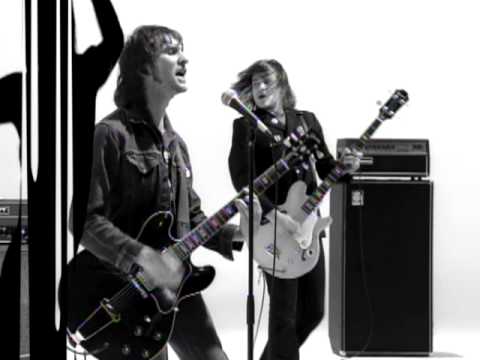

→ More from the 2000s File
View all 2000s hits →




Keep digging