The 2000s File Feature
Livin' Our Love Song
Livin' Our Love Song — Jason Michael Carroll (2007) "Livin' Our Love Song" was the debut single released by Jason Michael Carroll in 2007 and became one of t…
01 The Story
Livin' Our Love Song — Jason Michael Carroll (2007)
"Livin' Our Love Song" was the debut single released by Jason Michael Carroll in 2007 and became one of the most successful country debuts of that year, demonstrating that the format remained capable of launching a traditional-leaning male country voice to immediate chart prominence. Carroll, a North Carolina native, had spent years performing on the regional country circuit before his signing to Arista Nashville, and the label's decision to lead with "Livin' Our Love Song" proved commercially prescient. The song was written by George Teren and Tony Martin, two experienced Nashville songwriters whose craft gave the track the structural solidity and emotional directness that country radio rewarded most consistently.
The song reached number one on the Billboard Hot Country Songs chart, making it one of the standout debut singles in country music that year. The climb to the top was steady rather than explosive, reflecting the traditional pattern of country radio promotion in which new artists build station support incrementally as their profile grows. Arista Nashville worked the single through their established radio relationships, and Carroll supported the campaign with extensive touring and promotional appearances across the country markets where the format was strongest.
Jason Michael Carroll's vocal style was immediately identifiable as rooted in the traditional country and southern rock influences that characterized much of the music coming out of the Carolinas and adjacent states. His voice had a rougher grain than the more polished Nashville pop-country sound that had dominated the format in the late 1990s and early 2000s, and that quality connected him to listeners who felt the genre had drifted too far from its roots. The timing was favorable for a traditional-leaning act; the mid-2000s had seen renewed industry and audience interest in country music that felt connected to its historical foundations.
The production on "Livin' Our Love Song" was handled with the warm, organic sound that Arista Nashville favored for its roster at the time. The arrangement led with acoustic guitar and fiddle elements before building to a fuller band sound in the chorus, a structural approach that located the song within the mainstream country tradition while giving it enough sonic brightness to compete for radio airplay alongside more produced tracks. The production team understood that a debut single needed to announce its artist convincingly while fitting the format's sonic expectations, and they achieved both goals.
Carroll's debut album, also titled "Livin' Our Love Song," was released in 2007 to accompany the single's chart run. The album sold respectably and confirmed that the radio success of the lead single translated into genuine album-level commercial interest. Country fans who had heard the title track were willing to investigate the larger body of work, which demonstrated the functional usefulness of a strong lead single in building an album career.
The critical reception to Carroll's debut was warm within the country music press, which generally treated "Livin' Our Love Song" as evidence of healthy variety in the format at a time when mainstream country encompassed everything from crossover pop to authentic traditionalism. Reviewers noted the craft of the songwriting and the emotional conviction of Carroll's performance, identifying him as a genuine find rather than simply a commercial product shaped to fit a market opportunity.
The song's cultural moment was the late-career era of Garth Brooks's dominance giving way to a broader field of male country voices, with acts like Tim McGraw, Kenny Chesney, and Keith Urban having established that country could produce superstars who combined traditional authenticity with contemporary pop appeal. Carroll arrived as a deliberate counterbalance to the slicker end of that spectrum, offering something rougher and more rooted that found a ready audience among listeners who valued that quality. His chart success confirmed that there was genuine commercial space for that approach alongside the format's more polished mainstream offerings.
In the years following "Livin' Our Love Song," Carroll continued to release music through Arista Nashville, generating additional charting singles that kept him in the country conversation. His follow-up efforts, while not replicating the instant impact of the debut, demonstrated that his initial success was not a fluke. The debut single remains his most recognized achievement, a document of an arrival that announced a genuine country talent with the clarity and commercial effectiveness that the best debut singles deliver. The song charted for an extended run, spending many weeks on the country charts before its eventual exit and leaving a positive impression on the format's history for that year.
02 Song Meaning
Meaning and Themes: Livin' Our Love Song
"Livin' Our Love Song" engages with one of country music's most resonant lyrical conceits: the idea that an ordinary life, when shared with the right person, becomes something extraordinary and narratively worthy. The title's formulation is precise in its ambition: not simply living a life that contains love, but inhabiting a love story as if it were a song, a composed and meaningful narrative rather than an accidental accumulation of days. This elevation of the quotidian through the frame of romantic commitment is a gesture country music has made repeatedly across its history, and the song makes it with the directness and confidence of a composition certain of its emotional truth.
The song's narrator does not locate meaning in dramatic events or exceptional circumstances. Instead, the argument is that the daily textures of shared life, the ordinary moments of partnership, contain more genuine significance than grander experiences lived without connection. This is a fundamentally democratic vision of love, insisting that meaning is available to everyone willing to commit to another person with sufficient depth and sincerity. Country music has always been particularly effective at communicating this kind of emotional democracy, speaking to audiences who may not see themselves as the subjects of grand romantic narratives but who recognize something true in the less glamorous, more sustainable forms of love the genre tends to celebrate.
Jason Michael Carroll's vocal delivery is essential to how the song's themes land. His voice carries the quality of lived experience rather than polished performance, and that texture gives the emotional claims of the lyric a credibility that a more technically perfect but less characterful delivery would not achieve. Country audiences are sophisticated readers of vocal sincerity, and Carroll's grain communicates authenticity in a way that aligns with the song's lyrical argument about the value of genuine, unpretentious commitment over surface gloss.
The use of the word "song" as a metaphor for relationship is also worth examining. Songs are composed things, shaped things, with structure and form and intention. To describe a relationship as a song is to imply that it has been made rather than simply fallen into, that it reflects choices and craftsmanship as much as feeling. This framing suggests that love, in the song's conception, is an active and ongoing creative project rather than a passive state. That is a more demanding and ultimately more hopeful conception of romantic partnership than the one implied by less intentional metaphors, and it gives the song a quiet depth that rewards repeated listening.
For Carroll as a debut artist, the song was also a statement of artistic identity. By choosing to launch his career with a track so clearly rooted in country's traditional celebration of committed love and everyday life, he was positioning himself as an heir to a specific lineage within the format. That positioning connected him to artists like Randy Travis and Alan Jackson, whose careers had been built on similar foundations, and it told listeners and industry figures alike what kind of country artist he intended to be. The song's success confirmed that the audience for that kind of artist was still substantial and responsive, which was itself a meaningful statement about the continued vitality of country music's traditional emotional core.
→ More from Jason Michael Carroll
View all Jason Michael Carroll hits →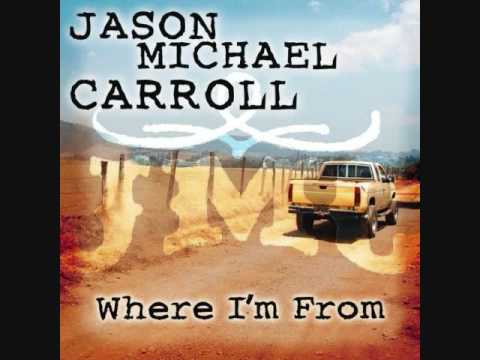

→ More from the 2000s File
View all 2000s hits →
Keep digging