The 2000s File Feature
DJ Play A Love Song
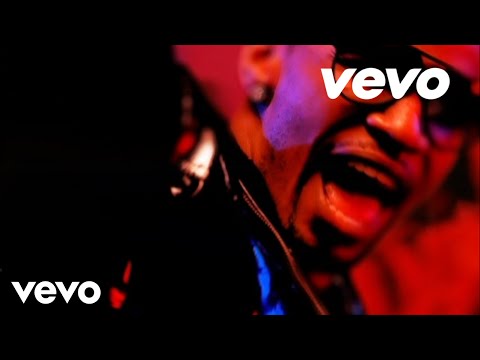
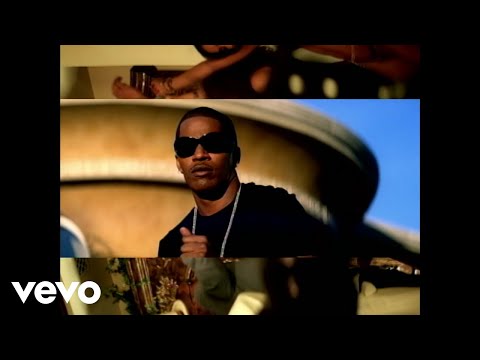
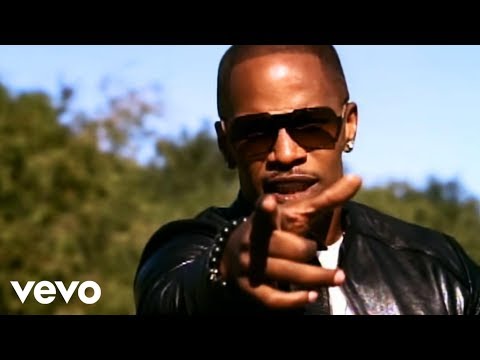
"DJ Play a Love Song" by Jamie Foxx Featuring Twista When Hollywood Met the Dance Floor The spring of 2006 was a rich, complicated moment for R&B. The genre …
01 The Story
"DJ Play a Love Song" by Jamie Foxx Featuring Twista
When Hollywood Met the Dance Floor
The spring of 2006 was a rich, complicated moment for R&B. The genre was navigating between the smooth polish of mainstream radio R&B and the harder-edged energy of hip-hop, and the most commercially successful artists of the period were the ones who could inhabit both worlds convincingly. Jamie Foxx arrived in this landscape with unusual credibility on multiple fronts: an Academy Award-winning actor fresh off his Oscar for portraying Ray Charles, a singer who had genuine musical training, and a performer comfortable enough in hip-hop spaces to attract collaborators from that world without appearing to be reaching across a gap.
"DJ Play a Love Song" appeared on Foxx's second major-label album, Unpredictable, released at the end of 2005. The album had already generated significant commercial momentum through other tracks, and the song arrived into a market that had become receptive to Foxx as a recording artist in a way it had not always been before his acting career breakthrough. The addition of Twista, the Chicago rapper celebrated for the fastest flow in mainstream hip-hop at the time, gave the track a specific energy that set it apart from the smoother productions elsewhere on the record.
Jamie Foxx's Musical Career in Context
To appreciate "DJ Play a Love Song," it is worth remembering that Foxx's path to music credibility was unusual. He had musical training from childhood, studied classical piano, and had included musical performance in his stand-up and acting work for years before mounting a serious recording career. Unpredictable had arrived at a moment when his cultural stock had never been higher, and the album rewarded that goodwill with a genuine artistic effort rather than a celebrity vanity project.
His vocal style on "DJ Play a Love Song" occupies a particular register: polished but not sterile, emotional without being overwrought. Foxx understood the craft of the R&B ballad and the mechanics of the dance floor in equal measure, and the song asks him to serve both masters simultaneously, an assignment he carries off with the ease of someone who had genuinely studied the tradition he was participating in.
Twista's Contribution and the Hip-Hop Bridge
Twista, then at the height of his commercial profile following the success of "Slow Jamz" and his album Kamikaze, brought a kinetic energy to "DJ Play a Love Song" that gave it a dimension beyond conventional R&B. His verse functions as a contrast element: where Foxx is measured and melodic, Twista is percussive and rapid, the two vocal styles creating a dynamic tension that keeps the track interesting across its length.
This pairing reflected a broader trend in mid-2000s R&B, where hip-hop features were being used not simply for crossover commercial purposes but as genuine artistic choices, bringing sonic diversity and rhythmic complexity to productions that might otherwise have settled into formulaic smoothness. Twista's appearance on this track was the right choice for this specific song.
The Chart Run and Commercial Performance
The Billboard Hot 100 trajectory for "DJ Play a Love Song" tells the story of a track that built steadily rather than exploding out of the gate. It debuted on May 6, 2006 at number 90, climbing week by week through positions 76, 70, 57, and 53 before reaching its peak of number 45 on June 17, 2006. The song spent 14 weeks on the Hot 100 in total, a robust chart run that speaks to sustained radio play and consistent audience engagement over a three-month period.
That peak of 45 placed "DJ Play a Love Song" comfortably in the upper half of the Hot 100, a meaningful commercial achievement for what was essentially a mid-album track rather than the project's primary commercial vehicle. The gradual climb through the chart positions reflects what radio promotion can do for a record over time, a week-by-week accumulation of airplay that built the song's audience rather than a viral explosion that burned out quickly.
The Production and Its Era
The production of "DJ Play a Love Song" captures the mid-2000s R&B sound at a point of particular glossiness: programmed drums with acoustic textures layered over them, synthesizer strings that aspire to lushness, a bass line designed to translate on both radio and in a club context. It is music made with considerable technical skill and with a clear understanding of what the radio format demanded.
That professionalism is ultimately what made Unpredictable such a successful album, and "DJ Play a Love Song" is one of its more compelling examples. Fourteen weeks of Hot 100 presence and a peak of 45 represent a genuine commercial achievement for a man who had come to music via a circuitous route. Put it on in a room with good speakers and rediscover why the R&B dance floor of 2006 had such a particular kind of magic.
"DJ Play a Love Song" — Jamie Foxx Featuring Twista's singular moment on the 2000s charts.
02 Song Meaning
"DJ Play a Love Song" by Jamie Foxx Featuring Twista — The Dance Floor as Sacred Space
The DJ as Intermediary
Addressing a DJ rather than a lover, the song's central conceit is philosophically interesting. By directing its request to the DJ, "DJ Play a Love Song" acknowledges something that the best dance floor music has always understood: the DJ is a mediator between feeling and experience, a curator of emotional environments, the person responsible for whether a room becomes the space where something memorable happens. To ask the DJ to play a love song is to ask for the conditions of romance to be created, rather than romance itself.
This framing puts music at the center of intimacy, which is a genuinely romantic idea. The right song, in the right room, at the right moment, changes what is possible between people. Jamie Foxx, who understood music as a lifelong practitioner and not simply a recording artist, brought a particular authenticity to this insight. The song believes in what it is asking for.
Romantic Aspiration on the Dance Floor
The emotional landscape of "DJ Play a Love Song" is specific to a particular social geography: the mid-2000s R&B club, a space where slow jams and uptempo tracks alternated in a carefully managed progression, where the DJ's set list created an emotional arc across an evening. The song situates its romantic narrative within this context, treating the club not as a site of shallow entertainment but as a place where genuine feeling could happen if the right conditions were established.
This generosity of spirit toward the dance floor as an emotional environment sets the track apart from club music that is purely about sensation rather than connection. Foxx was operating within a tradition of R&B that took the dance floor seriously as a site of human meaning, from the Motown era through the disco years and into the contemporary period, and "DJ Play a Love Song" is a small but genuine contribution to that tradition.
Twista's Verse and the Contrast of Registers
Twista's contribution to the track shifts the emotional register momentarily from smooth aspiration to something more urgent and kinetic. His verse operates in a different mode than Foxx's melodic passages, bringing a hip-hop energy that gestures toward the competitive and assertive masculinity of that genre while still remaining within the track's overall romantic framework. The contrast between the two performers is part of what makes the song interesting.
This kind of vocal contrast had been a feature of R&B and hip-hop collaboration since at least the early 1990s, when producers discovered that the juxtaposition of smooth R&B vocals with harder-edged rap verses created a dynamic energy that served both genre audiences simultaneously. "DJ Play a Love Song" participates in that tradition with the ease of artists who understood the formula and had the skills to execute it without the execution feeling formulaic.
The Song's Cultural Context in 2006
Mid-2006 was a moment of considerable vitality in mainstream R&B. Multiple artists were competing for the same radio real estate, and the genre was producing a steady stream of tracks that blended romantic subject matter with club-oriented production. In that context, "DJ Play a Love Song" occupied a relatively conventional position, offering polish and professionalism rather than radical innovation.
What distinguished it was the quality of its execution and the credibility of its performers. Jamie Foxx's musical background meant that his R&B performances carried a different kind of authority than those of artists who had come to recording from purely commercial motivations. Fourteen weeks on the Hot 100 and a peak of 45 testify to how well that quality resonated with listeners who were looking for R&B that delivered on its promises.
"DJ Play a Love Song" — Jamie Foxx Featuring Twista's singular moment on the 2000s charts.
→ More from Jamie Foxx Featuring Twista
View all Jamie Foxx Featuring Twista hits →

→ More from the 2000s File
View all 2000s hits →
Keep digging