The 2000s File Feature
Beautiful Flower
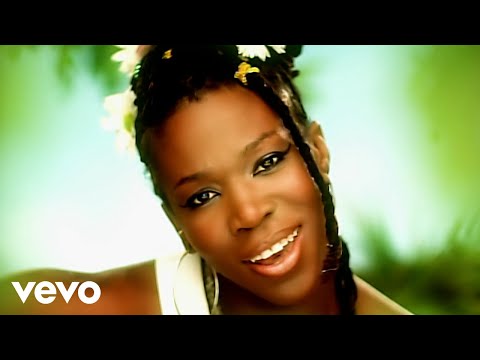
India.Arie's "Beautiful Flower" and the Testimony of Acoustic Soul India.Arie had spent the first years of her recording career building one of the most dist…
01 The Story
India.Arie's "Beautiful Flower" and the Testimony of Acoustic Soul
India.Arie had spent the first years of her recording career building one of the most distinctive and philosophically coherent bodies of work in contemporary rhythm and blues and soul music. Her debut album, "Acoustic Soul," released in 2001, had announced a sensibility sharply at odds with the production aesthetics and image conventions dominant in mainstream R&B at the time. While much of the genre was moving toward heavily produced tracks, explicit material, and carefully constructed public personas emphasizing physical appearance and commercial calculation, India.Arie arrived with acoustic guitar in hand, celebrating natural beauty, self-acceptance, and spiritual grounding. The Grammy nominations she received for that debut demonstrated that her audience was substantial, even if the wins sometimes went elsewhere.
By the time India.Arie released her third studio album, "Testimony: Vol. 1, Life and Relationship," in 2006, she had established a clear creative identity that her audience trusted and returned to repeatedly. The album drew deeply on personal experience, processing the emotional landscape of romantic relationships, spiritual development, and self-understanding through a distinctively autobiographical lens. "Beautiful Flower," which appeared as a single from the album, exemplified the warmth and direct personal address that had made India.Arie one of the most beloved singer-songwriters working in the neo-soul adjacent space during that period.
India.Arie Simpson was born in Atlanta, Georgia in 1975 and raised partly in Denver, Colorado. Her musical education came through a combination of formal study at the Savannah College of Art and Design and extensive self-teaching on guitar, an instrument whose centrality to her sound distinguished her from virtually every other significant female R&B artist working at the turn of the century. The acoustic guitar was not merely an instrumental choice but a philosophical statement, one that implicitly argued for a different set of values in the way music was made, consumed, and understood.
The neo-soul movement that provided the immediate cultural context for India.Arie's emergence had roots in the work of artists like D'Angelo, Erykah Badu, and Maxwell, who had spent the mid-to-late 1990s developing an alternative to the dominant styles in Black popular music. Neo-soul recuperated elements of 1970s soul and funk, emphasized live instrumentation and improvisational quality, and tended to engage with themes of spirituality, identity, and social consciousness. India.Arie brought her own variation to these themes, with a particular emphasis on self-acceptance and the celebration of natural beauty that addressed something the neo-soul world had not fully explored.
"Beautiful Flower" entered the Billboard Hot 100 on June 16, 2007, debuting and peaking at number 56 in its single week on the chart. The brief chart tenure reflected the changing economics of the singles market in the mid-2000s, a period when digital downloading was transforming how chart positions were calculated and when album-oriented artists like India.Arie generated their most significant commercial activity through full-length sales rather than individual single performances. The chart appearance documented audience interest without fully representing the breadth of India.Arie's commercial reach during this period of her career.
The Testimony album from which "Beautiful Flower" derived was certified platinum in the United States, reflecting an audience relationship built through years of consistent artistic integrity rather than any particular moment of crossover commercial calculation. India.Arie's fan base demonstrated a loyalty that was qualitatively different from the transactional relationship between mainstream pop acts and their audiences; listeners connected with her work on an explicitly personal and values-based level, returning to her albums because they reflected commitments and perspectives that resonated with their own self-understanding.
The song's position within the broader arc of India.Arie's career represents a moment of creative consolidation rather than reinvention. By 2007, the elements of her artistic identity were well established, and "Beautiful Flower" delivered those elements with confidence and warmth. Her production work, her guitar playing, and her vocal delivery had all matured since the debut album, and the song showcased an artist who knew exactly what she was trying to accomplish and had developed the craft to accomplish it consistently. The chart moment was smaller than her artistic significance might have warranted, but it marked another chapter in a career built on the principle that genuine connection with a genuine audience is its own sufficient form of commercial success.
02 Song Meaning
Affirmation and Self-Worth in India.Arie's "Beautiful Flower"
"Beautiful Flower" extends the central preoccupation of India.Arie's artistic project: the active, deliberate, spiritually grounded affirmation of self-worth in a cultural environment that consistently offers competing messages about the conditions under which women, and particularly Black women, may legitimately consider themselves beautiful, worthy, and complete. The song takes the form of direct address, speaking to a person who has perhaps internalized those limiting messages and offering in their place a vision of beauty that is intrinsic rather than conditional. This is not a passive love song but an act of witness and encouragement, deploying the structures of intimate communication to deliver something closer to a spiritual teaching.
The flower metaphor that structures the song's imagery carries multiple layers of significance. Flowers are beautiful by nature, not by achievement; their beauty is constitutive rather than earned through conformity to external standards. They grow toward light through their own inherent tendency, and they bloom according to their own timing rather than according to the expectations of observers. India.Arie's use of this metaphor positions the person being addressed as already beautiful, already in possession of everything required for flourishing, needing only to recognize and trust what she already is.
The song participates in a counter-tradition within Black American music that has consistently worked against the beauty hierarchies promoted by mainstream commercial culture. From the natural hair movement of the 1960s through the Afrocentric aesthetics of the 1990s and India.Arie's own emphatic celebration of natural beauty in her debut album's most famous song, Black artists have repeatedly used music as a vehicle for arguing that beauty is plural, culturally constructed, and not exhausted by the narrow standards promoted by industries with commercial interests in limited definitions. "Beautiful Flower" continues this work in a register that is gentle and affirming rather than polemical, choosing the warmth of direct encouragement over the confrontation of critique.
India.Arie's approach to the subject is distinguished by its spiritual grounding. Her work consistently frames self-worth not primarily as a political position but as a spiritual one, connected to the recognition of an inherent dignity that precedes cultural judgment. This theological underpinning gives the affirmations in the song a different quality than purely secular self-help messaging; the beautiful flower is not beautiful because she has decided to believe she is beautiful through an act of will, but because she participates in a created order in which beauty is already present and already real.
The acoustic production environment that India.Arie consistently chose for her recordings contributes to the meaning of this song in ways that extend beyond mere stylistic preference. The guitar-based arrangements suggest intimacy and immediacy, communicating that what is being said comes directly from one person to another rather than through the mediating apparatus of commercial pop production. The listener is positioned as the recipient of personal communication rather than as a member of a mass audience being addressed from a distance. This intimacy is essential to the song's persuasive work; affirmation delivered at close range carries different weight than affirmation broadcast from a stage.
The song also carries biographical resonance given India.Arie's own journey toward self-acceptance as an artist who did not conform to the image conventions of mainstream R&B. Her choice to present herself without the visual styling typical of her contemporaries was itself an act of the same affirmation the song describes, a demonstration that the beautiful flower principle applied to her own life and choices. This autobiographical coherence between the artist's public self-presentation and the content of her songs gave her audience a reason to trust the message as something genuinely lived rather than merely performed. "Beautiful Flower" is meaningful in part because India.Arie had already demonstrated, through years of consistent artistic choices, that she believed what she was singing.
→ More from India.Arie
View all India.Arie hits →

→ More from the 2000s File
View all 2000s hits →




Keep digging