The 2000s File Feature
Why We Thugs
Why We Thugs: Ice Cube's Structural Interrogation of Street Culture in 2006 By 2006, O'Shea Jackson, professionally known as Ice Cube, had spent nearly two d…
01 The Story
Why We Thugs: Ice Cube's Structural Interrogation of Street Culture in 2006
By 2006, O'Shea Jackson, professionally known as Ice Cube, had spent nearly two decades as one of the most commercially successful and culturally consequential figures in hip-hop. His career had moved through phases: the incendiary early work with N.W.A that helped establish West Coast gangster rap as a commercially dominant force, the critical acclaim of his solo output in the early 1990s, the commercial populism of his later 1990s albums, and a parallel career as an actor and film producer. "Why We Thugs," the lead single from his 2006 album Laugh Now, Cry Later, arrived as a statement that Ice Cube was still engaged with the social and political dimensions of hip-hop rather than merely its commercial ones.
"Why We Thugs" was released in 2006 on Lench Mob Records and Interscope Records, the label home that had housed much of Ice Cube's later solo output. The production was handled with a deliberate, stripped quality that suited the song's interrogative tone. Rather than the hard-charging production that characterized much of the commercial gangster rap of the period, the beat creates space for the lyrical argument to breathe, a structural choice that reflects Ice Cube's dual identity as both practitioner and analyst of street culture.
The song's central inquiry concerns the social and economic conditions that produce criminal activity and the cultural values associated with street life. Ice Cube approaches this subject not as an outsider making sociological observations but as someone who emerged from those conditions and made his artistic name by articulating them. The title functions as a genuine question rather than a boast, asking what systemic forces, whether economic deprivation, educational failure, or deliberate suppression, contribute to the perpetuation of street culture across generations of Black Americans.
The album Laugh Now, Cry Later debuted at number one on the Billboard 200 upon its release in June 2006, giving Ice Cube one of the biggest commercial openings of his career and demonstrating that his audience remained substantial and loyal despite the years between major solo releases. "Why We Thugs" served as the commercial gateway to the album, introducing its central themes and establishing its political register for listeners.
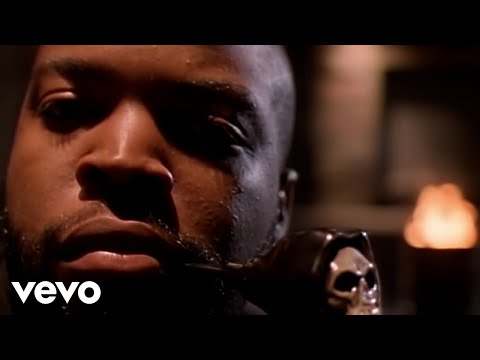
The music video for "Why We Thugs" used imagery that reinforced the song's social commentary, situating the narrative within visual representations of urban poverty and institutional neglect. The video circulated widely on BET and on the emerging online video platforms that were beginning to reshape music video distribution in 2006, contributing to the single's promotional reach beyond traditional television.
Critics and hip-hop commentators received the song as a return to the kind of socially engaged rap that Ice Cube had produced in his most critically acclaimed period. The song was widely seen as a deliberate repositioning, an effort to reconnect with the politically conscious dimension of his early work after a period in which his music had moved toward more commercially formulaic territory. Whether this reading was entirely accurate or partly retrospective, it reflected a genuine perception in the hip-hop community that Ice Cube was engaging with substantive questions rather than merely mining familiar commercial formulas.
The context in which "Why We Thugs" was released is essential to understanding its cultural impact. The mid-2000s represented a period of ongoing public debate about hip-hop's relationship to violence, misogyny, and social values, a debate that had intensified following the commercial explosion of gangster rap in the late 1980s and early 1990s. Ice Cube occupied a particular position in that debate as someone whose own work had been central to the controversy from the beginning. His return to overtly social commentary in 2006 was therefore received as a contribution to that ongoing conversation from one of its most historically significant participants.
The album cycle for Laugh Now, Cry Later solidified Ice Cube's commercial standing in the mid-2000s hip-hop landscape, confirming that veterans of the genre's foundational generation could still generate first-week sales and radio presence that competed with younger acts. "Why We Thugs" charted on Billboard's Hot Rap Songs chart and received substantial urban radio airplay, performing consistently with the expectations for a lead single from an established act of Ice Cube's profile. The song remains one of the more substantive political statements of his later career, a track that used the commercial machinery of mainstream hip-hop to advance an argument about the social architecture of American urban life.
02 Song Meaning
The Meaning of "Why We Thugs": Systemic Critique and the Politics of Street Identity
"Why We Thugs" stands as one of the more explicitly analytical pieces in Ice Cube's catalog, a song that uses the conventions of hip-hop to mount a structural argument about the social conditions that produce the behavior and identity formations it describes. Rather than simply celebrating or condemning street culture, the song asks why it exists and persists, which is a fundamentally different and more demanding intellectual undertaking.
Ice Cube's narrator positions himself as both an insider and an analyst. He draws on his lived experience and his community's history to examine the question from a standpoint of authenticity, but the song's form, its interrogative structure and its insistence on systemic explanation rather than individual pathology, reflects a perspective shaped by years of engagement with the social criticism embedded in hip-hop's political tradition. The song belongs to the lineage of politically engaged rap that includes the Public Enemy catalog, the early N.W.A recordings, and the socially conscious work of artists such as KRS-One and Talib Kweli.
The central argument of the song is that the behaviors associated with street culture are not random or intrinsic but are produced by specific conditions: economic deprivation, educational disinvestment, the legacy of racism, and the deliberate or negligent failure of institutions that are supposed to serve all citizens equally. The narrator catalogs these conditions not as excuses but as explanations, insisting on the distinction between individual agency and structural constraint in a way that engages with genuine complexity rather than seeking simple moral resolutions.
The title's use of the first-person plural is significant. "Why We Thugs" is not a question about other people or a detached observation about a social phenomenon. It is a first-person inquiry that places the narrator, and by extension Ice Cube himself, within the community he is describing. This rhetorical choice refuses the comfortable distance of sociological observation, insisting instead on a form of solidarity and shared identity even in the act of critical examination.
The song also engages implicitly with the debate within hip-hop about the role and responsibility of the genre in representing and potentially perpetuating the behaviors and values it depicts. Ice Cube, whose early career work was at the center of precisely this controversy, brought particular authority and complexity to this question. "Why We Thugs" does not resolve the tension but inhabits it productively, making the difficulty of the question part of the song's meaning rather than papering over it.
For Ice Cube's artistic identity in 2006, the song served as an important statement of continued engagement with the social and political dimensions of hip-hop that had defined his most critically respected work. After a period in which his commercial priorities had shifted toward broader pop appeal and his public profile had expanded through his film career, "Why We Thugs" reasserted that the analytical voice of his early career remained active and relevant. It suggested that commercial success had not silenced the social critic who had first made his name by articulating, with unsparing precision, the realities of life in South Central Los Angeles at the end of the 1980s.
→ More from Ice Cube
View all Ice Cube hits →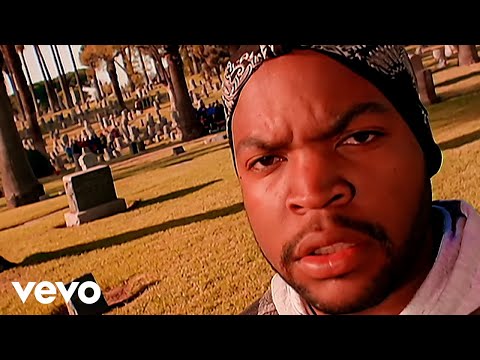



→ More from the 2000s File
View all 2000s hits →




Keep digging