The 2000s File Feature
Who Said
Who Said — Hannah Montana (2006) The Hannah Montana franchise represented one of the most carefully engineered entertainment properties in Disney Channel his…
01 The Story
Who Said — Hannah Montana (2006)
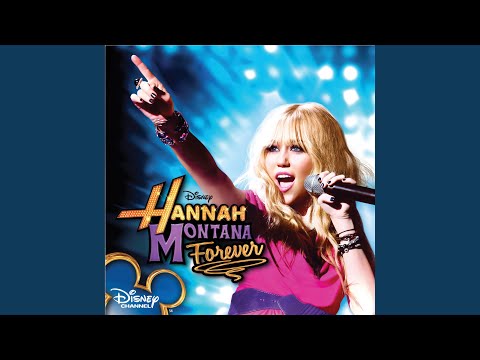
The Hannah Montana franchise represented one of the most carefully engineered entertainment properties in Disney Channel history, a multimedia phenomenon built around the dual identity of a teenager who lived an ordinary life while secretly performing as a pop star. The central conceit was designed to carry enormous appeal for the preteen and early-teenage audience that Disney Channel had spent years cultivating, and the music that accompanied the franchise was crafted to serve both the narrative requirements of the television series and the commercial demands of the pop music market. "Who Said" appeared on the Hannah Montana soundtrack album released on October 24, 2006, through Walt Disney Records, as part of the initial commercial expansion of the property beyond its television base.
The song was written by Tamara Dunn and Matthew Gerrard, two songwriters who had significant experience crafting pop material for the teen market. Matthew Gerrard in particular had worked extensively with Disney Channel properties and had developed a particular fluency in constructing pop songs that delivered empowerment messages in musical packages that felt accessible and immediate to young audiences without condescending to them. The collaboration with Dunn produced a track that was representative of the best work of its type during the period: musically competent, lyrically direct, and thematically focused on a message that its target audience would find genuinely meaningful.
The thematic territory of "Who Said" was the challenge to externally imposed standards of beauty and desirability, a subject with obvious and deep resonance for the demographic at which the Hannah Montana property was aimed. The song's central question, directed at whoever is responsible for establishing the rules of attractiveness and acceptability that young women are expected to conform to, positions the narrator as someone discovering and asserting her right to define herself on her own terms. This empowerment framework was central to the Hannah Montana brand identity and to the broader Disney Channel aesthetic of the mid-2000s.
The Hannah Montana soundtrack album debuted at number one on the Billboard 200, an extraordinary achievement for a television tie-in product and a demonstration of the commercial power that the Disney Channel brand had achieved with its core demographic by 2006. The debut made Miley Cyrus, who performed as Hannah Montana on the record, the youngest artist ever to have a number-one debut album on the Billboard 200 at that time, a milestone that generated significant media attention and positioned her as one of the most commercially significant young performers in American entertainment.
Miley Cyrus brought a vocal energy to "Who Said" that was central to the song's effectiveness with its target audience. Her delivery was enthusiastic and convincing, projecting the kind of confident assertion that the lyrical content required without the studied polish that might have felt artificial in the context of a character and persona built around relatability and ordinariness. The production was clean and contemporary for the pop landscape of 2006, featuring the guitar-driven pop sound that was characteristic of the era's mainstream teen-oriented recordings.
The broader Hannah Montana franchise was at this point approaching the height of its cultural reach. The television series, which had premiered on Disney Channel in March 2006, had quickly become the most-watched show on the network and one of the most discussed properties in children's entertainment. The success of the soundtrack album demonstrated that the property's appeal was not limited to the passive viewing experience of television but could translate into active commercial engagement with music releases. The franchise would go on to generate several additional soundtrack albums and concert films, establishing a commercial template that Disney Channel would replicate with subsequent properties throughout the following decade.
The live performance dimension of the Hannah Montana brand was also becoming an important factor in the property's cultural footprint during the period in which "Who Said" was released. Concerts performed under the Hannah Montana brand drew enormous audiences from the demographic that had made the television show a success, and songs from the soundtrack albums, including "Who Said," became staples of these performances. The experience of hearing and singing along to familiar songs in a live concert context deepened the emotional connection that young audiences formed with the material.
The soundtrack album was certified multi-platinum by the Recording Industry Association of America, reflecting substantial physical sales at a time when the music industry was still navigating the transition from a primarily physical sales model to the digital distribution landscape that would come to dominate in subsequent years. The commercial performance of the Hannah Montana soundtrack demonstrated that certain categories of dedicated fan audience could still drive significant physical sales even as the broader industry was experiencing declining physical purchase behavior.
For Miley Cyrus's career, "Who Said" and the Hannah Montana franchise represented the foundational commercial and cultural context from which she would eventually depart in her subsequent artistic evolution. The contrast between the carefully crafted, family-friendly empowerment messaging of the Hannah Montana period and the more provocative artistic choices of her later career would become one of the defining narratives of her public story, and "Who Said" stands as one of the clearest early expressions of the persona that she would eventually, deliberately and systematically, deconstruct.
02 Song Meaning
What "Who Said" Means
"Who Said" belongs to a long tradition of pop songs built around the challenge to arbitrary standards of social acceptability, a tradition that has been particularly prominent in music aimed at younger audiences for whom the pressure to conform to externally imposed definitions of attractiveness and desirability is experienced with particular intensity. The song's central rhetorical strategy is the question itself: by asking who established the rules that the narrator is being expected to follow, the lyric implies that these rules have no legitimate authority because they have no coherent author. The challenge to unexamined convention is cast as a rational inquiry rather than an emotional rebellion, which gives the song's empowerment message a particular kind of intellectual backbone beneath its accessible pop surface.
The context of the Hannah Montana franchise shapes how the song functions and what it communicates to its intended audience. Hannah Montana is, at the most basic narrative level, a story about the management of dual identities: the ordinary teenage girl and the famous pop star, with the secret held carefully between them. The empowerment message of "Who Said" speaks to both dimensions of this premise. For the character, it addresses the question of which version of the self is the real one, and it answers that both are authentic. For the young audience, it addresses the more universal question of how to be oneself in environments that create pressure toward conformity.
For Miley Cyrus as a performer, the song established early in her public career a relationship to questions of identity and self-definition that would remain central to her artistic concerns across multiple subsequent phases of her career, even as the specific answers and the aesthetic context in which she explored them changed dramatically. The Hannah Montana period planted the questions about authenticity, identity, and the performance of self that her later, more provocative artistic choices would revisit with very different conclusions.
The emotional register of "Who Said" is celebratory and confident, belonging to the affirmative pole of the empowerment genre rather than the more combative or defensive expressions that the same subject matter can produce. The narrator is not angry at the establishment of unfair standards; she is simply dismissing them as irrelevant to her own self-understanding. This lightness of touch is appropriate to the context and to the age of the intended audience, offering a model of self-possession that is aspirational rather than polemical.
The song's enduring relevance to the audiences who encountered it during the peak of the Hannah Montana franchise reflects the degree to which the questions it raises are genuinely ongoing rather than resolved at any particular point in development. The challenge to externally imposed standards of beauty and acceptability does not become less urgent as young people move through adolescence and into adulthood; it simply takes new forms and presents itself in new contexts. Songs that address this challenge at a formative moment in listeners' lives retain a particular emotional significance as those listeners grow older and recognize in the song's central inquiry an articulation of something they are still actively navigating.
→ More from Hannah Montana
View all Hannah Montana hits →
→ More from the 2000s File
View all 2000s hits →
Keep digging