The 2000s File Feature
The Other Side Of Me
Hannah Montana: The Other Side Of Me "The Other Side Of Me" was released in 2006 as part of the debut soundtrack album for the Disney Channel television seri…
01 The Story
Hannah Montana: The Other Side Of Me
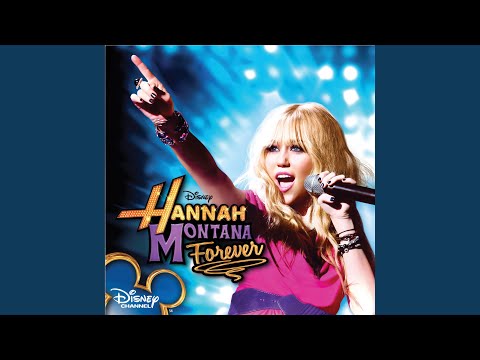
"The Other Side Of Me" was released in 2006 as part of the debut soundtrack album for the Disney Channel television series Hannah Montana, distributed through Walt Disney Records. The song served as one of the defining tracks on an album that would become a commercial landmark in the teen pop genre, arriving at a moment when the Disney Channel was aggressively building a music-to-television pipeline that had already proven extraordinarily profitable with artists such as Hilary Duff and the Cheetah Girls.
The Hannah Montana soundtrack was released on October 24, 2006, and debuted at number one on the Billboard 200, a remarkable achievement for a television tie-in record. The album moved quickly through retail channels fueled by the show's massive viewership among the six-to-fourteen demographic, and it eventually sold more than three million copies in the United States alone, earning triple platinum certification from the RIAA. Within that commercial context, "The Other Side Of Me" occupied a prominent position as one of the tracks performed by Miley Cyrus under her fictional alter ego Hannah Montana.
The dual-identity premise of the show, in which an ordinary teenager named Miley Stewart secretly leads a parallel life as the pop star Hannah Montana, gave the entire soundtrack an unusual conceptual coherence. Songs were credited to Hannah Montana rather than to Miley Cyrus personally, which allowed the fictional conceit to extend into the real commercial marketplace. "The Other Side Of Me" leaned directly into that premise, functioning both as a standalone pop song and as a piece of narrative architecture for the television series.
The production of the track followed the bright, guitar-forward pop template that characterized the album's overall sound, blending contemporary production values with accessible hooks aimed squarely at the Disney Channel's core audience. The album was produced under the supervision of Disney's music division, drawing on a stable of professional songwriters and producers who specialized in youth-oriented pop. The result was a polished, radio-friendly collection that did not condescend to its audience while remaining firmly within the guardrails of family-friendly entertainment.
Miley Cyrus was thirteen years old when the series premiered in March 2006, and the soundtrack's success accelerated what would become one of the most closely watched careers in pop music. The Hannah Montana album demonstrated that a television property could serve as a genuine launch vehicle for a recording career rather than merely a promotional supplement. Industry observers noted at the time that the album's chart performance rivaled those of established adult pop acts, an outcome that reshaped the way major labels and entertainment conglomerates thought about children's television as a music-industry asset.
The soundtrack spent multiple weeks in the top ten of the Billboard 200, and the success of the record directly enabled the follow-up Hannah Montana 2: Meet Miley Cyrus in 2007, a dual album that included both additional Hannah Montana material and Miley Cyrus's official debut as herself. That transition was made possible in large part by the groundwork laid by tracks like "The Other Side Of Me," which established audience loyalty while also hinting at the more personal artistic territory Cyrus would eventually occupy.
Culturally, "The Other Side Of Me" belongs to a specific and consequential moment in American pop music when the Disney Channel functioned as the most reliable star-making machine in the industry. The Hannah Montana franchise generated enormous ancillary revenue across merchandise, touring, and theatrical films, and the soundtrack album was the commercial and artistic spine around which all of that activity was organized. The song's cheerful execution and its thematic alignment with the show's central dramatic tension made it one of the tracks fans most closely associated with the series during its original run from 2006 to 2011.
In retrospect, the Hannah Montana soundtrack and its individual songs represent a cultural document of the mid-2000s Disney Channel era as much as they represent conventional pop releases. The album's success helped define the parameters of what a children's television franchise could achieve in the music marketplace, and "The Other Side Of Me" stands as one of its more emblematic contributions to that record. The soundtrack's cumulative impact extended into the broader music industry's understanding of synergy between television and recorded music, demonstrated by the fact that Walt Disney Records leveraged the album's commercial blueprint across subsequent properties including Camp Rock, High School Musical, and the Jonas Brothers, all of which replicated the model of television-first artist development that Hannah Montana had pioneered.
02 Song Meaning
The Other Side Of Me: Meaning and Themes
"The Other Side Of Me" operates as both a pop song and a piece of dramatic monologue, with its central subject being the experience of living two separate identities simultaneously. The lyrical conceit maps directly onto the premise of the Hannah Montana television series, in which the protagonist maintains a private life as an ordinary teenager while secretly inhabiting the very different world of pop stardom. The song articulates this duality not as a burden but as a source of genuine self-knowledge, treating the secret identity as something that enriches rather than distorts the singer's sense of who she is.
At its emotional core, the song is about the incompleteness that comes from showing only one version of yourself to the world. The narrator suggests that her public face and her private self are both authentic, but that neither alone constitutes the whole person. This is a sophisticated psychological observation dressed in accessible pop language, and it resonates with the experience of adolescence more broadly, a period in which young people routinely experiment with different presentations of self across different social contexts.
The dual-identity framework gives the song a depth that purely biographical pop material might lack. Rather than drawing on a single emotional event or relationship, the lyric asks its listener to contemplate how identity itself is constructed and performed. For a song aimed primarily at pre-teen and early-teen audiences, this is unusually rich thematic territory, though it is delivered with enough directness and melodic warmth that the conceptual complexity never becomes an obstacle to enjoyment.
Emotionally, the song occupies a register of gentle revelation rather than crisis. The narrator does not appear tormented by her double life; instead, she seems to have arrived at a kind of peace with it, acknowledging that different people know different sides of her without treating this as a tragedy. This emotional tone was well-suited to the Disney Channel's programming philosophy, which generally preferred stories of growth and self-acceptance over darker narratives of conflict and loss.
Within Miley Cyrus's artistic catalog, or more precisely within the Hannah Montana catalog as a distinct body of work, the song functions as something like a mission statement. It articulates the central dramatic proposition of the entire franchise in musical form, which is why it was so effective as both a standalone pop song and as a piece of narrative scaffolding for the television series. Fans of the show could hear the song and understand immediately what it was about, while listeners encountering it without that context could still engage with it as a study in self-awareness and dual identity.
The song also reflects a broader tradition in pop music of using performance itself as a subject. From the classic tension between stage persona and private self that runs through rock and pop history, "The Other Side Of Me" draws on a rich lineage while translating it into terms accessible to a young audience. The insight that performance and authenticity are not opposites but can coexist and even enrich each other is one that music has explored across many decades and genres, and the song contributes to that conversation in its own modest way.
In the context of Miley Cyrus's subsequent career, the song reads as an early exploration of themes she would return to repeatedly: the relationship between public persona and private identity, the pressures of celebrity on selfhood, and the desire to be understood in one's full complexity rather than reduced to a single, simplified image. The Hannah Montana years, and songs like this one, established the emotional and conceptual vocabulary that Cyrus would later deploy in far more raw and personal ways as her career evolved beyond the Disney framework.
→ More from Hannah Montana
View all Hannah Montana hits →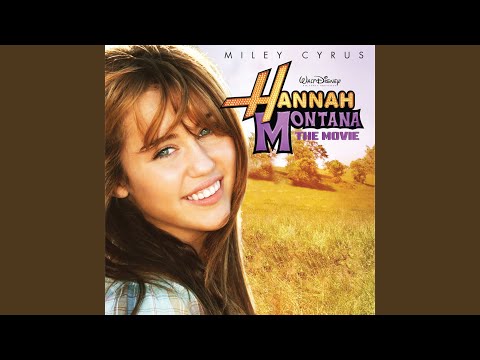
→ More from the 2000s File
View all 2000s hits →
Keep digging