The 2000s File Feature
Pumpin' Up The Party
Pumpin' Up The Party: Hannah Montana, Disney, and the Teen Pop Machine of 2006 "Pumpin' Up The Party" arrived as part of one of the most strategically orches…
01 The Story
Pumpin' Up The Party: Hannah Montana, Disney, and the Teen Pop Machine of 2006
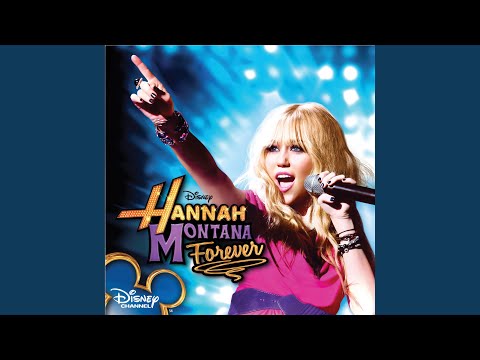
"Pumpin' Up The Party" arrived as part of one of the most strategically orchestrated launches in the history of children's and teen entertainment, the debut of the Hannah Montana franchise on the Disney Channel in 2006. The television series premiered in March 2006 and immediately established itself as a phenomenon, with Miley Cyrus in the title role generating the kind of passionate audience identification that Disney had been cultivating with particular sophistication since the launch of its television music strategy in the early 2000s. The soundtrack album, from which "Pumpin' Up The Party" emerged, was an integral component of the franchise's commercial architecture.
The Hannah Montana soundtrack was released on Walt Disney Records in 2006 and performed spectacularly on the commercial charts, demonstrating the effectiveness of the Disney Channel's ability to convert television viewership directly into music purchases. The album entered the Billboard 200 at extremely high positions and maintained strong sales for an extended period, becoming one of the best-selling soundtracks of its year and establishing a commercial template that Disney would repeat with subsequent franchise properties.
The creative team behind "Pumpin' Up The Party" worked within the well-defined parameters of the Disney pop aesthetic, which prioritized melodic accessibility, positive messaging, and production values that would translate effectively to both television performance contexts and radio play. The songwriting and production approach drew on the bubblegum pop tradition that had been commercially potent since the late 1990s, with influences from the Backstreet Boys, Britney Spears, and other acts who had demonstrated the viability of polished, melody-forward teen pop in the global marketplace.
Miley Cyrus, then twelve or thirteen years old at the time of the show's launch, brought to the role an unusual combination of natural charisma and genuine musical ability that distinguished her from some of her Disney Channel contemporaries. Her father, Billy Ray Cyrus, was a country music star of considerable commercial stature whose 1992 hit "Achy Breaky Heart" had introduced him to a mass audience, and Miley had grown up in a professional entertainment household that prepared her well for the demands of a dual career as actress and recording artist.
The fictional conceit of the Hannah Montana franchise, that a regular teenager lived a secret life as a pop star, gave the music a specific narrative context that enhanced its meaning for its target audience. Songs that appeared on the soundtrack were understood by viewers not simply as pop records but as Hannah Montana's pop records, music that existed within the fictional world of the show and simultaneously outside it as commercially available products. This blurring of fiction and reality was central to the franchise's appeal and helped generate the exceptionally intense fan identification that drove its commercial success.
The production of "Pumpin' Up The Party" employed the high-energy, anthemic quality that defined the party-starting genre of teen pop at its most commercially effective. The production aesthetic drew on contemporary pop production techniques, with programmed percussion, synthesizer layers, and melodic hooks designed for immediate memorability and repeated playback. The energy level throughout the track was calibrated to create a sense of celebratory momentum, inviting the listener to join a collective experience of musical enjoyment.
Disney Channel's music strategy in this period was sophisticated and thoroughly integrated with its television programming. Songs from Disney Channel series were promoted through the shows themselves, through music video programming, and through a variety of ancillary products and experiences that reinforced the music's presence in the daily lives of the target demographic. This integrated approach meant that a track like "Pumpin' Up The Party" had multiple channels of exposure working simultaneously, creating a saturation of awareness that translated directly into commercial performance.
The success of the Hannah Montana franchise at this moment reflected broader changes in the entertainment landscape for young people, with the convergence of television, music, and consumer products creating entertainment ecosystems that monetized fan loyalty across multiple platforms simultaneously. Disney had been refining this approach since the success of its earlier music-driven television properties, and by 2006 the model had been optimized to a degree of considerable commercial effectiveness.
The cultural impact of the Hannah Montana phenomenon extended well beyond the initial soundtrack album. The franchise generated touring shows, feature films, and a succession of subsequent albums that followed Miley Cyrus's development as an artist from child star to adult performer of more independent artistic ambitions. "Pumpin' Up The Party" thus stands at the beginning of one of the more extensively documented artistic trajectories in contemporary popular music, the transformation of a Disney Channel creation into a major recording artist with a genuinely complex artistic identity.
02 Song Meaning
Youth, Energy, and the Invitation to Celebrate: The Meaning of Pumpin' Up The Party
"Pumpin' Up The Party" is a song that operates entirely within the register of celebratory energy and social invitation. Its fundamental message is simple and unambiguous: the narrator announces an intention to raise the energy level of a social gathering and invites listeners to participate in that elevation of collective mood. The track belongs to a long tradition of party anthems, songs whose primary function is to create and sustain a shared experience of joyful communal energy, and it executes that function with a directness and enthusiasm appropriate to its target audience.
The simplicity of the premise should not be mistaken for a lack of craft. Effective party anthems are actually among the more difficult achievements in popular songwriting, because they must create a sense of genuine momentum and excitement without the complexity of character or situation that other song types can deploy. The challenge is to sustain interest and energy through repetition and escalation rather than through narrative development, and the best examples of the genre achieve this through a combination of melodic irresistibility and rhythmic momentum that bypasses critical analysis and goes directly to physical and emotional response.
The Hannah Montana context shapes the song's meaning in important ways. Because the character of Hannah Montana was a pop star within the fictional world of the television series, "Pumpin' Up The Party" functioned simultaneously as a party anthem within that narrative and as a demonstration of Hannah's pop star capabilities. When the target audience of young viewers heard the song, they were hearing both a celebration of collective social energy and a performance by a character they admired and identified with. This dual function gave the track a resonance within its audience that a purely standalone pop record would not have carried.
The values embedded in the song are characteristic of the Disney Channel's approach to music for its demographic. The celebration is unambiguously positive, the energy is inclusive rather than exclusive, and the invitation to join the party is extended to everyone rather than to a select few. There is no irony, no ambiguity, and no complexity in the emotional landscape the song inhabits, and this directness was precisely calibrated to the emotional needs and preferences of its intended audience. Young audiences consuming entertainment that affirms simple, positive social experiences find in such music a genuine emotional satisfaction.
The social function of party anthems for adolescent and pre-adolescent audiences is more significant than their commercial context might suggest. Songs that celebrate collective social experience provide young people with a shared emotional vocabulary, a way of narrating and understanding their own experiences of social belonging and celebration. When a twelve-year-old listener hears "Pumpin' Up The Party" and associates it with experiences of dancing and social connection with friends, the song becomes part of the emotional landscape of early adolescence in a way that carries genuine personal meaning.
For Miley Cyrus's developing artistic identity, the song represents the beginning of a commercial persona that she would subsequently work to complicate and move beyond. The Hannah Montana version of Miley Cyrus was designed to be maximally accessible and reassuring, a pop star whose energy was entirely positive and whose image was carefully managed within Disney's family-friendly parameters. The distance between this starting point and the more provocative artistic positions she later occupied makes the early recordings historically interesting as documents of an origin point against which subsequent development can be measured.
The track's lasting value lies in its effectiveness as an artifact of its specific cultural moment, the peak of Disney Channel's music-driven franchise strategy in the mid-2000s. It captures with considerable fidelity the aesthetic values, commercial priorities, and target audience expectations that defined that strategy, and it does so with enough melodic and energetic effectiveness to remain genuinely entertaining when encountered outside its original context. As a historical document of early twenty-first century teen pop and Disney's commercial entertainment model, "Pumpin' Up The Party" is a more revealing and informative recording than its cheerful surface might initially suggest.
→ More from Hannah Montana
View all Hannah Montana hits →
→ More from the 2000s File
View all 2000s hits →

Keep digging