The 2000s File Feature
Working Class Hero
Working Class Hero — Green Day (2007) When Green Day chose to record a cover of John Lennon's "Working Class Hero" in 2007, the decision was both a commercia…
01 The Story
Working Class Hero — Green Day (2007)
When Green Day chose to record a cover of John Lennon's "Working Class Hero" in 2007, the decision was both a commercial calculation and a statement of artistic lineage. The original recording was released by Lennon in 1970 on his debut solo album John Lennon/Plastic Ono Band, and it had stood for nearly four decades as one of rock music's most uncompromising political and social critiques. Green Day's version was produced for the soundtrack of the documentary film The U.S. vs. John Lennon, which examined the Nixon administration's attempts to deport Lennon in the early 1970s because of his antiwar activism. The context of the documentary gave the cover a specific political urgency, arriving as it did during the peak years of American debate over the Iraq War.
The cover was released as a single in October 2007, distributed through Reprise Records, and it reached number 17 on the Billboard Hot 100. This was a notable chart position for a song that was deliberately stripped-down and acoustically centered, representing a different commercial profile than the arena-ready punk of Green Day's most successful work. The track's chart performance indicated that the band's audience was willing to follow them into more understated sonic territory, and it also benefited from the documentary's promotional apparatus and the broader cultural interest in Lennon's legacy during that period.
Billie Joe Armstrong handled the vocal performance, and his approach was both respectful of the original and distinctly his own. Where Lennon's version was deliberate and rhythmically spare, delivered with a working-class English directness that was central to the song's political character, Armstrong brought a slightly different emotional register: his voice communicates anger alongside the song's irony, and there is an urgency in his performance that fits the Bush-era political moment in which the cover was made. The production was handled by Butch Walker and the band, and it remained close to the acoustic guitar-and-vocal template of the original while incorporating subtle production choices that placed it in the contemporary moment.
The release of the cover was timed to coincide with the theatrical run of The U.S. vs. John Lennon, which explored the FBI surveillance and immigration proceedings targeting Lennon during his years in New York. The parallels between the Nixon administration's treatment of political dissidents and the post-9/11 political climate in the United States were not subtle, and both the documentary and Green Day's cover were understood as commenting on the present through the lens of the past. This political alignment gave the track a cultural significance beyond its chart performance.
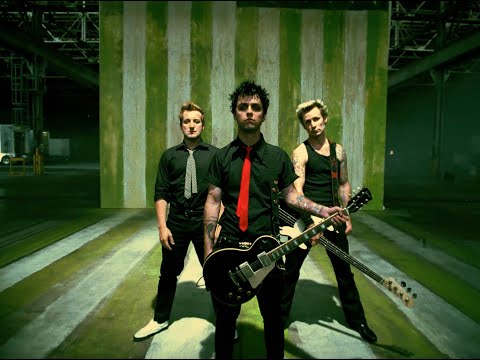
The music video for the cover was similarly engaged with documentary material, incorporating footage from The U.S. vs. John Lennon alongside performance footage of Green Day. The visual combination of historical footage and contemporary performance created a through-line between Lennon's moment and Armstrong's, arguing implicitly that the political anxieties the original song addressed remained as relevant in 2007 as they had been in 1970. This historical argument was a significant part of the track's reception and contributed to the substantial critical attention the cover received.
Critics were generally respectful of the cover, noting both Green Day's care with the source material and the appropriateness of the political moment as a context for the song's reemergence. Several reviewers observed that the cover was more successful than most rock covers of Lennon material, which often fail either because they over-produce the original or because they fail to find a genuinely contemporary voice for the material. Armstrong's vocal performance was specifically cited as the element that justified the recording, because it communicated genuine feeling rather than mere homage.
The cover was also noted as part of Green Day's evolution during the period following American Idiot (2004), a record that had established the band as capable of explicitly political statement on a mass commercial scale. "Working Class Hero" extended that political dimension in a different direction, replacing the electric bombast of American Idiot with something quieter and more intimate, demonstrating range and a genuine engagement with the rock tradition rather than simply a desire to make large political gestures. The track remains a notable entry in Green Day's catalog precisely because it sits somewhat outside their typical mode.
02 Song Meaning
What "Working Class Hero" Means
"Working Class Hero" is among the most politically explicit songs in the rock canon, and its meaning has proved remarkably portable across the decades since John Lennon first recorded it in 1970. At its core, the song is a critique of social conditioning: it describes in precise and unsparing terms the mechanisms by which class society reproduces itself by teaching the people it exploits to accept and even celebrate their own subordination. The narrator walks through the stages of this conditioning, from childhood education through adult wage labor, exposing each stage as a form of subtle violence dressed as opportunity.
The central irony of the song, captured in its title, is that the "working class hero" of the phrase is not actually a hero at all, but a construct, a flattering label applied to working-class people to make them feel honored by the conditions of their exploitation. The hero is "working class" in the sense of being permanently fixed in that status, and the "heroism" consists of enduring that fixity without complaint. Lennon's original treatment of this theme was devastating precisely because it refused sentimentality, presenting the working class not as noble victims but as people who have been successfully trained to perpetuate the system that constrains them.
Green Day's 2007 cover brought this critique into a new political context without significantly altering its terms. In the mid-2000s, the United States was engaged in two overseas wars that were disproportionately fought by working-class and lower-middle-class soldiers, and the political culture of the era was saturated with rhetoric about heroism and sacrifice that paralleled, in updated form, exactly the kind of ideological conditioning the song describes. Billie Joe Armstrong's vocal performance communicated an anger that was simultaneously directed at the political present and at the deeper structural critique embedded in the original.
The song's themes of class, conditioning, and false consciousness resonate in Green Day's catalog because the band has always positioned itself as speaking for and to a constituency that feels alienated from the dominant culture. Their breakthrough album Dookie and their later political record American Idiot both addressed versions of the feeling that the mainstream society promises inclusion while delivering marginalization. "Working Class Hero" gave them a language for that feeling that had been refined over three decades of reception and that carried the authority of Lennon's biography and moral standing.
The decision to maintain the song's acoustic character, resisting the temptation to electrify and amplify it in the manner of Green Day's signature sound, was itself a meaningful interpretive choice. The acoustic arrangement preserves the intimacy and directness of the original, which is important because the song's critique operates through close address rather than spectacle. A fully produced rock version would have aestheticized the anger in ways that would undercut the argument. By keeping the arrangement spare, Green Day acknowledged that the song's power comes from its words and its directness, not from sonic grandeur.
In the context of the documentary The U.S. vs. John Lennon, the cover also functioned as a statement about the relationship between artistic dissent and state power. The documentary's subject, the government's attempts to silence Lennon by deporting him, gave the song a biographical dimension that enriched its political content. Covering "Working Class Hero" in that context was a way of arguing that Lennon's political commitments were not merely personal quirks but serious cultural contributions that needed to be defended and continued.
→ More from Green Day
View all Green Day hits →


→ More from the 2000s File
View all 2000s hits →

Keep digging