The 2000s File Feature
If You Can Do Anything Else
"If You Can Do Anything Else" — George Strait's 2001 Crossover Moment The King of Country in a Changing Landscape Country music in 2001 was a genre in flux. …
01 The Story
"If You Can Do Anything Else" — George Strait's 2001 Crossover Moment
The King of Country in a Changing Landscape
Country music in 2001 was a genre in flux. The post-Garth Brooks commercial expansion of the 1990s had swept in a wave of hat-act traditionalists and pop-inflected crossover acts alike, and by the turn of the millennium the Hot 100 had become an increasingly complicated space for Nashville-rooted artists. Radio formats were fragmenting. Digital distribution was beginning its first tentative disruptions. And yet George Strait, who had anchored the traditional country movement since the early 1980s, continued to move between the country charts and the broader pop conversation with a consistency that seemed almost casual from the outside.
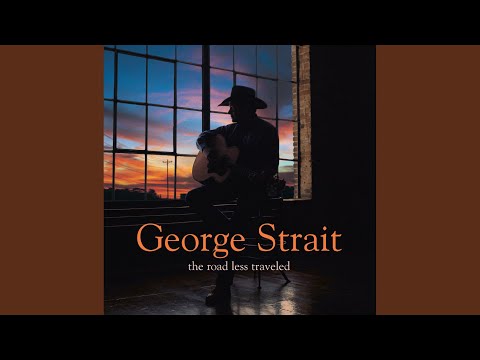
"If You Can Do Anything Else" appeared in this environment as part of Strait's The Road Less Traveled album, released in 2001. By that point in his career, Strait had accumulated an extraordinary record of number one country singles, making him one of the most successful chart performers in the genre's history. The Hot 100 appearance of this particular track, which debuted on April 14, 2001, represented one facet of an artist operating across multiple formats simultaneously.
Traditional Sensibility, Modern Moment
What distinguished Strait from many of his contemporaries during this period was his refusal to chase production trends. While other country acts were incorporating elements of arena rock, adult contemporary, or even traces of hip-hop production into their sound, Strait remained committed to a style rooted in honky-tonk tradition, Western swing, and the understated Texas country of his formative influences. "If You Can Do Anything Else" exemplified this approach: clean guitar work, a measured rhythm section, and production that framed the vocal without overwhelming it.
The song itself explored themes of vocational passion, the idea that a person drawn to a particular calling cannot easily imagine themselves doing anything else. For an artist with Strait's record of sustained dedication to a single creative direction, the subject carried a certain autobiographical resonance. Whether intended as such or not, the choice of material reinforced a public image Strait had cultivated consistently over two decades: a man who knew exactly what he did, did it better than almost anyone, and saw no reason to change.
Chart Performance on the Hot 100
The single's run on the Hot 100 unfolded steadily through the spring and summer of 2001. Debuting at number 76, it worked its way through the chart over 18 weeks, reaching its peak position of 51 on July 14, 2001. For a track whose primary market was country radio and country fans, breaking into the pop top 100 and sustaining nearly five months of chart presence was a genuine achievement. It reflected the degree to which Strait's audience overlapped with the broader pop-buying public, particularly in the American South and Midwest where country had its densest commercial base.
On the country charts specifically, the track performed with the authority typical of Strait releases during this period. His name on a single was a reliable indicator of country radio success, and the album it came from continued his pattern of steady commercial performance in an era when many of his 1980s contemporaries had seen their commercial fortunes significantly diminished.
Strait's Place at the Turn of the Millennium
By 2001, George Strait had been recording and touring for roughly two decades. Where other artists of comparable longevity had reinvented themselves multiple times or retreated into nostalgia tours, Strait maintained a productive recording career and a touring schedule that kept him in regular contact with his audience. The lack of dramatic reinvention was itself a kind of statement: some artists find their lane early and commit to it not out of limitation but out of genuine conviction.
The Road Less Traveled arrived at a moment when the country industry was actively debating what traditional country sounded like and who its audience was. Strait's continued commercial viability was part of that debate's answer. Listeners who wanted Texas shuffle rhythms, clean pedal steel, and direct emotional songwriting could find it in a George Strait record in 2001 just as they had found it in 1982.
Legacy of a Quiet Hit
Not every George Strait single became a landmark. "If You Can Do Anything Else" belongs to the category of solid, well-executed recordings that sustained a career rather than defined it. Its value in Strait's catalog lies in what it represents: the middle of a long body of work, the kind of release that reminds you a great artist's career is not composed entirely of peaks and valleys but of long stretches of reliable, high-quality output.
For fans who follow Strait's discography carefully, the song's 18-week Hot 100 run is a data point in a larger story about crossover appeal and genre loyalty. Put it on, and you'll hear exactly what made George Strait the dominant figure in traditional country for the better part of four decades.
"If You Can Do Anything Else" — George Strait's singular moment on the 2000s charts.
02 Song Meaning
The Meaning Behind "If You Can Do Anything Else" by George Strait
Vocation as Identity
The title of this George Strait track poses a quiet but pointed question. If you can do anything else, the implication runs, then maybe you should. The song's central premise is that a true calling is recognizable precisely by its necessity: the person drawn to it could not imagine substituting something else without losing a fundamental part of themselves. This is the language of vocation rather than profession, and it gives the song a philosophical weight that its understated country production might initially conceal.
In popular music, songs about dedication and passion tend to fall into two categories: the triumphant anthem and the weary confession. This track occupies neither extreme. It speaks from a place of settled conviction, a voice that has long since made its peace with the demands of a calling and is now simply describing what that commitment looks like from the inside. The tone is reflective rather than celebratory, honest rather than boastful.
The Texas Tradition of Plain-Spoken Truth
George Strait's artistic lineage runs through the Texas country and Western swing traditions, genres that prized directness and sincerity above theatrical display. In that tradition, a song earns its keep by saying something true in the most economical language available. "If You Can Do Anything Else" fits squarely in this lineage. The production does not embellish where embellishment would be dishonest; the lyric does not reach for metaphors where a plain statement will serve.
This approach to songwriting and performance reflects a broader aesthetic philosophy that Strait had represented throughout his career. In an era when country music was sometimes pulled toward pop gloss or rock bombast, the decision to stay plain and direct was itself a statement about what the genre's values were and where its emotional power resided. A song that trusts its listener to hear what is being said without visual spectacle or production artifice is making a bet on the audience's attentiveness.
Cultural Context: Work, Passion, and Identity in 2001
The early 2000s were a moment when conversations about work and identity were taking new forms. The dot-com boom and its subsequent collapse had rattled assumptions about career paths and financial security. Cultural commentary increasingly focused on questions of meaning and purpose in professional life, the gap between what people did to earn money and what they cared about deeply. A song built around the idea of doing the one thing you cannot stop doing touched a nerve that extended well beyond the country music audience.
For Strait's core listeners, the agricultural and working-class communities of the American South and Southwest, the concept carried additional resonance. These were people familiar with the idea of work as identity, trades and callings passed through families, commitments to land or craft that could not easily be traded for something more comfortable. The song's subject matter spoke to a value system that much of mainstream pop music in 2001 was not addressing directly.
Why the Song Holds Up
Thirty or so years into George Strait's recording career, listeners returning to his catalog find a body of work remarkable for its internal coherence. He did not dramatically reinvent himself, did not chase trends, did not attempt to rebrand for new audiences. "If You Can Do Anything Else" fits that larger portrait perfectly. It is a song that could have been recorded at several different points in his career without seeming out of place, because the values it articulates were consistently present throughout.
That consistency is itself a form of meaning. A song about commitment to a calling acquires additional resonance when performed by an artist who has demonstrably lived out that commitment across decades. The biographical echo is not incidental; it is part of what the song communicates when Strait is the one singing it.
"If You Can Do Anything Else" — George Strait's singular moment on the 2000s charts.
→ More from George Strait
View all George Strait hits →
→ More from the 2000s File
View all 2000s hits →


Keep digging