The 2000s File Feature
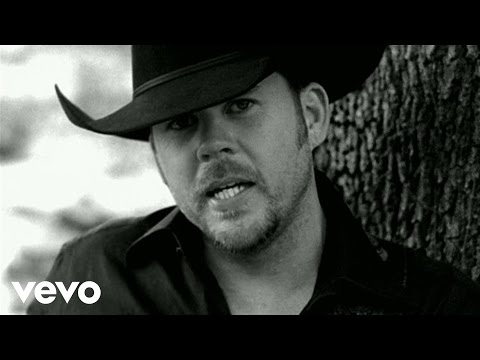
Nothing On But The Radio
"Nothing On But The Radio" — Gary Allan's Blue-Collar Romance Country's Quiet Rebel Finds His Moment Gary Allan spent the late 1990s and early 2000s carving …
01 The Story
"Nothing On But The Radio" — Gary Allan's Blue-Collar Romance
Country's Quiet Rebel Finds His Moment
Gary Allan spent the late 1990s and early 2000s carving out a particular niche in mainstream country music. While many of his contemporaries leaned into upbeat anthems and polished production, Allan cultivated a harder-edged, darker sound rooted more in the honky-tonk and Texas-influenced traditions than in the Nashville pop crossover machine. His voice carried a raw quality, a slight roughness at the edges that gave even his most radio-friendly material a sense of lived experience. By 2004, he had earned considerable critical respect and a devoted fan base, though massive commercial breakthroughs had remained somewhat elusive. "Nothing On But The Radio" would change that calculation.
The song appeared on his album Tough All Over, released in 2005, and the single was sent to country radio in the fall of 2004. The timing suited the track well. Country radio was entering an era when the lines between traditional country sounds and mainstream adult contemporary were blurring considerably, and a well-crafted love song with strong melodic bones could find a home in that middle ground without sacrificing the genre's emotional directness.
The Architecture of a Perfect Country Love Song
What "Nothing On But The Radio" does with remarkable economy is paint an entire domestic relationship in a few well-chosen images. The lyrical scenario is intimate and specific without being limiting: a couple, quiet time together, music in the background, the kind of contentment that ordinary moments can hold when you're with the right person. Country music has always been at its best when it treats the mundane as sacred, and this song operates squarely in that tradition. The production's warmth matches the lyrical temperature precisely, all acoustic textures and unhurried tempos, the sonic equivalent of a lazy Sunday morning.
Allan's vocal performance sits at the song's center with natural ease. He does not oversell the emotion, which is precisely the right instinct for material this intimate. The restraint is persuasive. Listeners believe him because he sounds like someone recounting something real rather than performing a sentiment. That quality of sincerity is harder to manufacture than it appears, and it was a consistent strength of Allan's work throughout this period of his career.
Climbing the Charts Through the Autumn
The single entered the Billboard Hot 100 on September 18, 2004, debuting at position 75. Its chart journey was the kind that radio programmers and label executives love to track: steady, consistent, reflecting genuine audience enthusiasm building over weeks rather than a single spike from heavy promotion. By December 4, 2004, the track had climbed to its peak position of 32 on the Hot 100, spending 20 weeks on the chart in total. That kind of chart longevity is a signal of real staying power, the kind of song that people request repeatedly rather than simply accepting when it comes on.
On the country-specific charts, the track performed even more strongly, becoming one of Allan's most successful singles. The crossover presence on the Hot 100 demonstrated that the song's appeal extended beyond the dedicated country audience into broader territory, reaching listeners who may not have thought of themselves as country fans but found something irresistible in the song's combination of strong melody and emotional clarity.
Within the Gary Allan Story
Looking at Allan's catalog in context, "Nothing On But The Radio" represents a high point in his run of early 2000s singles. The period surrounding this track was genuinely productive for him, with the Tough All Over album and its singles solidifying his commercial standing in ways that his earlier, critically celebrated but more modestly selling work had not quite managed. The song became one of his most recognizable tracks, the kind that would close shows and appear on best-of compilations, a reliable crowd pleaser that connected with audiences across different demographics.
The track also demonstrated that Allan could inhabit warmth and affection as convincingly as he inhabited the darker emotional territories his voice seemed naturally suited for. He had built much of his reputation on songs that dealt with loss, heartbreak, and resilience. Here was evidence that the same voice and the same sensibility could turn in the other direction without losing credibility. That range made him a more complete artist and gave radio programmers a wider palette of his material to work with.
Still Playing on Country Radio
Two decades on, "Nothing On But The Radio" holds its place among the fondly remembered country singles of the mid-2000s. It surfaces reliably on classic country radio formats, turns up in playlist discussions of the era's best love songs, and continues to accumulate streaming plays from listeners who discovered it the first time and never quite let it go. Gary Allan's ability to find genuine emotion in a simple scenario gives the track a timelessness that more elaborate productions from the same period have not always managed to preserve.
The song is an argument for restraint, for trusting a melody and a voice to do their work without excessive ornamentation. Put it on and feel what a warm autumn evening in 2004 sounded like on country radio, when a quiet love song could climb to the top third of the charts purely on the strength of its honesty.
"Nothing On But The Radio" — Gary Allan's singular moment on the 2000s charts.
02 Song Meaning
"Nothing On But The Radio" — Intimacy, Contentment, and Country's Domestic Ideal
The Quiet Power of Ordinary Happiness
Country music has always maintained a special relationship with the domestic sphere, treating home, family, and the ordinary rhythms of a shared life as subjects worthy of serious artistic attention. "Nothing On But The Radio" fits firmly within that tradition. The song's central scenario is deliberately unspectacular: two people, a quiet space, background music, the kind of uncomplicated togetherness that represents happiness in its most sustainable form. The track's emotional argument is that this kind of ordinary contentment is worth celebrating, that the big romantic gestures may get the movies but the quiet evenings are where life actually happens.
Gary Allan delivers this argument without irony or inflation. The song does not pretend that love is always dramatic. It suggests, instead, that the absence of drama can be its own form of richness, that two people comfortable enough together to simply be still are experiencing something real and valuable. That is not a revolutionary idea in country music, but it is one the genre returns to repeatedly because it resonates so consistently with audiences who recognize that version of happiness from their own lives.
Sensuality and Suggestion
The title's double meaning is handled with characteristic country music discretion. "Nothing on but the radio" works both as a description of a listening moment and as something considerably more intimate. The song plays with this ambiguity lightly, never pressing the point too hard, allowing listeners to read the lyric according to their own inclinations. That balance between the innocent and the suggestive is a longstanding country songwriting technique, the kind of thing that allows a song to work on family radio while also carrying an undercurrent that adult listeners pick up without anything being stated directly.
The approach keeps the song accessible across age groups and listening contexts. A teenager might hear a straightforward love song about sharing music with someone special. An older listener will catch the warmth of the physical intimacy implied beneath the surface. Both readings are valid, and the song's enduring radio appeal owes something to this layered accessibility.
The Era and Its Emotional Landscape
The song arrived in 2004, a period when American culture was navigating considerable anxiety around the aftermath of September 2001 and an ongoing military engagement abroad. Country music during this era produced a striking range of responses to the national mood, from explicitly patriotic anthems to songs that retreated entirely into private domestic space. "Nothing On But The Radio" belongs clearly to the second category. Its focus on intimate, private happiness carries a kind of counter-cultural energy in that context, a deliberate insistence on the value of small-scale personal life against the noise of larger public events.
That retreat into private space was not unique to country music in this period, but the genre's deep investment in domestic imagery gave songs like this one a particular kind of authority. Country listeners had never needed a historical crisis to appreciate a song about home and love. The crisis simply gave such songs an additional layer of resonance for listeners who were actively seeking comfort in the familiar.
Why the Song Still Connects
The most durable love songs tend to be the ones that describe experiences their listeners have actually had, rather than aspirational fantasies they may never encounter. The scenario at the center of this track is within reach of virtually anyone who has ever been in a relationship, which is one reason it travels so well across time and demographic groups. You do not need to be wealthy, adventurous, or conventionally romantic to recognize the version of happiness Allan describes. You just need to have known what it feels like to be completely at ease with another person.
That universality has kept the song in rotation on country radio long after the specific chart moment of late 2004 has faded into music history. It endures because the feeling it describes endures, one of country music's oldest and most reliable tricks, and one that Gary Allan executed with particular skill on this recording.
→ More from Gary Allan
View all Gary Allan hits →



→ More from the 2000s File
View all 2000s hits →




Keep digging