The 2000s File Feature
Make It Rain
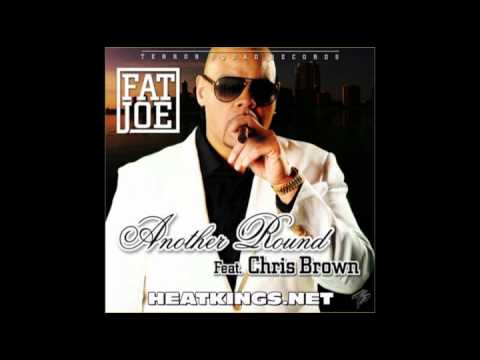
"Make It Rain" by Fat Joe Featuring Lil Wayne Hip-Hop's Grand Gesture at Its Most Cinematic There are moments in hip-hop that crystallize an era so completel…
01 The Story
"Make It Rain" by Fat Joe Featuring Lil Wayne
Hip-Hop's Grand Gesture at Its Most Cinematic
There are moments in hip-hop that crystallize an era so completely that the song becomes almost inseparable from its cultural context, and "Make It Rain" is one of them. When Fat Joe and Lil Wayne collaborated on this track in late 2006, they were creating something that would define a specific strain of hip-hop extravagance: the nightclub anthem built on the ritual of showering money onto a crowd, a gesture so theatrical and so culturally loaded that it demanded its own soundtrack. The song delivered exactly that, and the result spent the better part of six months on the Billboard Hot 100, climbing from a respectable debut to a top fifteen peak.
Fat Joe, born Joseph Antonio Cartagena in the South Bronx, had built a career spanning more than a decade by the time "Make It Rain" arrived. He had established himself through consistent output, credible street connections, and a roster of successful collaborations, navigating the transitions in hip-hop's commercial landscape with remarkable durability. By 2006 he was a reliable mainstream presence whose association with Terror Squad and his own solo output had earned him genuine industry standing.
The Lil Wayne Factor
Lil Wayne in late 2006 was at an extraordinary moment in his ascent. He was releasing a volume of mixtape material that was generating enormous industry buzz, building a reputation as one of the most technically skilled and creatively prolific rappers working in any format. His formal album career with Cash Money Records was established, but the mixtape period between 2006 and 2008 was where his legend was being actively constructed, verse by verse, track by track. His feature on "Make It Rain" was among the most commercially visible of that period, positioning him alongside a mainstream act on a major-label release while the mixtape circuit was making him a cult figure.
The chemistry between Fat Joe's verse and Wayne's contribution gave the track its dynamic range: Joe brought the swagger of an established Bronx figure at home in the club environment, while Wayne's delivery had the technical dexterity and unpredictability that was becoming his signature. The contrast served the song well.
The Chart Journey
The song debuted at number 55 on the Billboard Hot 100 on November 18, 2006. From that solid starting position it climbed steadily through the holiday season and into 2007, spending week after week moving upward through the chart. It reached its peak of number 13 on February 17, 2007, spending twenty-four weeks on the chart in total. That sustained performance across nearly half a year of chart activity confirmed the song as a genuine crossover hit rather than a hip-hop-specific success.
The track appeared on Fat Joe's album Me Myself & I and received significant radio promotion through Terror Squad's distribution arrangement. Its club-ready construction made it a natural fit for hip-hop and R&B radio formats, while the escalating buzz around Lil Wayne generated additional media attention.
A Phrase Enters the Cultural Vocabulary
One of "Make It Rain"'s most lasting contributions was helping to spread a phrase that had specific origins in club culture into mainstream American vernacular. The act of "making it rain", the practice of throwing currency into the air in a club or strip club context, became widely discussed and referenced as a result of the song's enormous commercial reach. The track did not invent the phrase or the practice, but its commercial success gave them mainstream visibility that they had not previously achieved.
This kind of cultural transmission, where a song moves a specific subcultural reference into mainstream consciousness, is one of hip-hop's most significant recurring functions. "Make It Rain" performed it with particular efficiency, the phrase becoming a cultural shorthand that survived well beyond the song's chart run.
Fat Joe's Legacy and the Song's Place Within It
For Fat Joe, "Make It Rain" represents one of the commercial peaks of his long career, a track that synthesized his strengths with a perfectly chosen collaborator at a cultural moment that was receptive to exactly the kind of statement the song made. Its twenty-four weeks on the Hot 100 placed it among the most enduring chart runs of his discography. The collaboration with Lil Wayne also demonstrated Fat Joe's instinct for pairing himself with artists at precisely the right moment in their trajectories. Put it on and let the money fall.
"Make It Rain" — Fat Joe Featuring Lil Wayne's singular moment on the 2000s charts.
02 Song Meaning
"Make It Rain" — Wealth, Performance, and Hip-Hop's Theater of Abundance
Money as Language
In hip-hop's cultural vocabulary, money has never been merely an economic fact; it is a symbol, a performance, a gesture toward a specific idea of freedom and power. "Make It Rain" engages with this tradition at its most theatrical, building its central image around the conspicuous expenditure of cash as a form of expression. The act described in the title is one that would be financially irrational by any conventional calculation; its value lies entirely in the statement it makes, the demonstration of abundance so complete that its literal disposal becomes the point. That inversion of conventional economic logic has deep roots in African American cultural traditions that predate hip-hop by generations, encompassing practices of conspicuous generosity and display that served specific social functions in communities where conventional wealth accumulation was systematically denied.
The Club as Stage
The club environment that "Make It Rain" inhabits is one of hip-hop's most important theatrical spaces. The nightclub has served as a setting for self-invention, for the performance of success, and for the translation of street-level status into mainstream visibility. Songs set in the club are not only about fun; they are about the assertion of presence and power in a social space where those qualities are publicly displayed and measured. Fat Joe and Lil Wayne understood this theater intuitively, and the song functions as a script for a specific kind of performance within it, one in which financial excess signals social arrival.
The 2006-2007 period was one of significant expansion in hip-hop's commercial reach, with the genre's aesthetic sensibilities influencing mainstream fashion, language, and social norms more broadly than at any previous point. "Make It Rain" arrived at the height of that expansion and contributed to it.
Lil Wayne and the Art of the Feature
One of the interesting things about the song from an artistic standpoint is what Lil Wayne's verse contributes beyond commercial star power. By 2006, Wayne's verses had developed a quality that set them apart from his contemporaries: an associative, unpredictable flow that generated surprise at the level of individual lines without losing coherence across the verse as a whole. His contribution to "Make It Rain" demonstrated that technical depth within a commercial context, showing that radio-ready hip-hop could accommodate genuine lyrical ambition rather than requiring its abandonment.
Cultural Impact and Vernacular Spread
The phrase "make it rain" entered American vernacular significantly through this song's cultural penetration, appearing in comedy, sports, and general conversation in ways that had nothing necessarily to do with clubs or money. That kind of linguistic diffusion is one of pop music's most powerful effects, and the song achieved it at a scale that reflected both its commercial reach and the vividness of its central image. The phrase became a shorthand that could be deployed humorously, ironically, or aspirationally depending on context, demonstrating how thoroughly hip-hop's imagery had been absorbed into mainstream American culture by the mid-2000s. The song earned its place in the decade's cultural record precisely because it captured that moment of absorption so completely.
"Make It Rain" — Fat Joe Featuring Lil Wayne's singular moment on the 2000s charts.
→ More from Fat Joe Featuring Lil Wayne
View all Fat Joe Featuring Lil Wayne hits →
→ More from the 2000s File
View all 2000s hits →
Keep digging