The 2000s File Feature
The Music Of The Night
The Music of the Night by David Cook Picture a packed television studio in the spring of 2008, the cameras swooping, the audience roaring, and a rock-leaning…
01 The Story
"The Music of the Night" by David Cook
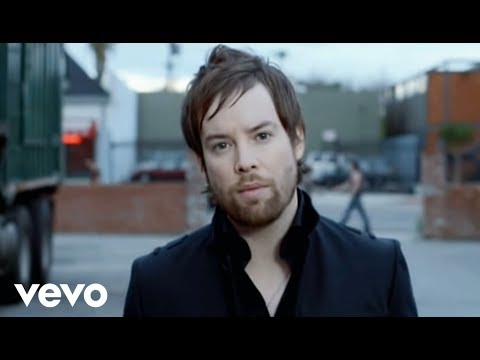
Picture a packed television studio in the spring of 2008, the cameras swooping, the audience roaring, and a rock-leaning contestant from Missouri standing center stage to deliver one of musical theater's most famous show-stoppers. This is the unlikely intersection where a Broadway classic met the biggest television talent competition of its day, and where a young singer with a husky rock voice took on a song built for operatic grandeur.
An American Idol Front-Runner
In 2008 David Cook was the breakout favorite of the seventh season of the era's most-watched singing competition. He had distinguished himself by reworking pop songs into brooding rock arrangements, charming voters with his rasp and his ambition. His performance of "The Music of the Night" came during his run on the show, which he would go on to win that May. The song, drawn from one of the most successful stage musicals in history, was a bold swing, a chance to show range beyond the rock posture that had defined his early weeks.
A Rock Singer Meets the Phantom
The composition itself is a towering piece of theatrical romance, originally written for a soaring, classically trained voice. "The Music of the Night" was written by Andrew Lloyd Webber for the musical "The Phantom of the Opera," one of the most performed stage works ever. Cook's challenge was to honor that sweeping melody with an instrument trained on grunge and modern rock. The result leaned on his sincerity and control rather than operatic power, a contestant stretching to meet a song designed for a different kind of singer entirely.
A Single Week on the Hot 100
The competition's format released contestant performances as digital singles, and this one made a brief but real chart appearance. "The Music of the Night" debuted and peaked at number 77 on the Billboard Hot 100 during the week of June 7, 2008. It spent a single week on the chart, a typical pattern for the season's individual performance releases. That fleeting appearance was less about long-term radio life than about the enormous real-time audience the show commanded, with millions watching the performance live before it ever reached the chart.
A Footnote With a Story
Cook's broader moment came when he won the season and launched a recording career, scoring hits with his original rock material. His coronation single went on to become a substantial pop hit later that year. This Broadway cover stands as a curiosity from his competition run, a snapshot of a young performer testing his limits on national television. It captures the strange alchemy of the talent-show era, when a contestant could send a century-old style of song briefly onto the modern pop chart.
The Talent-Show Chart Phenomenon
The brief chart life of this performance illustrates a peculiar feature of the late-2000s music business. The era's dominant singing competition had figured out how to convert its enormous live audience into instant digital sales, releasing contestant performances as downloadable singles within hours of broadcast. This mechanism allowed even a century-old style of theatrical song to land briefly on the modern pop chart, powered purely by the show's vast viewership. It was a strange and short-lived chapter in chart history, when the line between television entertainment and the singles chart blurred almost completely. For a few seasons, the competition functioned as one of the most powerful star-making and chart-moving machines in the industry, and performances like this one were the proof, vanishing as quickly as they appeared but real while they lasted.
Worth a Spin Today
Give it a listen and you hear an ambitious young singer reaching for something grand, a rock voice wrapping itself around theatrical romance. It is an earnest, intriguing performance from a pivotal moment in his rise, a snapshot of a contestant betting on range. Press play and revisit the swing.
"The Music of the Night" — David Cook's singular moment on the 2000s charts.
02 Song Meaning
The Meaning Behind "The Music of the Night"
As a piece of musical theater, this song is a seduction, the Phantom's attempt to draw his protege into a world of darkness, beauty, and music. Its meaning is rooted in the story of The Phantom of the Opera, where art, obsession, and longing intertwine. When a contestant performs it on television, the lyric's themes of allure and surrender to music take on a fresh, slightly altered charge.
A Spell Woven in Song
The lyric is an invitation to surrender to the night, to let music dissolve the boundary between waking life and dream. The Phantom coaxes his listener to abandon daylight reason and give in to sensation. The imagery is lush and hypnotic, designed to enchant rather than argue. At its core the song is about the overwhelming, almost dangerous power of music to seduce and transform.
Beauty Entwined With Darkness
Within the musical, the song reveals a character who is both artist and predator, offering transcendent beauty laced with manipulation. That moral complexity gives the piece its haunting quality. The same melody that promises ecstasy also conceals a trap, and the tension between the two is what makes it unforgettable on stage. Even removed from the plot, that undertow of shadow remains audible.
The Pull of Pure Sensation
Stripped of its narrative, the song speaks to anyone who has ever been transported by music, lost in sound to the point of forgetting everything else. That universal experience of musical rapture is why the piece resonates far beyond theater audiences. A young singer covering it taps into that same idea, celebrating music's capacity to carry a listener somewhere else entirely.
Why It Endures
The song endures because it dramatizes the seductive power of art itself, a theme that never loses its grip. Audiences return to it for the sheer sweep of the melody and the romantic danger it conjures. Its survival across countless performances speaks to how deeply it captures the allure of giving oneself over to beauty.
Music as an Alternate World
One of the song's deepest ideas is that music can offer refuge, an alternate world more vivid and more forgiving than ordinary reality. The Phantom dwells beneath the opera house, in a hidden realm where music reigns, and his invitation is essentially an offer to escape the harshness of daylight life for the beauty of sound. That fantasy of music as sanctuary speaks to anyone who has ever turned to a song to feel less alone. It reframes the seduction not only as romantic temptation but as the universal lure of art as a place to belong, which is part of why the piece resonates so far beyond its stage origins.
A Familiar Spell, Newly Cast
Heard in a competition context, the song becomes a test of how far a performer can be carried by its grandeur. The meaning bends slightly, from a character's seduction to a singer's own surrender to a demanding piece. Either way, the central enchantment holds, and the music does exactly what the lyric promises, drawing the listener into its world.
→ More from David Cook
View all David Cook hits →



→ More from the 2000s File
View all 2000s hits →




Keep digging