The 2000s File Feature
Ma, I Don't Love Her
Clipse and Faith Evans Trade Honesty on Ma, I Don't Love Her Set the scene in early 2003, when hip-hop was in the grip of a sleek, futuristic production soun…
01 The Story
Clipse and Faith Evans Trade Honesty on "Ma, I Don't Love Her"
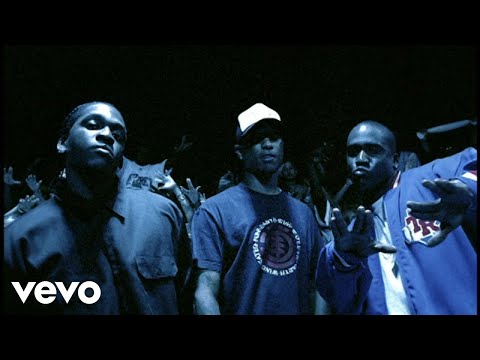
Set the scene in early 2003, when hip-hop was in the grip of a sleek, futuristic production sound and a pair of brothers from Virginia were among its sharpest new voices. Clipse had arrived with a cold-eyed, vivid style of street storytelling and a partnership with one of the most innovative production teams of the era. "Ma, I Don't Love Her" brought a soulful counterweight into their world, pairing their crisp rhymes with the rich voice of an R&B legend.
Virginia's Sharpest New Duo
Clipse, the brother duo of Pusha T and Malice, broke through in 2002 with a debut album that earned widespread acclaim for its detailed, unsentimental lyricism. Their music was produced by The Neptunes, the celebrated team of Pharrell Williams and Chad Hugo, whose minimalist, off-kilter beats were reshaping the sound of mainstream hip-hop and pop. That alliance gave Clipse a distinctive sonic signature, all skeletal rhythms and futuristic textures. The brothers brought a literary precision to their verses, and their partnership with The Neptunes made them one of the most critically respected acts of the moment.
This was a duo built for credibility as much as commercial reach, admired by purists and tastemakers alike.
A Soulful Collaboration
"Ma, I Don't Love Her" stood out for its guest voice. The track featured Faith Evans, the acclaimed R&B singer whose warm, expressive vocals had graced countless hits. Her presence added emotional depth and melodic richness to the song, contrasting beautifully with the brothers' clipped, confident delivery. The collaboration set a story of romantic complication against The Neptunes' spare, hypnotic production. Evans brought soul and vulnerability, while Clipse supplied the narrative grit, the two elements weaving together into something more textured than either could have managed alone.
A Brief Run on the Hot 100
The single appeared on the Billboard Hot 100 on the chart dated February 15, 2003, debuting at number 96. It moved up to 90 the following week and then reached its ceiling. "Ma, I Don't Love Her" peaked at number 86 on the chart dated March 1, 2003, holding that spot for a second week before sliding to 92. The song spent six weeks on the Hot 100 in total. It was a modest mainstream showing, the kind of result common for a deeper album single from a critically beloved act whose commercial impact never quite matched its artistic reputation. Clipse always commanded more respect than radio domination, and this track fit that pattern.
The chart numbers undersell the song's standing among fans, who prized the duo for their craft rather than their crossover hits.
A Standout From an Acclaimed Era
"Ma, I Don't Love Her" captures a specific high point in early-2000s hip-hop, when The Neptunes' production was everywhere and Clipse were among its most compelling vessels. The song showcased the duo's ability to balance hard-edged storytelling with melodic, radio-aware collaboration. For listeners who followed the era closely, it remains a memorable cut, a snapshot of a moment when Virginia hip-hop was at the cutting edge of the genre. The pairing with Faith Evans lent it a soulful staying power that has helped it endure in fans' memories.
The brothers would go on to be regarded as one of the most respected duos of their generation, and tracks like this illustrate exactly why.
Press Play for Early-2000s Craft
Cue up Clipse and Faith Evans on "Ma, I Don't Love Her" and drop into the sleek, inventive sound of early-2000s hip-hop at its most artful. The contrast between sharp rhymes and soulful singing makes for a rich, rewarding listen. It is a reminder of how thrilling the genre could be when great rappers and great singers met over a perfect beat.
"Ma, I Don't Love Her" — Clipse's singular moment on the 2000s charts.
02 Song Meaning
Honesty and Reassurance in "Ma, I Don't Love Her"
This is a song about a man trying to reassure his partner that another woman means nothing to him. The title says it plainly: a plea of devotion aimed at calming a lover's doubts. It dramatizes the tension and suspicion that can creep into a relationship, and the effort to hold onto trust when appearances suggest otherwise. The result is a story-driven track about loyalty under scrutiny.
A Plea Against Suspicion
The central theme is reassurance in the face of jealousy. The narrator insists that his heart belongs to his partner, no matter what she may have seen or heard. The song captures the familiar drama of a relationship strained by doubt, where one person must convince the other of their faithfulness. That push and pull of accusation and defense gives the lyric its tension and its relatable, human edge.
Faith Evans as the Voice of Doubt
The collaboration shapes the emotional dynamic. The presence of a soulful female voice adds the perspective of the one being reassured, deepening the song from a one-sided plea into something closer to a dialogue. Her warmth and vulnerability give the listener a window into the hurt and uncertainty on the other side of the argument, making the drama feel more rounded and real.
The Drama of Trust
At its core the song explores how fragile trust can be. It captures the anxiety of loving someone while fearing betrayal, a situation that plays out in countless relationships. The lyric does not pretend the doubt is irrational; it simply argues for faith despite it. That honest engagement with jealousy is part of what makes the song resonate beyond its specific scenario.
Why It Connected
The themes of suspicion, loyalty, and reassurance are deeply universal. Almost everyone has either pleaded their innocence or struggled to believe a partner, and the song speaks to both sides. Set against a hypnotic beat and softened by soulful singing, that emotional realism gave the track a relatable pull that lifted it above simple bravado.
A Familiar Emotional Knot
What lingers is the song's portrait of a couple working through doubt. It does not resolve neatly, leaving the listener with the genuine messiness of trust tested and defended. That refusal to tidy things up is what gives the song its honest, lasting emotional truth. Real relationships rarely come with clean resolutions, and the song respects that messiness rather than smoothing it over. By staying in the uncomfortable middle of the argument, it captures something true about how love and suspicion can live side by side. That willingness to sit with the tension is exactly what lifts the track above easy sentiment.
→ More from Clipse Featuring Faith Evans
View all Clipse Featuring Faith Evans hits →



→ More from the 2000s File
View all 2000s hits →


Keep digging