The 2000s File Feature
Touch It
Touch It — Busta Rhymes Rebuilds His Commercial Foundation A Career in Need of a Reset By the mid-2000s, Busta Rhymes found himself at a crossroads that many…
01 The Story
Touch It — Busta Rhymes Rebuilds His Commercial Foundation
A Career in Need of a Reset
By the mid-2000s, Busta Rhymes found himself at a crossroads that many artists of his generation were navigating with varying degrees of success. He had burst onto the scene in the early 1990s as a member of Leaders of the New School, then launched a solo career that was notable for its kinetic energy and visual imagination. The videos, the costumes, the sheer physicality of his performances had made him one of the most recognizable figures in mainstream hip-hop. But chart success had grown more elusive, and the landscape of 2005 was different from the one that had made him famous.
The answer, it turned out, was Touch It, a track that demonstrated Busta's instinct for finding the sonic context that could amplify his particular gifts. The song was built around a sample of Zapp's 1980 funk classic More Bounce to the Ounce, a choice that immediately grounded the track in a tradition of funk and R&B that gave Busta's rapid-fire delivery something almost elemental to push against. The sample became the song's backbone, its mechanical groove creating the kind of steady rhythmic foundation that Busta's style has always thrived on top of.
The Making of a Comeback Vehicle
Touch It appeared on Busta Rhymes' seventh studio album, The Big Bang, released in 2006. The album was seen in industry circles as a genuine commercial and artistic reset for an artist whose recent projects had not lived up to his commercial potential. The Big Bang was designed to address that perception directly, and the choice of Touch It as a lead single reflected a deliberate decision to lead with Busta's strengths rather than ask audiences to meet him somewhere new.
The production of Touch It leaned into club appeal, with a thumping, bass-heavy arrangement that was built for the dance floor and the radio simultaneously. The Zapp sample gave it immediate nostalgic appeal for older listeners while the contemporary production aesthetic made it accessible to younger audiences encountering the funk tradition for the first time through this filter. That dual appeal is one of the oldest tricks in commercial hip-hop, and in this case it worked with considerable effectiveness.
A Patient Chart Climb
The Billboard Hot 100 journey of Touch It was not an overnight success story but a slow, methodical build that reflected sustained radio support. The single debuted at position 88 on December 24, 2005, a modest entry for an artist of Busta's commercial history. But the track found its footing and refused to yield, climbing steadily through the early weeks of 2006 as radio programmers committed to it and dance floors responded.
The climb continued through January and February of 2006, and the song reached its peak position of number 16 on the Hot 100 on March 11, 2006. That peak represented a genuine commercial vindication, demonstrating that Busta Rhymes still had the ability to command mainstream chart attention when the material was right. The total chart run of 23 weeks on the Hot 100 was one of the most sustained performances of his solo career, confirming that Touch It had found an audience that kept returning to it.
The Music Video and Cultural Impact
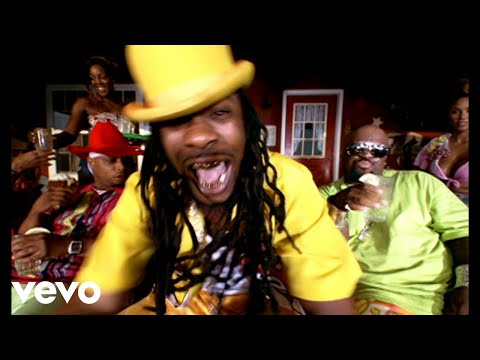
One of the distinctive elements of Touch It's cultural footprint was the series of remix versions that expanded the track's reach significantly. The official remix gathered an extraordinary roster of featured artists, transforming the original into a showcase for hip-hop talent that helped sustain its commercial momentum. The visual presentation reinforced the track's club-oriented energy, with the kind of high-production aesthetics that MTV and BET were still central to in the mid-2000s.
Busta Rhymes' visual instincts had always been among his most distinctive commercial assets, and the campaign around Touch It deployed them effectively. The track became a fixture in clubs and on radio in a way that his recent releases had not managed, re-establishing his presence in a hip-hop landscape that had evolved considerably since his early-career peak.
Legacy in Busta's Catalog
In the full span of Busta Rhymes' recording career, Touch It holds a specific place as the track that proved his commercial viability in the mid-2000s. It demonstrated that the core of his appeal, that combination of technical rapping ability, physical presence, and an instinct for the groove, remained intact and could be activated with the right production context.
The Zapp sample at the heart of the track also connected Busta's work to the broader conversation about hip-hop's relationship with funk and soul, a conversation that was central to the genre's self-understanding throughout this period. Sampling as creative dialogue between generations of Black music had been hip-hop's foundational practice since its earliest days, and Touch It was a well-executed example of that tradition producing something genuinely new from familiar materials. The record still hits as hard as it ever did. Put it on loud.
"Touch It" — Busta Rhymes' singular moment on the 2000s charts.
02 Song Meaning
Touch It — Desire, Urgency, and the Function of the Club Anthem
The Anthem as Pure Energy
Not every successful song is trying to tell a story or deliver a message in any conventional sense. Some records operate at the level of pure kinetic energy, serving the function of getting bodies moving and sustaining that movement for as long as the track runs. Touch It by Busta Rhymes belongs firmly in this category. The lyric is an invitation, an insistence, a provocation directed at a dance-floor audience whose primary relationship with the music is physical rather than contemplative.
The commanding imperative in the title and throughout the track channels a tradition of funk and hip-hop that understood the body as the primary site of musical experience. From James Brown forward, the greatest dance music has often been instruction as much as invitation, telling listeners not just what to feel but what to do with those feelings. Busta Rhymes understood this tradition completely.
The Sample and Its Meaning
The use of Zapp's More Bounce to the Ounce as the foundation of Touch It is not merely a commercial calculation. By building on one of the definitive funk tracks of 1980, Busta Rhymes was connecting his work to a specific tradition of Black dance music that had its roots in the 1970s and continued through the 1980s in forms that directly influenced hip-hop's development. The Zapp sample brings with it the full cultural weight of that tradition, the Roger Troutman vocoder style, the P-Funk lineage, the aesthetic of music designed specifically to make people move regardless of what else was happening in their lives.
For listeners who recognized the source material, the sample functioned as an act of acknowledgment and tribute, a signal that Busta was working within a tradition he understood and respected. For younger listeners encountering the funk groove through this hip-hop filter, it opened a door to an earlier generation of music that had shaped everything that came after it.
Busta Rhymes and the Performance of Intensity
Part of what Touch It communicates is something about Busta Rhymes himself, about the persona he had built over more than a decade in hip-hop. That persona was always about intensity, about the willingness to push vocal performance to its limits, about a physical approach to rapping that demanded the listener's full attention. The themes of the track provide a vehicle for the expression of that persona, but the persona is ultimately what the listener is responding to.
Artists who have built strong personas as central to their commercial identity face a particular challenge when musical trends shift around them. The most successful navigate this by finding new production contexts that allow the persona to continue expressing itself without becoming a parody of its own earlier forms. Touch It was Busta's most successful navigation of that challenge in the mid-2000s.
The Club Anthem in Cultural Context
The mid-2000s were a period when the club anthem had evolved significantly from its earlier forms. The rise of hip-hop's mainstream dominance meant that club music was now primarily rap-driven rather than house or R&B-driven as it had been in the 1990s. The specific requirements of the club setting, heavy bass, insistent rhythm, a hook that could cut through noise and distraction, were well understood by the producers working in this space, and Touch It met all of those requirements efficiently.
The track's success in clubs and on radio simultaneously demonstrated the degree to which those two markets had converged by 2006. A record that worked on the dance floor could also work on morning radio and afternoon drive, serving different functions in different contexts without losing its core appeal. That flexibility is one of the hallmarks of a genuinely well-constructed commercial record, and Touch It possessed it fully.
→ More from Busta Rhymes
View all Busta Rhymes hits →



→ More from the 2000s File
View all 2000s hits →



Keep digging