The 2000s File Feature
Light Your A** On Fire
Light Your A On Fire by Busta Rhymes: Rap Energy at Its Most Intense, 2003 By the summer of 2003, Busta Rhymes had been one of hip-hop's most recognizable an…
01 The Story
Light Your A** On Fire by Busta Rhymes: Rap Energy at Its Most Intense, 2003
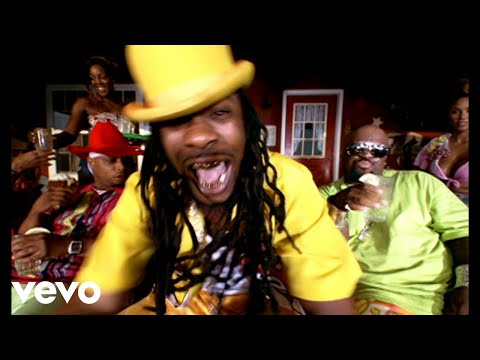
By the summer of 2003, Busta Rhymes had been one of hip-hop's most recognizable and energetic presences for nearly a decade, his rapid-fire delivery and visually spectacular music videos making him one of the genre's most distinctive performers. Light Your A** On Fire arrived as a single that exemplified the qualities that had made him commercially successful throughout his career: extreme energy, sonic density, and a personality that could fill any room it occupied.
Busta Rhymes and the Performance of Excess
Trevor George Smith Jr., performing as Busta Rhymes, had developed one of the most distinctive presences in hip-hop through his work as a solo artist following his time with Leaders of the New School in the early 1990s. His approach to rap was maximalist: the fastest delivery he could sustain without sacrificing clarity, productions that matched his energy with sonic density, and visual presentations that treated every music video as an opportunity for elaborate spectacle.
By 2003, Busta Rhymes had established himself as one of the most consistent commercial performers in hip-hop, placing records on the Hot 100 with remarkable regularity across multiple album cycles. His ability to maintain commercial relevance across a decade of rapidly changing hip-hop trends reflected both his genuine artistic distinctiveness and his willingness to adapt his approach to evolving production aesthetics.
Chart Performance in Summer 2003
Light Your A** On Fire entered the Billboard Hot 100 on August 9, 2003, debuting at position 69. Over the following weeks it moved to 66, 66, and then peaked at number 58 during the weeks of August 30 and September 6, 2003. The ten-week chart run demonstrated sustained commercial traction for a track that reflected Busta Rhymes's established commercial formula: aggressive production, distinctive vocal delivery, and a track title designed to command attention.
Summer 2003 was a competitive moment on the Hot 100, with hip-hop and R&B occupying much of the chart alongside pop crossover material. That Light Your A** On Fire held its position for ten weeks confirmed that Busta Rhymes's audience remained loyal and active through his continued commercial output.
The Sound and the Delivery
The production approach on Light Your A** On Fire reflects the early-2000s hip-hop production aesthetic: dense, hard-hitting beats with a sonic aggressiveness that matches the urgency of Busta Rhymes's vocal delivery. His rapid-fire style, which had always been one of the most technically impressive in the genre, operates here with characteristic precision: the syllables land with clarity despite their density, and the rhythmic complexity of the delivery creates a kind of musical argument for attention. Busta Rhymes demands that you listen, and the production gives him the platform to make that demand impossible to ignore.
The track's title, deliberately provocative, functions as a commercial strategy as much as a lyrical choice: records with titles that demand a reaction generate attention in a crowded market, and Busta Rhymes had always understood the value of capturing the ear before the music could do its work.
A Career of Consistent Commercial Output
Busta Rhymes's ability to sustain commercial relevance across the entirety of the 1990s and into the 2000s reflects a combination of genuine artistic distinctiveness and commercial intelligence that few of his contemporaries matched. Light Your A** On Fire is one data point in this sustained commercial performance, a record that does exactly what a Busta Rhymes record was expected to do in 2003: arrive at full volume, command attention for ten weeks on the Hot 100, and demonstrate that its creator's particular combination of energy and skill remained commercially viable. That formula had served him well for a decade by this point, and the record confirms that it had not exhausted itself.
Longevity in a Competitive Landscape
Busta Rhymes's ability to generate chart activity across multiple decades of hip-hop's evolution reflects a genuine adaptability that went beyond mere stylistic flexibility. His core artistic identity, rooted in technical delivery and performative intensity, remained consistent even as the production aesthetics around him evolved. Artists who survive a decade of rapid genre change without compromising the qualities that made them distinctive are rare in any popular music format, and Busta Rhymes belonged to this category. Light Your A** On Fire is one document of that survival, a record that sounds unmistakably like Busta Rhymes at a specific moment in his career while also sounding current enough to compete effectively in the 2003 commercial environment that surrounded it.
Press play and brace yourself for the full intensity of what Busta Rhymes means when he says he is going to light something on fire.
Light Your A** On Fire — Busta Rhymes's singular moment on the 2000s charts.
02 Song Meaning
The Meaning Behind Light Your A** On Fire: Energy, Provocation, and Rap's Performance of Intensity
The title Light Your A** On Fire is a declaration of intent before the music begins: it promises a certain quality of energy and intensity that the record then delivers. Understanding what the song means requires engaging with the specific tradition of hip-hop in which extreme energy, provocation, and the performance of overwhelming force are not incidental to the music's meaning but central to it.
Energy as Content
In a significant strain of hip-hop, the energy of the performance is itself the primary content. The technical complexity of the delivery, the density of the production, the sheer volume of attention-demanding elements compressed into a few minutes: these qualities communicate before the listener has processed a single specific lyric. Busta Rhymes has always operated in this mode. His records make their initial argument through sound rather than meaning, demanding a physical response, a quickened pulse, an involuntary increase in alertness, before the intellectual content can be engaged. Light Your A** On Fire exemplifies this approach, arriving with enough sonic force that the title's promised combustion feels like an accurate description of what the music does to the listener's attention.
Provocation as Strategy
The deliberately provocative quality of the title and the track's general aesthetic reflects a calculated approach to commercial presence in a crowded market. In the hip-hop economy of 2003, standing out from a dense field of releases required extreme gestures: the most aggressive production, the fastest delivery, the most attention-commanding title. Provocation, in this context, is a commercial tool as much as an artistic statement.
Busta Rhymes had always understood this, and his career demonstrated the effectiveness of the approach: consistent chart presence across a decade of releases through the consistent delivery of exactly the kind of extreme energy that his audience sought from him. The provocation is not random or purposeless; it is precisely calibrated to the expectations of a fan base that has come to rely on Busta Rhymes to deliver exactly this kind of sonic event.
The Tradition of Confrontational Hip-Hop
Light Your A** On Fire participates in a long tradition of confrontational hip-hop that uses aggressive language and imagery not as literal threat but as rhetorical strategy. The braggadocio of early rap, the battle rap tradition, the aggressive posturing of gangsta rap: all of these strands converge in a performance like Busta Rhymes's that uses extreme language and delivery as a demonstration of dominance and capability rather than as a literal plan of action.
Within this tradition, the fire imagery of the title connects to a long metaphorical lineage in which burning represents intensity, passion, and the power to transform. To light something on fire in this context means to illuminate it, to raise its temperature, to make it impossible to ignore, which is precisely what Busta Rhymes does to every track he appears on.
Technical Mastery as Meaning
One dimension of what Light Your A** On Fire means that is easy to overlook in favor of its surface provocations is the technical accomplishment that the record represents. Busta Rhymes's rapid-fire delivery is not merely fast; it is controlled, rhythmically sophisticated, and capable of sustaining complexity across extended passages without loss of clarity or impact. This technical mastery is itself a form of meaning in a genre that has always valued technical achievement as a demonstration of seriousness and dedication. The provocation is the surface; the craft is the substance.
→ More from Busta Rhymes
View all Busta Rhymes hits →



→ More from the 2000s File
View all 2000s hits →




Keep digging